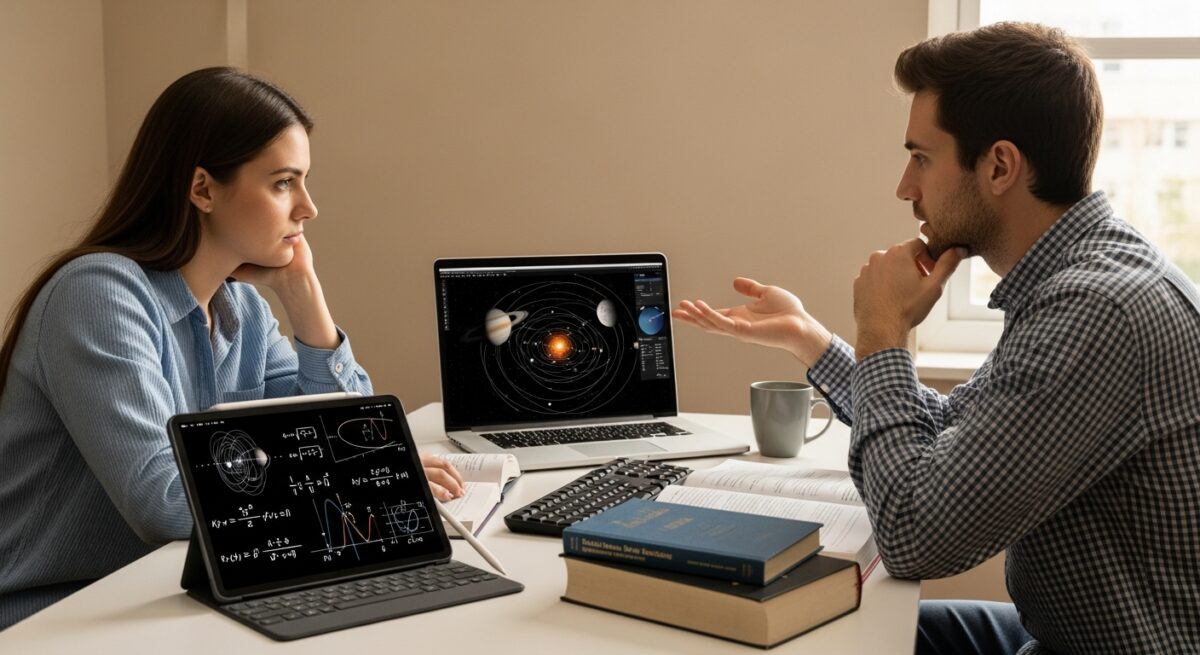
Physics is the fundamental science that explains how the universe works, from the smallest subatomic particles to the vast expanse of galaxies. For many students and professionals, the dream of studying physics has been hindered by geographic constraints, rigid schedules, or the high cost of traditional on-campus programs. The rise of high-quality online education has shattered these barriers. Today, you can earn a rigorous physics credential from your home office or local library, provided you select a program from a properly accredited source. This article explores why choosing online physics courses from accredited institutions is essential for your academic and professional future, and how to navigate the landscape of physics classes online to find a program that fits your goals.
The Critical Importance of Accreditation in Physics Education
Accreditation is the quality assurance mechanism that validates an institution’s academic standards. When you enroll in online physics courses from accredited institutions, you are investing in a credential that employers, graduate schools, and professional licensing boards recognize and respect. Without this validation, your hard-earned degree or certificate may hold little value in the marketplace.
There are two primary types of accreditation to understand. Institutional accreditation applies to the entire college or university. Regional accreditation is the gold standard in the United States, overseen by bodies such as the Higher Learning Commission or the Southern Association of Colleges and Schools. Programmatic accreditation, on the other hand, applies specifically to physics departments. The American Physical Society (APS) and the American Institute of Physics (AIP) do not directly accredit programs, but they provide guidelines for quality. Many top physics programs also hold accreditation from the Accreditation Board for Engineering and Technology (ABET) for related engineering physics tracks.
When evaluating an online physics course, always verify the institution’s accreditation status through the U.S. Department of Education’s database or the Council for Higher Education Accreditation (CHEA). This simple step protects you from diploma mills and ensures your coursework meets rigorous academic standards. For a broader perspective on how accreditation affects your degree options, you can explore our guide on Online Physics Degree Programs and Career Opportunities.
What to Look for in Physics Classes Online
Not all online physics offerings are created equal. As you research potential programs, consider these essential features that distinguish high-quality physics classes online from mediocre ones.
Laboratory and Hands-On Components
Physics is an experimental science. A legitimate online physics course must address laboratory work meaningfully. Accredited programs typically offer one of three solutions: at-home lab kits that you purchase and use with guidance, virtual lab simulations that replicate real experiments using sophisticated software, or hybrid arrangements where you complete labs during a short on-campus residency. The best programs combine these methods to give you practical experience with measurement, error analysis, and scientific instrumentation.
Faculty Credentials and Support
Your instructors should hold terminal degrees (Ph.D. in physics or a closely related field) from accredited universities. They should also have experience teaching online. Look for programs that publish faculty biographies and provide direct access to professors through office hours, discussion forums, or email. Avoid programs where teaching assistants or automated systems are your primary point of contact.
Curriculum Depth and Rigor
A comprehensive online physics curriculum should mirror its on-campus counterpart. Core courses typically include classical mechanics, electromagnetism, quantum mechanics, thermodynamics, and statistical mechanics. Advanced electives might cover astrophysics, particle physics, condensed matter physics, or biophysics. The program should require the same number of credit hours and the same level of mathematical sophistication (calculus through differential equations) as a traditional degree.
Technology and Learning Platform
The delivery platform matters. Reputable programs use robust learning management systems like Canvas, Blackboard, or Moodle. They provide recorded lectures, interactive simulations, online problem sets with immediate feedback, and proctored examinations. Ensure the program offers technical support and that you have the necessary hardware and internet bandwidth to participate fully.
Here are three concrete steps to evaluate any online physics course before enrolling:
- Check the accreditation status. Verify both institutional and programmatic accreditation through official databases. Do not rely solely on the school’s website.
- Review the syllabus. Request a sample syllabus for core courses. Compare the topics, textbooks, and assessment methods with those used at reputable brick-and-mortar universities.
- Speak with current students or alumni. Ask about their experience with labs, faculty engagement, and career outcomes after graduation. Honest feedback reveals the program’s true quality.
Taking these steps before you commit ensures that your time and money are well spent. An accredited program that meets these criteria will prepare you for graduate study or employment in fields such as engineering, data science, research, and education.
Types of Online Physics Courses From Accredited Institutions
Your choice of program depends on your current educational level and career objectives. Here is a breakdown of the most common options available through accredited online physics courses from accredited institutions.
Individual Courses for Credit or Personal Enrichment
Many accredited universities offer standalone online physics courses. These are ideal if you need to fulfill a prerequisite for another program, want to strengthen your foundation before applying to a degree program, or simply wish to learn physics for personal satisfaction. Some institutions offer these courses as part of their continuing education division, while others allow non-degree-seeking students to enroll in regular undergraduate classes. Credits from regionally accredited institutions are generally transferable, but always confirm with your home institution beforehand.
Bachelor of Science in Physics
A complete online bachelor’s degree in physics is becoming more common. These programs require about 120 credit hours and cover the full physics core along with general education requirements. They are designed for students who want to become physicists, enter graduate school, or work in technical fields. Some programs offer concentrations in areas like astrophysics or applied physics. Because physics is a sequential discipline, you must progress through courses in a specific order, which can extend the time to completion if you study part-time.
Master of Science in Physics
Online master’s degrees in physics are less common but exist at several respected universities. These programs typically require 30 to 36 credit hours and may include a thesis or capstone project. They are suitable for working professionals who want to advance their careers in research, teaching, or industry. Admission usually requires a bachelor’s degree in physics or a closely related field with strong grades in upper-level physics and mathematics courses.
Doctoral Programs (Ph.D.) with Online Components
Fully online Ph.D. programs in physics are extremely rare due to the intensive research and laboratory requirements. However, some universities offer low-residency doctoral programs where most coursework is completed online, supplemented by short on-campus summer sessions for research and collaboration. These programs are best suited for experienced professionals who already work in a research environment and can conduct their dissertation research at their workplace or a nearby facility.
Certificate and Professional Development Programs
For those who do not need a full degree, graduate certificates in physics or specialized topics like computational physics or medical physics are valuable. These typically require 12 to 18 credit hours and can be completed in one to two years. They are excellent for career changers or professionals seeking to add physics expertise to their existing skill set.

How to Succeed in an Online Physics Course
Online learning demands a different set of skills than traditional classroom instruction. Physics, in particular, requires sustained effort and active problem-solving. Here are strategies that successful students use to excel in physics classes online.
First, establish a consistent study schedule. Physics concepts build on each other, so falling behind for even a week can create significant gaps in understanding. Dedicate specific blocks of time each day to watching lectures, reading the textbook, and working through problem sets. Treat your online course like a scheduled in-person class.
Second, engage actively with the material. Do not just watch lecture videos passively. Pause frequently to work through derivations on paper, test your understanding by explaining concepts aloud, and attempt problems before looking at solutions. Use online forums to ask questions and collaborate with classmates. Many programs offer virtual study groups or tutoring services, take advantage of them.
Third, master the mathematical tools. Physics is expressed in the language of calculus and linear algebra. If your math foundation is weak, consider taking a refresher course before starting your physics classes online. Many accredited institutions offer preparatory mathematics courses that run concurrently with introductory physics, providing additional support.
Fourth, utilize external resources wisely. There are many high-quality supplementary materials available, including open-source textbooks, video lectures from MIT OpenCourseWare or the University of Oxford, and interactive simulations from PhET Interactive Simulations at the University of Colorado Boulder. These resources can deepen your understanding without replacing your assigned coursework.
Cost and Financial Aid for Online Physics Education
The cost of online physics courses from accredited institutions varies widely. Individual courses may cost several hundred to several thousand dollars. A full bachelor’s degree program can range from $30,000 to $100,000 or more depending on the institution and whether you qualify for in-state tuition. Master’s degrees typically cost between $15,000 and $50,000.
Financial aid is available for accredited programs. You may qualify for federal student loans, grants, and work-study programs by completing the Free Application for Federal Student Aid (FAFSA). Many employers offer tuition reimbursement benefits for courses related to your job. Scholarships specifically for physics students are offered by professional organizations such as the American Physical Society, the Society of Physics Students, and the National Society of Black Physicists. Additionally, some institutions offer military or veteran discounts, sibling discounts, or payment plans. Always contact the financial aid office of the institution you are considering to explore all options. For more information on making education affordable, you can explore resources on financial aid and scholarships at CollegeAndTuition.com, which provides guidance on funding your studies.
Career Outcomes After Completing Physics Courses Online
A physics degree from an accredited institution opens doors to diverse and rewarding careers. While some graduates pursue academic research, many work in private industry, government, and education. Common career paths include data scientist, software engineer, research scientist, aerospace engineer, medical physicist, high school physics teacher, and science writer. The analytical and problem-solving skills you develop in a physics program are highly valued across many sectors, including finance, technology, and healthcare.
According to the U.S. Bureau of Labor Statistics, employment of physicists and astronomers is projected to grow at an average rate, with a median annual wage significantly higher than the national average. Graduates from accredited programs are also well-prepared for graduate study in physics, engineering, medicine, or law. The key is that your credential must come from a recognized institution to be credible to employers and graduate admissions committees.
Frequently Asked Questions
Can I get a legitimate physics degree entirely online? Yes, many regionally accredited universities offer fully online bachelor’s and master’s degrees in physics. However, ensure the program includes a laboratory component, either through at-home kits, virtual labs, or a short residency.
Are online physics courses easier than on-campus courses? No. Accredited online physics courses maintain the same academic rigor as their on-campus counterparts. The flexibility of online learning does not reduce the depth or difficulty of the material.
How do I verify an institution’s accreditation? Use the official databases of the U.S. Department of Education or the Council for Higher Education Accreditation (CHEA). Do not rely solely on the school’s own claims.
Will employers accept an online physics degree? Yes, if the degree is from a regionally accredited institution. Employers are increasingly accepting online degrees, especially from well-known universities with strong online programs.
What are the technical requirements for an online physics course? You typically need a reliable computer with a webcam, a high-speed internet connection, and software for word processing, spreadsheets, and potentially specialized physics simulation tools. Some courses require a scientific calculator or specific lab equipment.
Choosing online physics courses from accredited institutions is a strategic investment in your future. The flexibility of physics classes online allows you to balance your education with work and family responsibilities, while the rigor of an accredited program ensures that your degree holds real value. By carefully evaluating programs for accreditation, laboratory components, faculty qualifications, and curriculum depth, you can find a path that leads to meaningful career advancement and intellectual growth. Take the first step today by researching programs that match your goals, and remember that the effort you invest in selecting the right program will pay dividends for years to come.