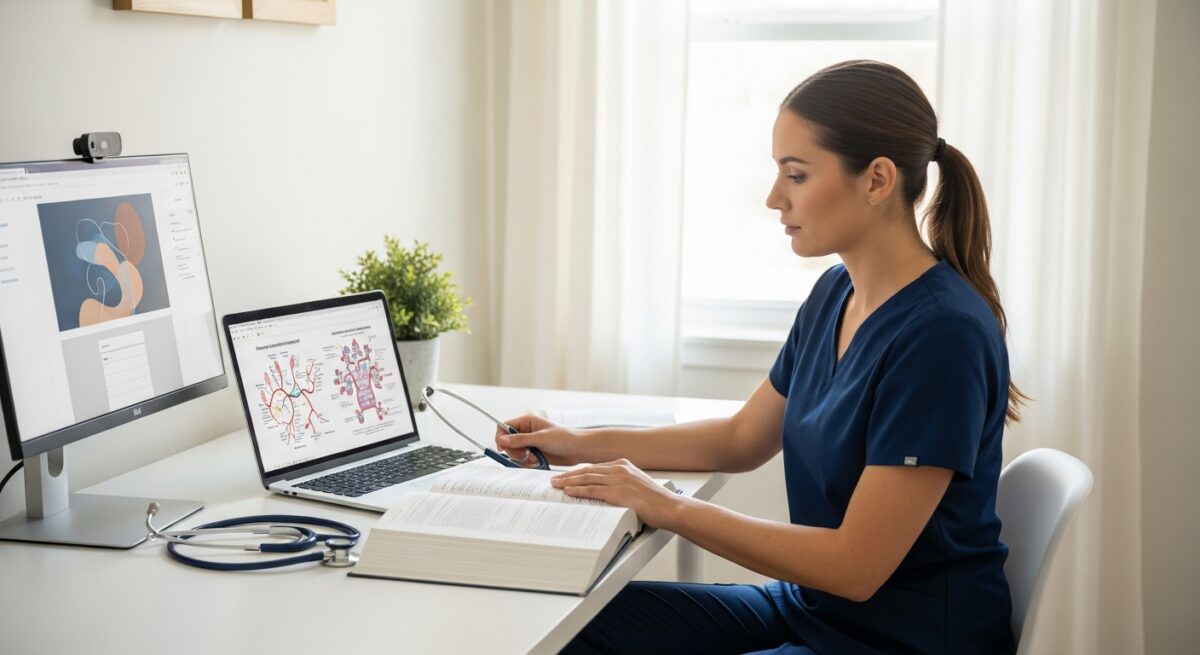
For licensed practical nurses (LPNs) looking to expand their clinical responsibilities, increase their earning potential, and secure a more stable career path, the transition to an Associate Degree in Nursing (ADN) represents one of the most strategic moves in healthcare. The journey from LPN to registered nurse (RN) is demanding, but the rise of flexible, high-quality online bridge programs has made it more accessible than ever. This LPN to ADN online programs guide provides a clear roadmap for working nurses who need to balance education with existing professional and personal commitments. By leveraging online coursework, clinical placements near home, and accelerated curricula, LPNs can earn their ADN in 12 to 24 months while continuing to work. Whether you are seeking career advancement, higher pay, or the ability to work in critical care settings, understanding how to choose and succeed in an online program is essential.
Online nursing bridge programs are designed specifically for LPNs who have already completed a practical nursing diploma and hold an active license. These programs build on your existing knowledge, allowing you to bypass introductory nursing courses and focus on the advanced theory and clinical skills required for RN licensure. The flexibility of online learning means you can study pathophysiology, pharmacology, and nursing leadership from your home computer, then apply that knowledge in local healthcare facilities during clinical rotations. This hybrid model is ideal for adult learners and career changers who cannot afford to pause their careers for a traditional on-campus program. In this guide, we will explore program structures, accreditation requirements, admission criteria, financial aid options, and career outcomes so you can make an informed decision about your educational pathway.
Understanding LPN to ADN Bridge Programs
An LPN to ADN bridge program is a specialized nursing pathway that recognizes the clinical experience and foundational education LPNs already possess. Instead of repeating fundamental nursing concepts, these programs offer advanced standing, which significantly reduces the time and cost required to earn an ADN. Most programs consist of two main components: didactic coursework delivered online and in-person clinical hours completed at affiliated hospitals, clinics, or long-term care facilities. The online portion covers subjects such as adult health nursing, maternal-child nursing, mental health nursing, and community health, while the clinical component ensures you develop hands-on skills under the supervision of experienced RNs and clinical instructors.
The primary advantage of an online bridge program is flexibility. As a working professional, you can access lectures, assignments, and discussion boards at times that fit your schedule. Many programs are asynchronous, meaning you do not need to log in at specific times for live classes. However, you must still meet strict deadlines and participate in virtual simulations and group projects. Clinical rotations are typically scheduled on weekends or evenings to accommodate your work schedule. When researching options, it is critical to verify that the program is accredited by either the Accreditation Commission for Education in Nursing (ACEN) or the Commission on Collegiate Nursing Education (CCNE). Accreditation ensures that your degree will be recognized by state boards of nursing and that you are eligible to sit for the NCLEX-RN exam upon graduation.
Key Benefits of Online LPN to ADN Programs
Choosing an online bridge program offers several distinct advantages over traditional campus-based options. First, the ability to continue working while studying is perhaps the most significant benefit. LPNs often support families or are the primary breadwinners in their households, so taking two years off from work is simply not feasible. Online programs allow you to maintain your income and healthcare benefits while pursuing your degree. Second, online programs often have lower tuition costs than their on-campus counterparts because they do not require physical classroom space, and many institutions pass those savings on to students. Third, you can attend a top-tier nursing school located anywhere in the country without relocating. This expands your options considerably, especially if you live in a rural area with limited local nursing programs.
Another critical benefit is the accelerated pace of many bridge programs. While a traditional ADN might take three to four years, an LPN-to-ADN bridge can often be completed in 12 to 18 months of full-time study. Some programs offer part-time tracks that extend to 24 months for those who need a lighter course load. The curriculum is designed to be rigorous but efficient, eliminating redundant content and focusing on the higher-level skills required for RN practice. Graduates of these programs consistently report feeling well-prepared for the NCLEX-RN and for the demands of registered nursing. For those interested in further advancement, an ADN is also the foundation for pursuing a Bachelor of Science in Nursing (BSN) through RN-to-BSN programs, many of which are also offered online. In our guide on Bachelor of Business Online Programs and Career Scope, we discuss similar accelerated pathways for career changers, though nursing has its own unique accreditation and licensing requirements.
Admission Requirements and Prerequisites
Admission to LPN to ADN online programs is competitive and requires careful preparation. While specific prerequisites vary by institution, most programs share a common set of requirements. You must hold a current, unencumbered LPN license in the state where you plan to complete clinical rotations. You must also have graduated from an accredited practical nursing program and typically need at least six months to one year of recent clinical experience as an LPN. Some programs prefer candidates with experience in acute care settings, but many accept LPNs from long-term care, home health, or physician offices. Additionally, you will need to submit official transcripts from all previous schools, a resume, letters of recommendation, and a personal statement outlining your career goals.
Before beginning the nursing-specific coursework, you may need to complete prerequisite general education courses such as anatomy and physiology, microbiology, chemistry, psychology, and college-level writing. Many online programs allow you to complete these prerequisites at a community college or through the same university before starting the bridge portion. Some programs offer a combined prerequisite and nursing curriculum, but that is less common. It is also important to note that many states have specific requirements for online nursing programs, including background checks, drug screenings, and proof of immunizations. You should verify that the program you choose is approved by your state board of nursing to ensure you will be eligible for licensure after graduation. For a comprehensive overview of what to expect, you can explore resources like CollegeDegree.Education, which offers detailed information on nursing program accreditation and state-by-state licensing requirements.
How to Choose the Right Online Program
Selecting the right LPN to ADN online program requires careful evaluation of several factors beyond just tuition cost. Start by verifying accreditation status. Only programs accredited by ACEN or CCNE are accepted by state nursing boards and recognized by employers. Next, examine the program’s NCLEX-RN pass rates. High pass rates indicate that the curriculum effectively prepares students for the licensure exam. You can usually find this data on the program’s website or by contacting the state board of nursing. Also, consider the program’s clinical placement support. Some online programs have partnerships with healthcare facilities across the country and will arrange your clinical rotations for you. Others require you to find your own preceptor and clinical site, which can be extremely challenging.
Other important considerations include the availability of financial aid, the flexibility of course scheduling, and the level of student support services. Look for programs that offer dedicated academic advisors, tutoring services, and career counseling. Many online programs also provide virtual simulation labs that allow you to practice clinical decision-making in a safe environment. Finally, read student reviews and alumni testimonials to get a sense of the program’s strengths and weaknesses. A program that consistently receives positive feedback from working nurses is likely a solid investment. Below is a list of key criteria to evaluate when comparing programs:
- Accreditation by ACEN or CCNE and approval by your state board of nursing
- NCLEX-RN first-time pass rates above the national average (currently around 85 percent)
- Clinical placement assistance and a wide network of affiliated healthcare facilities
- Flexible scheduling options including part-time and full-time tracks
- Tuition transparency and availability of federal financial aid, scholarships, and veteran benefits
After reviewing these factors, you should create a shortlist of three to five programs that meet your needs. Contact their admissions offices to ask specific questions about clinical coordination, transfer credit policies, and the typical time to completion. Many programs offer virtual information sessions where you can speak directly with faculty and current students. Taking the time to thoroughly research your options will pay off significantly when you enroll in a program that aligns with your career goals and lifestyle.

Financial Aid and Tuition Costs
The cost of an LPN to ADN online program varies widely depending on whether you attend a public community college, a private nonprofit university, or a for-profit institution. Public community colleges typically offer the lowest tuition rates, often between $5,000 and $15,000 for the entire program. Private nonprofit schools may charge $20,000 to $40,000, while for-profit institutions can be significantly more expensive. However, do not let sticker price alone guide your decision. Many students qualify for federal financial aid, including Pell Grants, Direct Subsidized and Unsubsidized Loans, and work-study programs. To access federal aid, you must complete the Free Application for Federal Student Aid (FAFSA) and ensure the school participates in federal student aid programs.
In addition to federal aid, many employers offer tuition reimbursement programs for LPNs pursuing further education. Hospitals and healthcare systems often have partnerships with specific nursing schools and may cover a portion of tuition in exchange for a work commitment after graduation. You should also explore scholarships specifically for LPNs and nontraditional nursing students. Professional organizations such as the National Association of Licensed Practical Nurses (NALPN) and the American Nurses Association (ANA) offer scholarship opportunities. Some states have loan forgiveness programs for nurses who work in underserved areas. When budgeting, remember to factor in costs beyond tuition, such as textbooks, simulation software fees, clinical uniforms, liability insurance, and NCLEX-RN exam fees. A well-planned financial strategy can make even the most expensive program affordable.
Frequently Asked Questions
How long does it take to complete an LPN to ADN online program?
Most full-time students complete their program in 12 to 18 months. Part-time students typically finish in 20 to 24 months. The exact timeline depends on how many prerequisite courses you have already completed and the specific curriculum structure of the program you choose.
Can I work full-time while enrolled in an online LPN to ADN program?
Yes, many students work full-time as LPNs while completing their ADN online. However, the program is demanding, and you will need strong time management skills. Clinical rotations may require you to adjust your work schedule, especially during the final semesters. Part-time enrollment can help balance work and school.
Are online LPN to ADN programs respected by employers?
Yes, as long as the program is accredited by ACEN or CCNE and you pass the NCLEX-RN, employers view online degrees the same as campus-based degrees. In fact, many healthcare employers value the self-discipline and time management skills that online graduates demonstrate.
What is the difference between an LPN to ADN and an LPN to BSN program?
An LPN to ADN program awards an associate degree and qualifies you to take the NCLEX-RN. An LPN to BSN program awards a bachelor’s degree and also qualifies you for RN licensure, but it includes additional coursework in leadership, research, and community health. A BSN is increasingly preferred by hospitals and may lead to higher pay and more advancement opportunities.
Do I need to find my own clinical placement?
It depends on the program. Some online programs have clinical coordinators who arrange placements at affiliated facilities. Others require you to find your own preceptor and clinical site, which can be challenging. Always ask about clinical placement support before enrolling.
Taking the Next Step Toward Your RN Degree
Transitioning from LPN to RN is one of the most rewarding decisions you can make for your nursing career. The increased responsibility, autonomy, and salary are significant, but the ability to provide a higher level of patient care is the true motivator for most nurses. Online LPN to ADN programs have removed many of the traditional barriers to advancement, making it possible for working nurses to earn their degree without sacrificing their current job or family commitments. By following the guidance in this LPN to ADN online programs guide, you can identify accredited, affordable, and flexible programs that fit your unique situation.
As you begin your research, remember to prioritize accreditation, clinical support, and financial aid availability. Reach out to admissions counselors, attend virtual open houses, and connect with alumni to gain firsthand insights. The path to becoming an RN requires dedication and hard work, but the payoff is immense. With a clear plan and the right online program, you can achieve your goal of becoming a registered nurse and open doors to specialties such as emergency care, intensive care, labor and delivery, and more. Your future patients will benefit from your advanced skills, and you will enjoy a career with greater stability, respect, and fulfillment. Start exploring your options today and take the first step toward transforming your nursing practice.