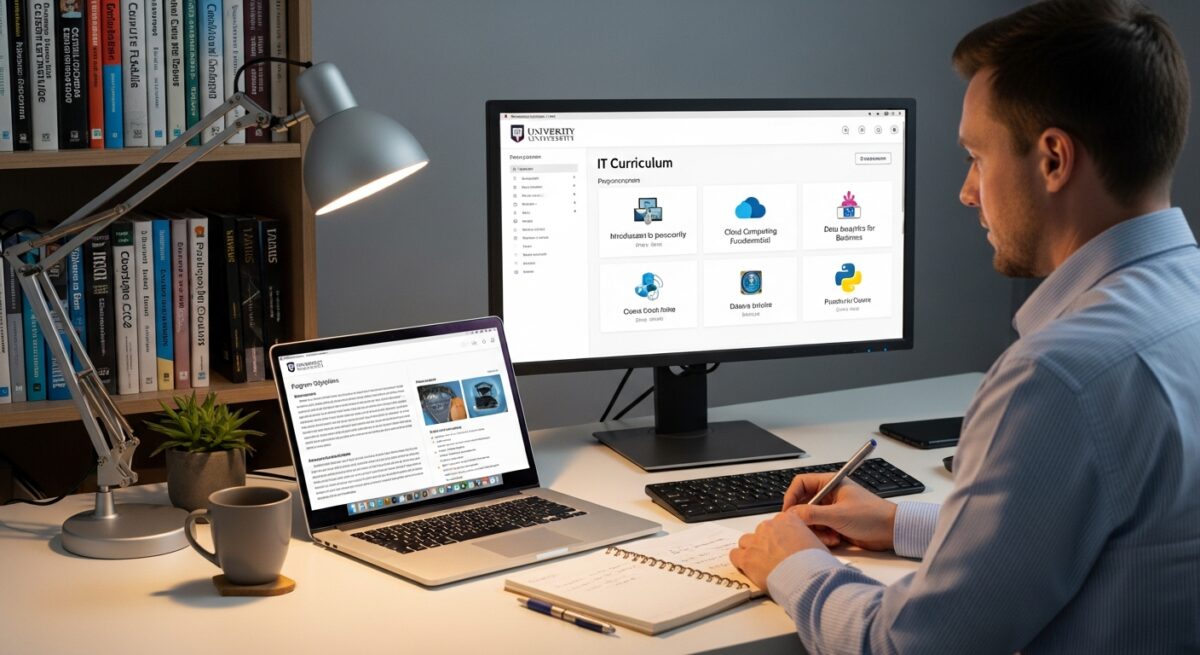
Choosing the right online information technology school can feel overwhelming, especially when you are juggling work, family, and other commitments. The demand for IT professionals continues to grow, and flexible online programs offer a practical path to career advancement without putting your life on hold. But not all online IT programs are created equal. Accreditation, curriculum quality, faculty expertise, and student support services vary widely. This guide breaks down what to look for, highlights some of the best online IT schools, and answers common questions to help you make a confident decision.
What Makes an Online IT School Stand Out?
Before diving into specific schools, it helps to understand the criteria that separate excellent programs from mediocre ones. A top-tier online IT school should offer more than just recorded lectures and discussion boards. It should provide a comprehensive learning ecosystem that supports your success from enrollment to graduation and beyond.
First and foremost, regional accreditation is non-negotiable. Accreditation ensures that the institution meets rigorous academic standards and that your degree will be respected by employers and other universities. Additionally, look for program-specific accreditation from bodies like ABET (Accreditation Board for Engineering and Technology) for technology programs. This extra layer of validation signals that the curriculum aligns with industry expectations.
Beyond accreditation, consider the flexibility of the program. Are courses asynchronous, meaning you can access lectures and assignments on your own schedule? Or are there required live sessions? For working professionals, asynchronous formats often provide the most flexibility. Also, evaluate the technology infrastructure. A good online school uses a robust learning management system (LMS) that is intuitive and accessible, and it offers technical support when you need it.
Student support services are another critical differentiator. The best online IT schools provide dedicated academic advisors, career counseling, virtual tutoring, and robust library and research resources. These services can make the difference between feeling lost in a digital void and feeling like a valued member of a learning community. Finally, look at the outcomes. Research graduation rates, job placement statistics, and alumni success stories. A program that tracks and publishes these metrics demonstrates accountability and confidence in its offerings.
Top Online IT Programs to Consider
Several universities have earned strong reputations for their online IT offerings. While this is not an exhaustive list, these programs consistently receive high marks for quality, flexibility, and value. Each has its own strengths, so consider what matters most to you, whether that is a specialization, cost, or accelerated pacing.
Here are some of the best online IT schools and what they bring to the table:
- University of Florida (UF): UF Online offers a Bachelor of Science in Computer Science and a Bachelor of Science in Information Systems. The programs are rigorous, taught by the same faculty who teach on campus, and are priced competitively for both in-state and out-of-state students.
- Arizona State University (ASU): ASU Online provides a Bachelor of Science in Information Technology with several concentrations, including cybersecurity and network security. ASU is known for its innovative online learning platform and strong student support network, making it a popular choice for adult learners.
- Penn State World Campus: Penn State offers a Bachelor of Science in Information Sciences and Technology with options to specialize in areas like cybersecurity and data sciences. The World Campus is renowned for its academic rigor and the prestige of the Penn State brand.
- Drexel University: Drexel’s online Bachelor of Science in Computing and Security Technology blends technical skills with business acumen. Their quarter-based system allows students to complete courses faster, which can be a significant advantage if you want to accelerate your timeline.
- Western Governors University (WGU): WGU is a competency-based institution, meaning you advance by demonstrating mastery of the material, not by sitting through a set number of hours. This model is ideal for self-motivated learners who want to move quickly through subjects they already know and spend more time on challenging topics.
These schools represent a blend of traditional research universities and innovative online-first institutions. When choosing among them, think about the learning style that suits you best. For example, WGU’s competency-based model is a radical departure from the traditional credit-hour approach, and it works brilliantly for some but not for others. Conversely, UF and ASU offer a more structured, semester-based experience that may feel more familiar.
For a more detailed comparison of degree options, including curriculum specifics and career outcomes, you might find our guide on best online IT degree programs for 2026 career growth to be a useful companion resource.
How to Choose the Right Program for Your Career Goals
Your career aspirations should dictate which online IT school you choose. The IT field is vast, encompassing roles like network administrator, cybersecurity analyst, database administrator, software developer, and IT project manager. Each role calls for a different skill set, and some programs are better suited to certain paths than others.
If you are aiming for a cybersecurity role, prioritize programs that offer specialized courses in ethical hacking, digital forensics, and security risk management. Look for programs that integrate preparation for industry certifications like CompTIA Security+ or Certified Information Systems Security Professional (CISSP). If you are more interested in the data side of IT, seek programs with a strong emphasis on database design, data mining, and business intelligence. For those drawn to the management side, a program that includes coursework in project management, systems analysis, and IT strategy will be more relevant.
Another key consideration is whether you want a generalist degree or a specialized one. A generalist Bachelor of Science in Information Technology provides a broad foundation, which is excellent if you are still exploring the field. A specialized degree can make you more competitive for specific roles right out of school. Some schools also offer accelerated master’s programs that allow you to earn both a bachelor’s and a master’s degree in a shorter timeframe, which can be a smart investment for ambitious professionals.

The Financial Aspect: Tuition, Aid, and ROI
The cost of an online IT degree varies dramatically by institution. Public universities often offer lower tuition rates for in-state residents, but many now offer competitive rates for online students regardless of residency. Private universities and online-only institutions like WGU typically have flat tuition rates, which can simplify budgeting. Before you commit, use net price calculators available on each school’s website to estimate your actual cost after financial aid.
Financial aid is available for online students, just as it is for traditional students. The first step is to complete the Free Application for Federal Student Aid (FAFSA) to see if you qualify for federal grants, loans, or work-study programs. Additionally, many schools offer scholarships specifically for online learners. Employer tuition reimbursement is another avenue worth exploring; many companies offer partial or full coverage for job-relevant degrees. For a deeper dive into funding your education, resources like college and tuition guidance can provide practical strategies for managing costs.
When evaluating the return on investment (ROI), consider the total cost of the program, the time to completion, and the expected starting salary for your target role. For example, a degree from a prestigious private university might cost more upfront, but if it leads to a significantly higher starting salary, the long-term ROI could be better. Conversely, a more affordable state school might offer a faster payback period, even if the starting salary is slightly lower. Use salary data from the Bureau of Labor Statistics and professional networks like LinkedIn to make an informed projection.
Accreditation and Quality Assurance
Accreditation is the single most important factor in ensuring your degree holds value. Regional accreditation is the gold standard for academic quality in the United States. It is awarded by one of six regional accrediting bodies recognized by the Council for Higher Education Accreditation (CHEA) and the U.S. Department of Education. Without regional accreditation, your credits may not transfer to other institutions, and employers may not recognize your degree.
In addition to institutional accreditation, look for programmatic accreditation. For IT programs, ABET accreditation is the most respected. ABET evaluates specific programs to ensure they meet the standards of the profession. While not all excellent IT programs have ABET accreditation, it is a strong signal of quality. For example, both the University of Florida and Arizona State University have ABET-accredited computer science and IT programs.
Be wary of schools that are nationally accredited but not regionally accredited. National accreditation is often associated with for-profit institutions and may not be accepted by traditional colleges or employers. Always verify accreditation status on the school’s website and cross-check it with the CHEA database. Remember, the onus is on you to ensure the school you choose is legitimate. A quick check can save you from wasting years and thousands of dollars on a degree that does not hold weight.
Frequently Asked Questions
What is the difference between an online IT degree and a computer science degree?
In simple terms, computer science (CS) focuses on the theoretical foundations of computing, such as algorithms, programming languages, and software design. It is a deeply mathematical discipline. Information technology (IT), on the other hand, is more applied. It focuses on using technology to solve organizational problems, covering areas like network administration, system security, and database management. CS is often a better fit for software engineering roles, while IT is better for infrastructure, support, and security roles.
Can I complete an online IT degree while working full-time?
Yes, many online IT programs are designed specifically for working professionals. The key is to choose a program that offers asynchronous courses, meaning you do not have to attend live lectures at set times. However, you should still expect to dedicate a significant number of hours per week to studying and completing assignments. Time management is critical. Set a consistent schedule and treat your studies like a job.
What are the typical admission requirements for online IT programs?
Most bachelor’s programs require a high school diploma or GED, and some require prior college coursework or standardized test scores like the SAT or ACT. Master’s programs typically require a bachelor’s degree from an accredited institution, and some may require a minimum GPA or relevant work experience. Some schools have a more holistic admissions process, considering your professional background and personal statement.
Are online IT degrees respected by employers?
Yes, a degree from a regionally accredited institution is respected by employers, whether it was earned online or on campus. What matters most is the reputation and accreditation of the school, not the delivery format. If you graduate from a well-known university’s online program, your diploma will look the same as a campus degree. However, you should be prepared to explain the skills you gained and how they apply to the job.
Choosing the best online IT school is a personal decision that depends on your career goals, learning style, budget, and life circumstances. Take the time to research thoroughly, reach out to admissions counselors, and connect with current students or alumni if possible. The right program is out there, and with careful consideration, you can find a path that sets you up for a rewarding and lucrative career in information technology. Start your search today with confidence, knowing that the flexibility and quality of online education have never been better.