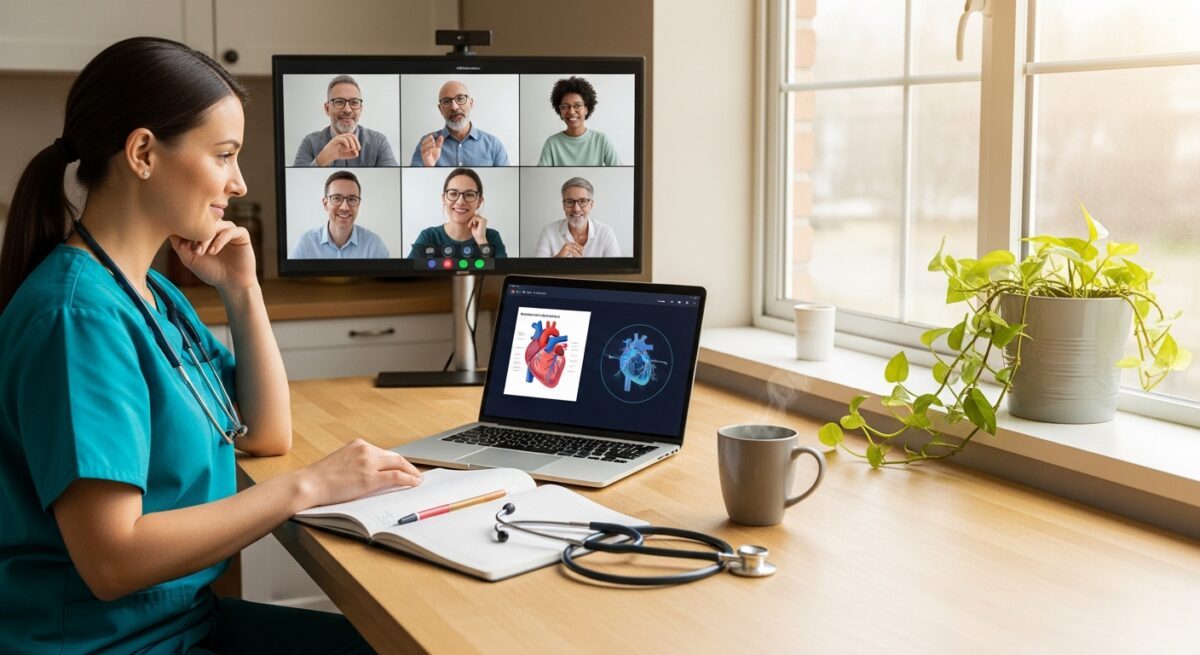
For registered nurses aiming to advance their careers, the decision to pursue a graduate degree is often a turning point. A master’s degree opens doors to roles in leadership, education, and specialized clinical practice, yet the path to earning one can seem daunting, especially when balancing work and family commitments. This is precisely where online programs have transformed the landscape of nursing education. They offer the flexibility to study while continuing to work, allowing you to apply new knowledge directly to your practice without putting your career on hold. However, with hundreds of options available, knowing how to select the right one is critical. This Masters in Nursing Online Programs Guide is designed to walk you through that process, from understanding the different types of degrees to evaluating program quality and financing your education.
The growing acceptance and rigor of online nursing education mean that a degree earned through a reputable distance-learning program is often indistinguishable from a traditional campus-based one in the eyes of employers. Yet, the quality and outcomes of these programs can vary significantly. A well-chosen online master’s degree not only enhances your clinical expertise but also positions you for roles with greater autonomy and higher earning potential. Conversely, a poorly chosen program can waste your time, money, and energy. The goal here is not just to find any program, but to find the one that aligns with your career goals, learning style, and life circumstances. Throughout this guide, we will explore the critical factors to consider, the application process, and the career outcomes that make this investment worthwhile.
Understanding the Types of Master’s Degrees in Nursing
The first step in your journey is to clarify your career objectives, as this will determine the type of master’s degree you should pursue. While the term “master’s in nursing” is often used as a catch-all, it actually encompasses several distinct pathways. The most common is the Master of Science in Nursing (MSN), which is a broad degree that allows for specialization in areas such as nurse practitioner, nurse educator, or nurse administrator. Another option is the Master of Science in Nursing with a concentration in a specific area, which is essentially the same as an MSN but with a more focused curriculum. There are also programs like the Master of Health Administration (MHA) for those interested in healthcare management, though this is not a nursing degree per se. For this guide, we will focus on the MSN, as it is the most relevant and widely pursued online nursing master’s degree for clinical and leadership roles.
Within the MSN, you will find several key specializations. Nurse Practitioner (NP) programs are among the most popular, preparing you for advanced clinical practice with the ability to diagnose and treat patients. Nurse Educator programs train you to teach in academic and clinical settings, addressing a critical shortage of nursing faculty. Nurse Leadership or Administration programs focus on management, finance, and healthcare policy, preparing you for roles as a nurse manager or director. Before you start exploring programs, take the time to research each of these paths. Consider where you see yourself in five to ten years. Do you want to work directly with patients, or would you prefer to influence patient care on a larger scale? The answer will guide your program choice and ensure that your online nursing master’s degree is a strategic step toward your ideal career.
Key Factors to Evaluate in an Online MSN Program
Once you have a clear idea of your specialization, you can begin to compare programs. Not all online programs are created equal, and a thorough evaluation is essential to ensure you receive a high-quality education that is respected by employers. The most important factor is accreditation. A program must be accredited by a recognized body, such as the Commission on Collegiate Nursing Education (CCNE) or the Accreditation Commission for Education in Nursing (ACEN). Accreditation ensures that the program meets rigorous academic standards and that you are eligible for certification and licensure in your state. Without it, your degree may not be recognized by employers, and you may not be able to obtain required credentials. Always verify the accreditation status of any program you consider, and cross-check it with your state’s board of nursing.
Beyond accreditation, you should also consider the program’s clinical placement model. Since nursing is a practice-based profession, online MSN programs still require hands-on clinical hours. How these hours are arranged is a crucial differentiator. Some programs require you to find your own preceptor and clinical site, which can be a significant challenge. Others have partnerships with healthcare facilities and will arrange placements for you, which can save you time and stress. Additionally, look into the program’s curriculum, faculty qualifications, and student support services. Are the courses taught by experienced nurse educators? Is there a strong support system for online students, including academic advising and technical assistance? These factors can greatly impact your success. For a broader perspective on evaluating online programs, you can refer to our guide on online degree program selection, which outlines similar principles that apply across disciplines.
The Application Process and Prerequisites
Applying to an online MSN program is a multi-step process that requires careful preparation. Most programs have similar requirements, but you should always check the specific criteria for each school. The typical prerequisites include an active, unencumbered registered nurse (RN) license, a Bachelor of Science in Nursing (BSN) from an accredited institution, and a minimum GPA, usually around 3.0. You will also need to submit official transcripts, letters of recommendation, a personal statement, and a current resume. Many programs also require a background check and drug screening, as you will be working in clinical settings. Some programs may have additional prerequisites, such as a statistics course or a certain number of years of clinical experience, so it is best to review these early in your research.
A strong application goes beyond meeting the minimum requirements. Your personal statement is your opportunity to articulate your career goals and explain why you are a good fit for the program. Use it to highlight your clinical experiences, leadership potential, and commitment to advancing nursing practice. Letters of recommendation should come from individuals who can speak to your clinical skills and academic abilities, such as a supervisor or a nursing professor. It is also wise to start the process early, as applications can be time-consuming and deadlines are often strict. If you are concerned about the cost, remember that financial aid is available, and many employers offer tuition reimbursement for nurses pursuing advanced degrees. Be sure to explore all your options, including scholarships and grants, before deciding on a program.
Financing Your Online Nursing Master’s Degree
The cost of an online MSN program can vary widely, from around $20,000 to over $60,000 for the entire degree. Understanding the total cost, including tuition, fees, and books, is essential for planning. Fortunately, there are many ways to finance your education. The first step is to complete the Free Application for Federal Student Aid (FAFSA) to see if you qualify for federal loans or work-study programs. Next, research scholarships specifically for nursing students. Many professional organizations, such as the American Nurses Association and specialty nursing associations, offer scholarships to graduate students. Additionally, many hospitals and healthcare systems offer tuition reimbursement as a benefit to their employees. If you are currently employed as an RN, check with your human resources department to see if this is an option.
Another important consideration is the return on investment (ROI) of your degree. While the upfront cost may seem high, a master’s in nursing can lead to a significant salary increase. According to the U.S. Bureau of Labor Statistics, nurse practitioners earn a median annual wage that is substantially higher than that of registered nurses. This higher earning potential can offset the cost of your education over time. When comparing programs, consider the total cost and the potential salary boost for the specialization you are pursuing. A more expensive program might be worth it if it has a strong reputation and a high NCLEX pass rate, but a more affordable program might offer the same value. Weigh the costs and benefits carefully to make a financially sound decision.

Career Outcomes and Job Prospects After Graduation
Earning a master’s in nursing online can significantly expand your career opportunities. Graduates of MSN programs are qualified for a variety of advanced roles, including nurse practitioner, clinical nurse specialist, nurse anesthetist, nurse midwife, and nurse administrator. These roles come with greater responsibility, autonomy, and, typically, higher salaries. The demand for advanced practice registered nurses (APRNs) is projected to grow much faster than the average for all occupations, driven by an aging population, an increased focus on preventive care, and a shortage of primary care physicians. This makes an online nursing master’s degree a highly valuable investment for your future.
Beyond clinical roles, an MSN can also open doors in healthcare policy, informatics, and education. For example, as a nurse educator, you can shape the next generation of nurses, addressing the faculty shortage that many nursing schools face. As a nurse informaticist, you can work on the technology that supports patient care, improving efficiency and safety. The skills you gain in an MSN program, such as leadership, research, and evidence-based practice, are transferable across many settings. Whether you aspire to be a frontline provider or a behind-the-scenes leader, the degree provides a solid foundation. As you evaluate programs, consider the career outcomes reported by the school, such as job placement rates and where alumni are employed. This data can give you confidence that your investment will pay off.
Frequently Asked Questions
Can I work while completing an online MSN program? Yes, many online MSN programs are designed for working nurses. The flexibility of asynchronous coursework allows you to study at your own pace, but you will still need to complete clinical hours, which may require some flexibility in your work schedule. Most students work part-time or full-time, but it is important to manage your time effectively.
How long does it take to complete an online master’s in nursing? The duration depends on whether you attend full-time or part-time. Full-time students can typically finish in 2 to 3 years, while part-time students may take 3 to 5 years. Accelerated programs, such as RN-to-MSN bridge programs, can be completed in a shorter time frame if you already have a BSN.
Are online nursing degrees respected by employers? Yes, as long as the program is accredited by a recognized body like CCNE or ACEN. Employers generally value the degree and the skills you bring, regardless of whether it was earned online or on campus. The key is to ensure the program is reputable and that you have the same clinical hours and competencies as a traditional student.
What are the admission requirements for online MSN programs? Common requirements include a BSN from an accredited institution, an active RN license, a minimum GPA (usually 3.0), letters of recommendation, a personal statement, and a resume. Some programs may also require a background check and specific prerequisite courses. Always check the specific requirements for each program.
Will I need to complete clinical hours if I study online? Yes, all MSN programs require clinical hours. The number of hours varies by specialization. For example, nurse practitioner programs require more clinical hours than nurse educator programs. The program will help you arrange these hours, but you may need to find your own preceptor in some cases.
Making the Right Choice for Your Future
Choosing the right online nursing master’s program is a decision that deserves careful consideration. It is not just about finding a program that fits your schedule; it is about finding one that aligns with your professional goals and provides the support you need to succeed. Start by identifying your specialization, then evaluate programs based on accreditation, clinical placement support, curriculum, and cost. Do not be afraid to reach out to program advisors with questions. A good program will be transparent and supportive. For more information on how to compare programs and understand the broader educational landscape, you can explore resources like DegreesOnline.Education, which offers detailed guides on various online degrees and career paths.
In summary, an online master’s in nursing is a powerful tool for career advancement. It offers flexibility, affordability, and a path to some of the most rewarding roles in healthcare. By following this Masters in Nursing Online Programs Guide, you can navigate the complexities of program selection with confidence. Remember to focus on accreditation, understand the clinical requirements, and plan your finances. With the right preparation and mindset, you can achieve your career aspirations and make a significant impact on the future of healthcare. Take the next step today, and invest in the education that will shape your tomorrow.