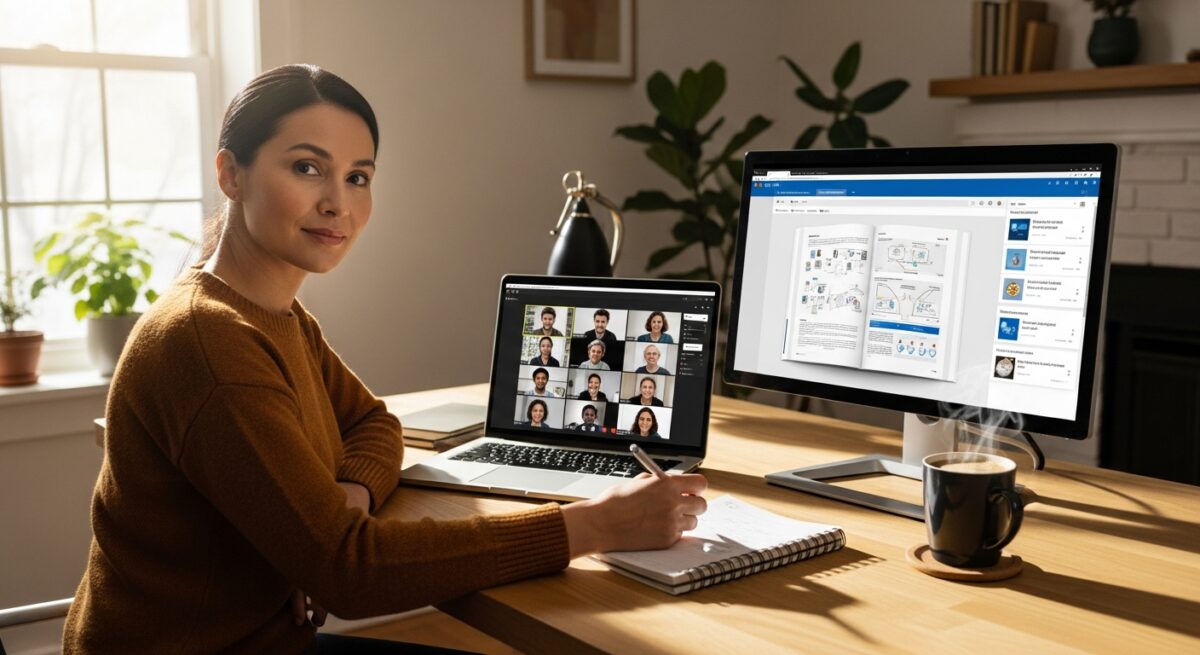
Imagine pursuing a degree in nursing, advancing your skills in business, or exploring a new passion in interior design without ever setting foot on a traditional campus. This is the reality offered by modern web distance learning programs, which have transformed higher education from a place you go into an experience you access. These programs leverage the internet to deliver comprehensive coursework, interactive instruction, and supportive communities directly to students, regardless of their geographic location or personal schedule. They represent a fundamental shift toward accessibility, catering to working professionals, caregivers, military personnel, and lifelong learners who require a more adaptable path to achieving their educational and career goals. This evolution moves beyond simple correspondence courses to create rich, engaging digital classrooms that rival the quality of in-person instruction.
The Core Structure and Technology of Online Learning
At the heart of any reputable web distance learning program is a robust Learning Management System (LMS). Platforms like Canvas, Blackboard, and Moodle serve as the virtual campus, housing everything from lecture videos and digital textbooks to assignment submissions and grade books. These systems are designed for intuitive navigation, ensuring that the technology facilitates learning rather than hindering it. Synchronous elements, such as live video lectures via Zoom or Teams, allow for real-time interaction with professors and classmates, fostering a sense of immediate connection and enabling dynamic Q&A sessions. Conversely, asynchronous components like pre-recorded lectures, discussion forums, and self-paced modules provide the critical flexibility that defines distance education, allowing students to engage with the material during their most productive hours.
The technological ecosystem extends to specialized software and digital resources. Students in a mathematics program might use advanced simulation tools, while those in human services could engage with virtual case management software. This hands-on, digital-first approach ensures that graduates are not only proficient in their subject matter but also adept at using the tools that are increasingly standard in modern workplaces. Reliable internet access and a capable computer are the primary requirements, turning any quiet corner into a potential classroom. For a deeper look at the foundational systems that power this experience, our resource on what an e-learning system is and how it is used provides valuable context.
Selecting the Right Program for Your Goals
With a vast array of web distance learning programs available, making the right choice requires careful consideration. The first and most critical step is to verify accreditation. Regional accreditation is the gold standard in the United States, ensuring that the institution meets rigorous quality standards and that your credits or degree will be recognized by employers and other universities. Always confirm accreditation status directly through the U.S. Department of Education’s database before applying.
Next, align the program’s structure and offerings with your specific objectives. Are you seeking a full bachelor’s degree, a career-focused associate degree, a graduate-level MBA, or a professional certificate? Each path serves a different purpose. Furthermore, examine the curriculum’s relevance to current industry standards, especially in fast-evolving fields like medical technology or business analytics. Investigate the faculty’s credentials: are they active practitioners or respected academics in their field? Finally, assess the level of student support offered, including access to academic advisors, career services, online tutoring, and technical support. A strong support network is often the key to persistence and success in a remote learning environment.
To start your search on solid ground, consider these key evaluation criteria for any program:
- Accreditation Status: Confirm regional or specialized programmatic accreditation.
- Program Format & Schedule: Determine if courses are synchronous, asynchronous, or hybrid, and if they fit your timeline.
- Faculty Expertise: Research instructors’ academic and professional backgrounds.
- Student Support Services: Evaluate the availability of advising, tutoring, and career guidance.
- Technology & Resources: Ensure you have the required hardware and software, and understand the LMS in use.
For those considering foundational studies, exploring a guide to online undergraduate programs can offer a detailed roadmap for starting your degree journey.
Maximizing Your Success as a Distance Learner
Success in a web-based program demands a different set of strategies compared to traditional classroom learning. The freedom of flexibility must be balanced with self-discipline and proactive organization. Start by establishing a dedicated study space free from distractions and treating your online coursework with the same respect as a job or in-person class. Create a consistent weekly schedule that blocks out time for watching lectures, participating in discussions, reading, and completing assignments. Use digital calendars and task management tools to stay on top of deadlines, as the absence of physical reminders requires greater personal accountability.
Active participation is non-negotiable. Engage deeply in discussion forums by posting thoughtful responses and asking clarifying questions. Virtual presence is your substitute for raising your hand in class. Don’t hesitate to reach out to instructors via email or virtual office hours; building that rapport is crucial for support and networking. Furthermore, seek out connections with fellow students through study groups or cohort-based programs. These relationships can combat isolation, provide moral support, and create valuable professional networks that last well beyond graduation. The skills you hone in this process time management, digital communication, self-motivation are themselves highly marketable assets in today’s workforce.
Exploring Diverse Fields of Study
The breadth of disciplines available through web distance learning programs is now astonishingly comprehensive. In the business realm, aspiring entrepreneurs and managers can pursue everything from an Associate’s in Business Administration to a prestigious Online MBA from accredited universities, often with specializations in finance, marketing, or healthcare management. The medical and healthcare fields offer numerous pathways, including RN-to-BSN programs for nurses, health administration degrees, and medical coding certifications, all designed to meet critical workforce needs. For the creatively inclined, accredited online degrees in interior design teach spatial theory, CAD software, and sustainable practices, preparing graduates for careers in residential and commercial design.
Other high-demand areas include online degrees in human services, which prepare compassionate individuals for roles in social work, community outreach, and counseling support. For those with analytical minds, online mathematics programs provide a foundation for careers in data science, actuarial science, education, and engineering. The common thread is that quality programs in these fields have adapted their hands-on or theoretical components for effective digital delivery, using virtual labs, internships with local providers, and project-based learning to ensure competency. This expansion means that for almost any career goal, a viable and respected online pathway likely exists.
Navigating Challenges and Embracing the Future
While the advantages are significant, prospective students should enter web distance learning with eyes open to its unique challenges. The lack of a physical campus can sometimes lead to feelings of isolation, making intentional community-building essential. Self-motivation is the engine of progress; without it, even the most flexible schedule can become a trap for procrastination. Additionally, learners must ensure they have consistent, high-quality internet access, as technical difficulties can disrupt the learning process. It’s also vital to develop strong written communication skills, as much of the interaction in asynchronous environments is text-based.
Looking forward, the trajectory of distance learning is deeply intertwined with technological innovation. We are already seeing the integration of artificial intelligence for personalized learning pathways, immersive virtual reality for simulations in fields like medicine or engineering, and sophisticated analytics to help instructors identify students who may need extra support. The line between “online” and “traditional” education continues to blur, with many campus-based programs incorporating digital elements. This convergence points to a future where web distance learning is not an alternative, but a standard, integrated component of global education, expanding access and personalization in ways we are only beginning to imagine.
Web distance learning programs have matured from a niche alternative into a powerful, mainstream avenue for achieving educational ambitions. They offer a practical solution for gaining respected credentials across a spectrum of fields, from business and healthcare to design and human services, all built on a foundation of flexibility and accessibility. By carefully selecting an accredited program and adopting proactive, disciplined learning strategies, students can unlock new career potential and personal growth. This mode of education is no longer just about convenience; it’s about delivering quality, engagement, and opportunity on the learner’s terms, reshaping the very landscape of higher education for the digital age.