
Animation Degrees for Mobile Learners: Read More About Online Programs
Read more about explore animation degree programs designed for mobile learners, and see how flexible online animation degrees fit busy schedules and build real portfolios.

By Patrick Dawson
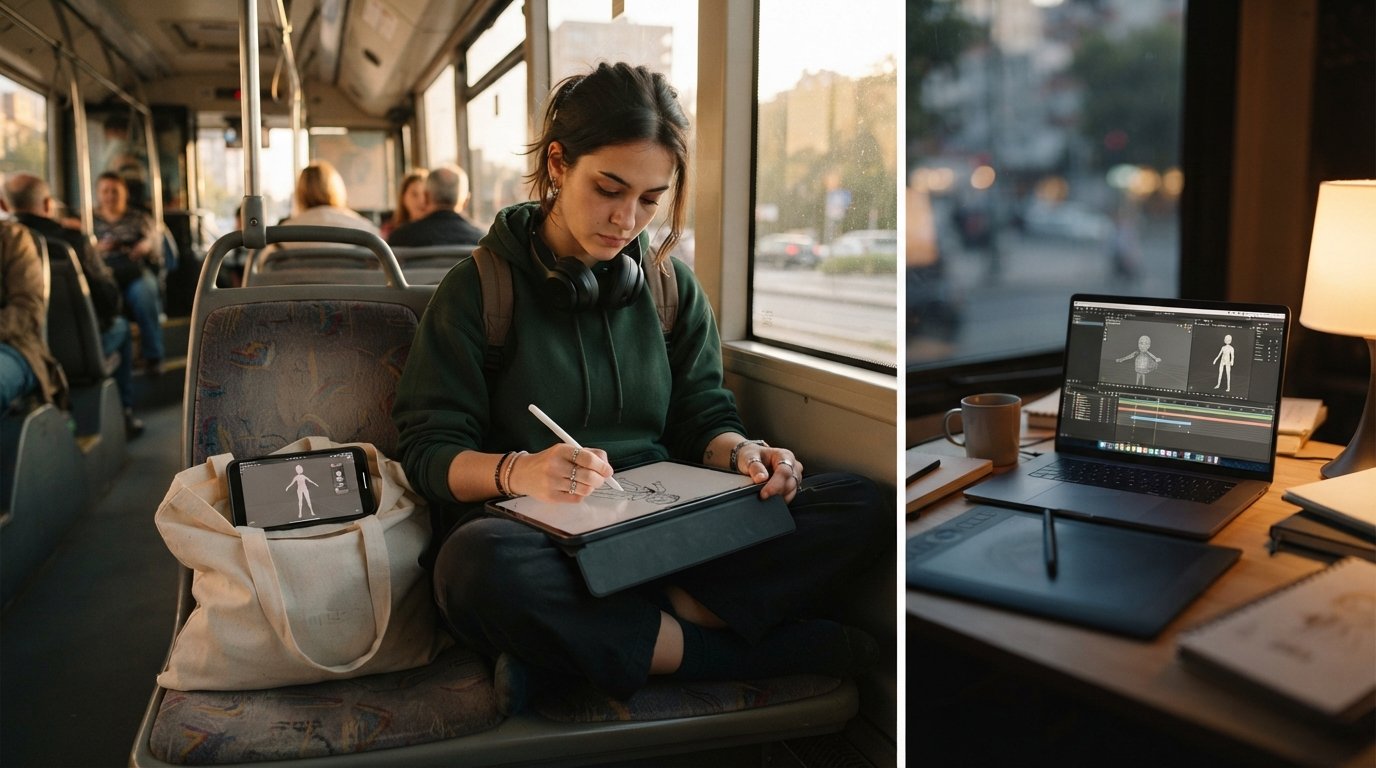
Your phone is not just a distraction anymore. It is a classroom, a studio, and a portfolio in your pocket. If you have ever sketched a character on a bus, watched a tutorial during a lunch break, or wished you could finish a 3D render while waiting at the DMV, you already understand why animation education had to change. The old model required you to sit in a lab for hours, tethered to a desktop workstation. The new model asks a different question: can you learn the full craft of animation through a screen you carry with you? The answer is yes, but only if you choose the right program. This guide will help you read more about explore animation degree programs designed for mobile learners, from how they work to what they cost to how you can tell a serious program from a shallow app.
The Rise of Mobile-First Animation Education
Animation has always been a technology-driven field. From hand-drawn cels to digital compositing, the tools change and the artists adapt. What has not changed, until recently, is the assumption that animation students need a dedicated lab with high-end GPUs, dual monitors, and a licensed copy of every major software suite. Online animation degrees have been around for years, but most early versions simply moved the lab to your home office, which did not help learners who did not have a home office.
Mobile-first animation programs flip that assumption. They are built around the device you already own and the schedule you already keep. Instead of asking you to carve out four-hour blocks in a computer lab, they break projects into smaller, phone-friendly tasks: storyboard a scene during your commute, review a peer's lip-sync work while waiting for coffee, or upload a rough pass of a walk cycle before bed. The pedagogy shifts from long studio sessions to short, repeated, high-feedback practice. For adult learners balancing jobs and families, that shift is not a luxury. It is the difference between finishing a degree and abandoning one.
The technology behind this shift is real. Cloud rendering services now let a mobile device send a scene to a remote server and receive a finished frame, so you do not need a powerful GPU in your pocket. Touch-based animation apps have matured from toys into professional tools, with pressure sensitivity, onion skinning, and layer management that would have seemed impossible on a tablet a decade ago. Learning management systems have also improved, delivering video lectures, peer critique, and instructor feedback in formats that work on small screens. The result is a genuine alternative to the traditional campus animation program, not just a watered-down version of it.
What to Look for in a Mobile-Friendly Animation Degree
Not every online animation program is designed for mobile learners. Some are simply campus programs with a web portal bolted on. The difference matters, because a program that assumes you have a desktop workstation will leave you frustrated if you are trying to complete assignments on a tablet or phone. When you evaluate programs, look for specific evidence that mobile learning is part of the design, not an afterthought.
Start with the curriculum delivery. A mobile-friendly program will offer lectures in short segments, provide downloadable assets that work on mobile apps, and accept assignments in formats that do not require a full desktop suite. It will also be clear about which courses require heavier software and whether remote lab access is provided. The best programs are honest about the limits of mobile learning and offer workarounds, such as cloud workstations or loaner equipment, for courses that need more power.
Next, examine the feedback loop. Animation is a craft learned through iteration, and mobile learners need fast, specific critique. Look for programs that use video feedback, annotated screenshots, and peer review systems that work well on small screens. A program that only offers weekly text comments will slow your progress. A program that lets instructors draw directly on your work and send it back in minutes will accelerate it.
- Curriculum designed for short, frequent practice sessions rather than long lab blocks.
- Cloud-based software access or clear guidance on which apps to use on mobile devices.
- Video-based critique and peer review that works on small screens.
- Explicit policies on equipment loans, remote lab access, and software licenses.
- Portfolio outcomes that demonstrate mobile workflow proficiency alongside traditional skills.
Finally, check the portfolio requirements. A degree is only as valuable as the work you can show at the end. Mobile-friendly programs should help you build a portfolio that demonstrates both artistic skill and technical adaptability. Employers in animation, game design, and advertising increasingly value artists who can work across devices and pipelines. If a program can help you show that flexibility, it is worth a closer look.
How Mobile Animation Programs Actually Work
The structure of a mobile-first animation degree can vary, but most share a common rhythm. Courses are organized into weekly modules, each with a short set of video lessons, a reading or demo, and a project milestone. You might watch a 12-minute lecture on timing and spacing during breakfast, practice a bouncing ball exercise on your tablet during lunch, and upload your work for critique before dinner. The key is that each task is small enough to fit into the gaps of a busy day, but frequent enough to build real skill over time.
Software access is usually handled in one of three ways. Some programs provide cloud-based workstations that you access through a browser, which means your device is just a window into a powerful remote machine. Others partner with software companies to offer discounted or included licenses for mobile-friendly apps. A few provide loaner equipment, such as drawing tablets or mobile workstations, for students who need them. Each approach has tradeoffs, and the right one depends on your budget and your existing devices. The important thing is that the program has a clear answer to the question, what will I actually use to do the work?
Assessment in mobile programs tends to be continuous rather than exam-based. You will submit work weekly, receive critique, revise, and resubmit. This mirrors professional studio practice, where feedback and iteration are constant. It also means you cannot cram your way through a mobile animation degree. The programs reward consistency, which is exactly the habit that working animators need. If you are the kind of learner who thrives on regular small deadlines, you will likely do well. If you prefer to binge a project at the last minute, you may find the rhythm challenging at first, though it is a habit worth building.
Accreditation and Financial Aid for Online Animation Degrees
Accreditation is the foundation of any degree's value. For animation programs, look for institutional accreditation from a recognized agency, such as the regional accreditors that oversee most nonprofit colleges and universities. Programmatic accreditation in art and design is less common but can be a plus if you find it. The key is to avoid programs that lack any recognized accreditation, because those degrees may not be accepted by employers, graduate schools, or financial aid programs.
Financial aid works differently for online programs, but it is available. Accredited institutions can participate in federal student aid programs, which means you may qualify for grants, loans, and work-study opportunities even if you never set foot on campus. Many programs also offer scholarships specifically for adult learners, working professionals, and students in creative fields. It is worth asking each program about its aid options before you apply, because the sticker price is rarely the real price. For a broader look at how to plan for college costs and compare financial aid offers, you can explore college tuition and aid resources that help families and adult learners make informed decisions.
Tuition for online animation degrees varies widely. Public institutions often charge lower rates for online students, sometimes with in-state and out-of-state tiers. Private institutions may charge more but offer larger scholarships. Competency-based programs can be especially affordable because you pay for time rather than credits, which rewards students who can move quickly. As you compare programs, calculate the total cost of attendance, including software, equipment, and any travel for residencies, rather than just the per-credit rate. A program that looks cheap upfront may cost more if it requires you to buy a powerful computer or attend expensive in-person sessions.
Building a Portfolio When You Learn on a Phone or Tablet
One of the biggest concerns about mobile animation programs is whether you can produce professional-quality work on a small device. The honest answer is that it depends on the project. A phone or tablet is excellent for storyboarding, 2D animation, character design, and rough 3D blocking. It is less suited for final rendering, complex rigging, and high-resolution compositing. The best mobile programs teach you to use the right tool for each stage of production, which is a valuable professional skill in itself.
Your portfolio should tell a story about your capabilities. Include a range of work: short 2D animations that show timing and expression, storyboard sequences that demonstrate narrative sense, character designs with turnarounds and expression sheets, and at least one project that shows you can collaborate with a team or work within a pipeline. If you completed a 3D project using cloud rendering or a remote workstation, note that in your portfolio. Employers understand that production is a team effort with specialized tools, and they value artists who can adapt.
Mobile learners also have an advantage in showing process. Because you are working in short sessions, you can document your iterations easily with screenshots and screen recordings. A portfolio that includes process work, such as rough passes, critiques, and revisions, can be more compelling than a polished reel alone. It shows how you think and how you respond to feedback, which are the qualities that get people hired and promoted. If you are considering a bachelor's degree as part of your path, you may want to earn your bachelor's online in New Mexico or a similar program in your state, since many online animation degrees are built on the same flexible delivery model.
Career Outcomes and ROI for Mobile Animation Graduates
Animation is a broad field, and the return on investment depends on the path you choose. Graduates work in film and television, game development, advertising, e-learning, medical illustration, architectural visualization, and user interface design. Some roles are highly creative, while others are more technical. The common thread is that employers value a strong reel, a clear specialty, and the ability to work within a production pipeline. A mobile-friendly degree can prepare you for all three if you choose a program that emphasizes portfolio development and professional practice.
Salary expectations vary by role and region. Entry-level 2D animators and motion graphics artists often earn less than 3D artists and technical directors, but the gap narrows with experience. Freelancers can set their own rates but must manage business costs and irregular income. Staff positions offer stability and benefits but may require relocation or studio work. As you evaluate programs, ask about career services, alumni outcomes, and industry connections. A program with strong employer relationships can be worth more than a slightly cheaper program with no career support.
It is also worth considering how a degree fits into your larger career plan. If you already work in a related field, such as graphic design or marketing, an animation degree can help you move into motion design or creative direction. If you are changing careers, the degree provides structure, feedback, and a credential that can open doors. Either way, the ROI depends on how deliberately you use the program to build skills and connections, not just on the diploma itself.
Is a Mobile Animation Degree Right for You?
Mobile animation degrees are not for everyone. They require self-discipline, comfort with technology, and a willingness to work in short bursts rather than long sessions. They also require you to be honest about your equipment and your environment. If you have a reliable internet connection, a tablet or phone with a stylus, and a quiet place to concentrate for 20 to 30 minutes at a time, you can succeed. If you need the energy of a studio and the immediate presence of classmates, a hybrid or campus program may be a better fit.
For many adult learners, though, the flexibility is transformative. Parents can study after bedtime. Shift workers can study before their shift. People in rural areas can access programs that would otherwise require a move. The result is a more diverse pipeline of animators, which benefits the industry as a whole. If you have been waiting for a program that fits your life rather than asking you to fit your life around it, this is the moment to explore your options.
Start by making a short list of accredited programs that explicitly support mobile learning. Request information, ask about equipment and software, and talk to current students or alumni if you can. Compare costs, including financial aid and scholarships, and calculate the total investment. Then commit to a consistent practice schedule, even if it is just 30 minutes a day. The craft of animation is built one frame at a time, and a mobile degree can help you build it without putting the rest of your life on hold.