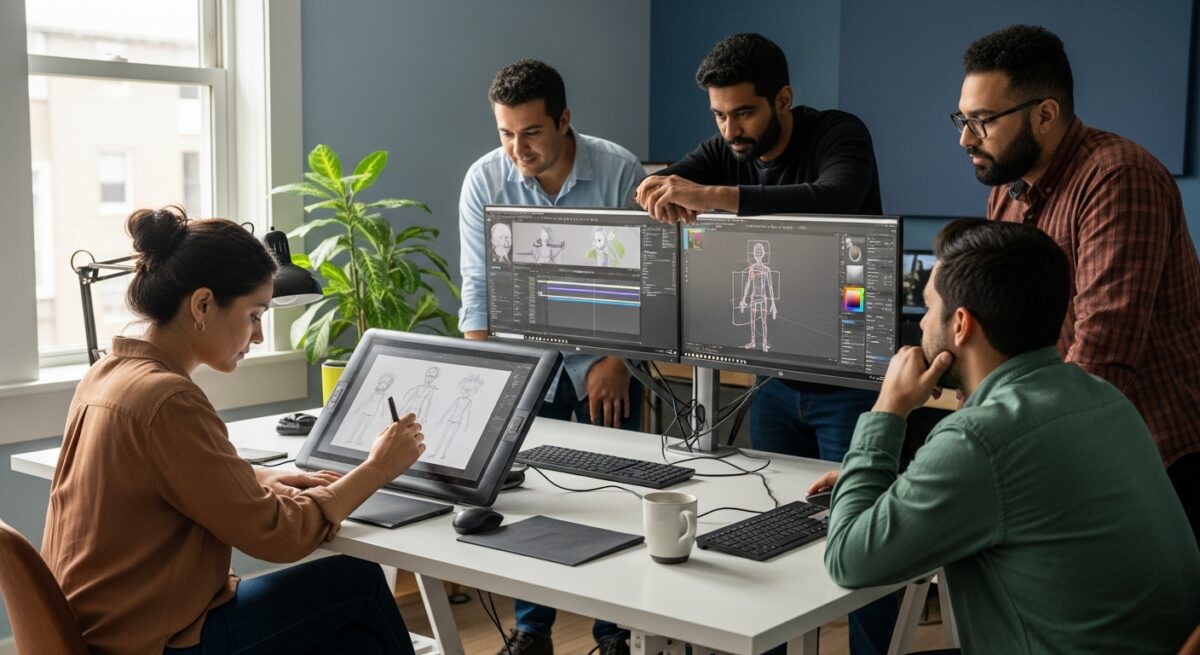
Animation is no longer confined to big studio campuses or expensive art schools in Los Angeles or New York. The rise of fully online degree programs has opened the door for adult learners, career changers, and working professionals to earn a respected animation degree from anywhere with a solid internet connection. Whether you dream of creating characters for video games, crafting visual effects for films, or building motion graphics for global brands, the best online animation degree programs combine rigorous artistic training with the flexibility you need to keep your current job or family commitments. This guide cuts through the noise to help you identify programs that offer real value, strong faculty, and outcomes that matter, all while avoiding the pitfalls of unaccredited or overpriced options.
Choosing an animation degree online is a significant investment of time and money, so you need a clear framework for evaluation. The landscape is crowded with options, from fully online bachelor’s degrees to specialized master’s programs. Before you start comparing software packages or campus visits, you need to understand what separates a top-tier program from a simple collection of tutorial videos. In this article, we will walk you through the key criteria for selecting a program, highlight standout options across different levels, and answer the most common questions about online animation education. By the end, you will have a clear action plan for finding a program that aligns with your career goals and budget.
What Makes an Online Animation Degree Program Worth It?
The value of an online animation degree is not measured by the name of the university alone. It is determined by the curriculum’s depth, the quality of student work produced, the industry connections of the faculty, and the strength of the alumni network. A degree that simply teaches you how to use software is a short-term skill course, not a comprehensive education. The best programs build your artistic foundation, teach you storytelling, and push you to develop a professional demo reel that can open doors in a competitive industry.
Accreditation is the first filter. A regionally accredited university ensures that your credits transfer and that your degree is respected by employers and graduate schools. Programmatic accreditation, such as from the National Association of Schools of Art and Design (NASAD), adds another layer of quality assurance. Always verify that the online animation degree program you are considering is housed within an accredited institution. Without this, your degree may not be recognized, and you may not be eligible for federal financial aid. For a deeper dive into vetting programs, our strategic guide to shortlisting online degree programs offers a step-by-step framework that applies directly to animation.
Core Curriculum and Specializations
Animation is a broad field. Some students want to specialize in 3D modeling and character rigging, while others are drawn to 2D hand-drawn techniques or visual effects. The best online animation degree programs offer a structured core that covers the fundamentals of animation principles, life drawing, color theory, and storytelling. From there, you should have the option to choose an elective track or a concentration that aligns with your interests. Look for programs that teach industry-standard tools like Maya, Blender, Toon Boom Harmony, and After Effects, but also require courses in art history, film theory, and narrative structure. These courses separate a degree from a vocational certificate.
Another critical component is the capstone or thesis project. A strong program will have you produce a short animated film or a professional-quality demo reel that you can present to employers. This project should be mentored by faculty who have real industry experience. Check the faculty bios: do they list credits on major films, games, or television series? Faculty who are active in the industry bring current knowledge and networking opportunities that can be invaluable when you start your job search.
Top Online Animation Degree Programs to Consider
While there are many online animation degrees, a few institutions consistently rise to the top due to their reputation, curriculum, and student outcomes. These programs are designed for students who want a comprehensive education that is respected by employers. Here is a closer look at some of the leading options, but remember that the best program for you depends on your specific goals, budget, and learning style.
Many of these programs are offered by universities that also have strong on-campus animation programs, which means you benefit from the same curriculum and faculty expertise. The difference is that you can complete the coursework entirely online, often with asynchronous lectures and project-based assignments that fit around your schedule. This is particularly appealing for working professionals who cannot relocate for school.
- Full Sail University (Online): Known for its fast-paced, project-based curriculum, Full Sail offers a Bachelor of Science in Computer Animation and a Master of Fine Arts in Computer Animation. The online format mirrors the on-campus intensity, with a focus on production pipelines and portfolio development.
- Savannah College of Art and Design (SCADnow): SCAD’s online degree programs, known as SCADnow, offer a highly rigorous education in animation and motion media. The program emphasizes both technical skill and creative thinking, with access to the same renowned faculty and career services as on-campus students.
- Academy of Art University (Online): With a strong reputation for its animation and visual effects programs, the Academy of Art offers online associate, bachelor’s, and master’s degrees. The curriculum is heavily focused on portfolio development, and instructors are working professionals in the industry.
- Rochester Institute of Technology (RIT): RIT’s online Master of Fine Arts in Visual Communication Design offers a specialized track in animation and interactive media. This program is ideal for students who already have a bachelor’s degree and want to advance their skills in a focused, research-driven environment.
- University of Florida (Online): The University of Florida offers a fully online Master of Arts in Digital Arts and Sciences with a specialization in 3D animation and visualization. This program is particularly strong for students interested in the intersection of art, technology, and science, and it is taught by faculty from the Digital Worlds Institute.
Each of these programs has a unique identity. Full Sail and the Academy of Art are more vocational, focusing heavily on production skills and industry readiness. On the other hand, RIT and the University of Florida are more academically oriented, which may be a better fit if you are considering a career in research or academia. SCAD strikes a balance between creative exploration and professional preparation. You should request detailed curriculum sheets and sample student work from each program to see which one resonates with your personal aesthetic and career aspirations.
How to Choose the Right Animation Degree Online for Your Career
Your career goals should drive your choice of an online animation degree. If you want to be a character animator at a major studio like Pixar or DreamWorks, you need a program with a strong emphasis on acting, body mechanics, and character performance. If you are more interested in visual effects for live-action films, look for programs that offer courses in compositing, particles, and dynamics. And if you want to work in game design, your program should include real-time animation, engine integration (like Unreal or Unity), and interactive storytelling.
It is also important to consider the level of the degree. An associate’s degree or a certificate can get you into the industry quickly, but a bachelor’s degree is often the minimum requirement for many studio positions and is essential for career advancement. A master’s degree can be valuable for leadership roles, teaching positions, or specialized technical roles. The best online animation degree programs at the bachelor’s level are designed to take you from a beginner to a professional in about four years, while master’s programs typically require two to three years of concentrated study.
Cost and financial aid are also critical factors. Public universities often offer lower tuition for in-state students, but many online programs offer a flat rate regardless of residency. You should also investigate scholarships specifically for animation students, which are offered by professional organizations like the Animation Guild and various software companies. Our site provides comprehensive information on financial aid and tuition comparisons, which can help you estimate the return on investment for different programs. For example, an animation degree from a mid-tier public university might cost $30,000 in total, while a private art school could cost $150,000. The higher price tag does not always guarantee a better job, so you need to weigh the cost against the program’s alumni outcomes.
What to Expect from an Online Animation Curriculum
The structure of an online animation degree program is different from a traditional classroom experience, but it can be just as demanding. Most programs are asynchronous, meaning you watch pre-recorded lectures and complete assignments on your own schedule, but you still have deadlines and weekly critiques. Live sessions are often held for discussions, guest lectures, and portfolio reviews. You should expect to spend at least 20 to 30 hours per week on coursework, including time for drawing, modeling, and rendering.

One of the biggest challenges of learning animation online is the lack of immediate feedback. In a physical classroom, you can get a quick critique from your instructor or peers. Online programs compensate for this with video submissions, discussion forums, and one-on-one virtual meetings with faculty. The best programs have robust feedback loops where you submit work for critique at multiple stages, not just at the final deadline. This iterative process is essential for developing your skills and preventing you from going down the wrong path for weeks.
You will also need to be self-motivated and disciplined. Animation is a time-intensive craft, and it is easy to fall behind if you are not managing your time well. Successful online students often create a dedicated workspace, set a regular study schedule, and actively participate in online communities. The top programs also provide access to digital resources, such as a library of motion capture data, high-end rendering farms, and software licenses that are included in your tuition. These resources can save you hundreds of dollars per year and give you access to tools that you might not otherwise be able to afford.
Accreditation, Financial Aid, and Transfer Credits
Accreditation affects every aspect of your education, from the financial aid you can receive to the way employers view your degree. For online animation degrees, the most important accreditation is institutional, which is granted by regional accrediting bodies such as the Higher Learning Commission or the WASC Senior College and University Commission. You can verify a school’s accreditation status through the U.S. Department of Education’s database. If a program claims to be “nationally accredited” but is not recognized by the department, be extremely cautious, as credits may not transfer and employers may not recognize the credential.
Financial aid for online animation degrees is available through the Free Application for Federal Student Aid (FAFSA). Many online students are surprised to learn that they can receive federal grants and loans even if they are enrolled part-time. In addition to federal aid, many universities offer merit-based scholarships for online students with strong portfolios or high GPAs. You should also check if your employer offers tuition assistance, as many companies are willing to invest in your education if it is related to your job. Finally, the GI Bill can be used for online programs if you are a veteran, and that benefit can cover a significant portion of your tuition.
Transfer credits are another crucial consideration. If you have previously attended college, you may be able to transfer earned credits to a new online program, which can reduce your total cost and time to completion. However, each institution has its own transfer policies, and not all credits will be accepted, especially if they are from a non-accredited institution. Contact the admissions office of each program you are considering and ask about their transfer credit evaluation process. You can also use our college degree planning resources to help you understand how to maximize your transfer credits and minimize your expenses.
Frequently Asked Questions
Can you really learn animation online and find a job?
Yes, you can absolutely learn animation online and secure a job in the industry. Many studios have embraced remote work, and they care more about your demo reel and your skills than where you studied. The best online animation degree programs provide the structure and mentorship you need to build a professional portfolio. Graduates from these programs have gone on to work at major studios, game companies, and advertising agencies. The key is to be proactive about networking, participating in online communities, and producing high-quality work that demonstrates your abilities.
How long does it take to complete an online animation degree?
An online bachelor’s degree in animation typically takes four years of full-time study, but many programs offer accelerated tracks that allow you to finish in three years. If you are working full-time, you may choose to study part-time, which can extend the timeline to five or six years. Master’s programs usually take two to three years to complete, and some offer one-year intensive options. The length of the program also depends on the number of credits required and whether you transfer in any credits from previous coursework.
What software do I need for an online animation program?
Most programs require you to have access to industry-standard software. The most commonly used tools are Autodesk Maya for 3D modeling and animation, Toon Boom Harmony for 2D animation, and Adobe Creative Cloud for compositing and effects. Many schools provide free student licenses for these programs, so you do not need to purchase them separately. You will also need a sufficiently powerful computer, which typically means a desktop or laptop with a dedicated graphics card, at least 16GB of RAM, and a solid-state drive (SSD) for fast rendering. Check the program’s technology requirements before you enroll to ensure that your equipment is adequate.
Are online animation degrees accredited?
Many online animation degrees are offered by regionally accredited universities, which is the gold standard in higher education. Some programs also hold programmatic accreditation from NASAD. However, there are also many for-profit institutions that tout “national accreditation,” which is generally less respected and may not be eligible for federal financial aid. Always verify the accreditation status of any online animation degree program before applying. You can do this by visiting the U.S. Department of Education’s website and searching for the school’s name.
This is where a resource like DegreesOnline.Education becomes invaluable. We help you filter out the noise and focus on accredited programs that have a track record of success. Our detailed program reviews and cost comparisons are designed to save you time and protect you from making an expensive mistake. You can use our site to read about the experiences of other students, learn about tuition rates, and access direct links to school admissions pages so you can get the most current information.
Your Next Step Toward an Animation Career
Investing in an online animation degree is a serious commitment, but the potential rewards are significant. The animation industry is growing, with increasing demand for content in streaming, gaming, advertising, and virtual reality. By choosing one of the best online animation degree programs, you are positioning yourself at the forefront of this exciting field. Remember to prioritize accreditation, a comprehensive curriculum, and a strong portfolio component. Use the resources available on this site, including our program comparisons and financial aid guides, to make an informed decision.
Start by shortlisting three to five programs that align with your career goals and budget. Reach out to their admissions departments, request more information, and talk to current students or alumni if possible. Then, take the leap. The flexibility of an online animation degree means you do not have to put your life on hold to pursue your passion. With dedication and the right program, you can build a fulfilling career as a professional animator, all from the comfort of your own home studio.