
Biola University Health Sciences Bachelor's Degree Guide
Explore Biola University's in-person Health Sciences bachelor's degree: curriculum, costs, career paths, and how to decide if this four-year program fits your goals.

By Ethan Green
Choosing a bachelor's degree in health services, allied health, or general health sciences is a strategic move for students who want a broad, flexible foundation for careers in healthcare, wellness, or health administration. At Biola University, this degree path is offered as an in-person, four-year program that blends rigorous academics with a faith-based liberal arts education. For adult learners and career changers comparing options, understanding exactly what this program entails, how it compares to online alternatives, and what outcomes it supports is essential. This guide breaks down the curriculum, admission process, costs, and career pathways so you can decide whether Biola's residential health sciences track fits your goals.
What the Health Services/Allied Health/Health Sciences General Bachelor's Degree Covers at Biola
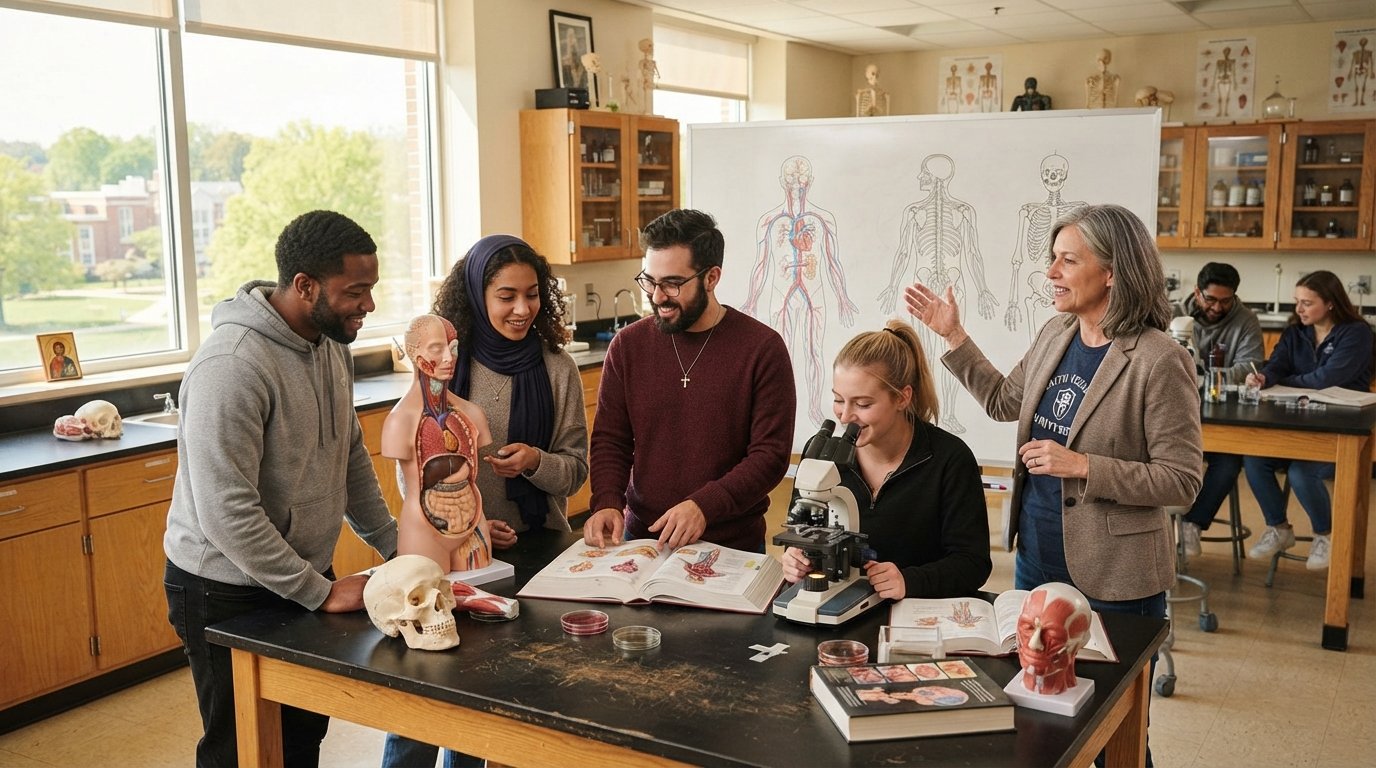
Biola University's general health sciences bachelor's degree is designed for students who want a comprehensive understanding of health, disease, and healthcare delivery without committing to a single clinical specialty. The program typically requires about 120 semester units and can be completed in four years of full-time, in-person study. Coursework spans biology, chemistry, anatomy, physiology, nutrition, public health, and health policy, giving you a strong scientific base while also exploring the social and ethical dimensions of healthcare.
Because the degree is general rather than specialized, it is often chosen by students who plan to pursue graduate study in medicine, nursing, physical therapy, occupational therapy, or public health, as well as those who want to enter healthcare administration, health education, or community health work directly after graduation. At Biola, the curriculum is grounded in a Christian worldview, and students are encouraged to integrate faith with their understanding of health and service. This distinctive approach can be appealing if you value a learning environment that emphasizes ethics, compassion, and whole-person care.
The residential format means you will attend classes on Biola's campus in La Mirada, California, giving you access to labs, faculty office hours, student organizations, and clinical or community volunteer opportunities in the region. If you are comparing this program with online options, our guide to your bachelor's degree in health science guide can help you weigh flexibility against the hands-on experience a residential program provides.
Curriculum and Coursework: What to Expect Each Year
Biola's health sciences degree follows a structured sequence that builds from foundational science courses in the first two years to more advanced and applied topics later. While the exact course list can vary by catalog year, the general progression looks like this:
- Year 1: General biology, general chemistry, English composition, introduction to psychology, and Bible or theology requirements.
- Year 2: Anatomy and physiology, microbiology, statistics, nutrition, and additional general education courses in humanities and social sciences.
- Year 3: Public health, health policy, pathophysiology, ethics in healthcare, and electives that align with your career interests.
- Year 4: Advanced health sciences electives, a capstone or research project, internship or practicum experience, and remaining general education requirements.
This sequence matters because it helps you prepare for graduate school prerequisites while still leaving room for exploration. For example, if you are considering medical school, you will need to complete additional chemistry and physics courses, often as electives. If you are leaning toward health administration, you might choose electives in business, management, or health economics. Meeting with an academic advisor early and often is the best way to customize the degree without delaying graduation.
The in-person format also means you will have regular access to laboratory sections, group projects, and faculty mentorship, which can be especially valuable for students who learn best through hands-on experiences and direct interaction. Biola's faculty typically include practitioners and researchers who can advise on internships and graduate school applications.
Admission Requirements and Application Process
Admission to Biola University is competitive but accessible for students who meet the academic and personal criteria. The health sciences program does not usually require a separate application beyond the university's undergraduate admission, though you will indicate your intended major. Key requirements typically include:
- High school diploma or equivalent with a college-preparatory curriculum.
- Minimum GPA (often around 3.0 or higher, though holistic review is common).
- SAT or ACT scores (Biola may be test-optional for some applicants; check current policy).
- Personal essay and letters of recommendation.
- Evidence of English proficiency for international applicants.
The application process usually involves submitting the online application, official transcripts, test scores if applicable, and a personal statement that reflects your interest in health sciences and your alignment with Biola's mission. Deadlines vary, but early action and regular decision rounds are typical. Because the program is in-person and cohort-based, it is wise to apply well before the priority deadline to maximize your chances for scholarships and housing.
Transfer students can also apply, and Biola generally evaluates previous coursework for equivalency. If you have completed science prerequisites at a community college, you may be able to transfer those credits, but you should confirm with an admissions counselor. For adult learners considering a return to school, the residential format may require relocation or a commute, so planning ahead is essential.
Costs, Financial Aid, and Return on Investment
Tuition and fees at private universities like Biola are higher than at public institutions, and the health sciences program is no exception. For the 2026-2027 academic year, you should expect tuition in the range of $40,000 to $45,000 per year, plus room, board, books, and personal expenses. However, the sticker price is rarely what students actually pay. Biola offers merit scholarships, need-based aid, and church or ministry discounts, and many students receive a combination of grants and loans.
To reduce out-of-pocket costs, students should explore external scholarships and financial aid resources early. Scholarship databases such as Scholarship.Education can help you find awards based on academic merit, community service, faith affiliation, and intended healthcare careers. Filing the FAFSA is also critical, even if you think you will not qualify for need-based aid, because many institutional scholarships require it.
When evaluating return on investment, consider that a general health sciences degree is often a stepping stone to graduate or professional school rather than a terminal credential. The ROI depends heavily on your next step. If you become a physician assistant, nurse practitioner, or physical therapist, the long-term earnings can be substantial. If you enter health administration or community health, salaries are moderate but stable. The key is to plan your post-graduation path early and use internships and shadowing to confirm your direction.
Career Paths and Graduate School Options
Graduates with a general health sciences degree from Biola pursue a wide range of careers. Some enter the workforce immediately in roles such as health educator, community health worker, medical scribe, patient coordinator, or public health assistant. Others use the degree as a foundation for graduate study in medicine, dentistry, pharmacy, nursing, public health, or healthcare administration. The breadth of the degree is its strength: it keeps multiple doors open while giving you a scientific and ethical framework for whatever specialty you choose.
Common career paths include:
- Clinical careers: Medical doctor, physician assistant, nurse practitioner, physical therapist, occupational therapist, or pharmacist (all require graduate or professional school).
- Allied health: Medical technologist, radiologic technologist, respiratory therapist, or nutritionist (some require additional certification or associate-level training).
- Health administration and policy: Healthcare administrator, health policy analyst, or quality improvement coordinator.
- Community and public health: Health educator, community health worker, or public health program coordinator.
Biola's location in Southern California gives students access to a large healthcare job market, including hospitals, clinics, public health departments, and nonprofit organizations. Internships and volunteer experiences are strongly encouraged, and the university's career services office can help with resume building, interview preparation, and networking. If you are considering an online master's degree later, many programs accept a general health sciences bachelor's degree as long as you meet prerequisite coursework requirements.
In-Person vs. Online: Is Biola's Residential Program Right for You?
The decision between an in-person program like Biola's and an online health sciences degree often comes down to your learning style, life circumstances, and career goals. In-person programs offer structured schedules, face-to-face interaction with professors, lab access, and a built-in community of peers. They can be ideal for traditional college-age students or those who thrive in a campus environment and want to take advantage of research and internship opportunities.
Online programs, by contrast, offer flexibility for working adults, parents, and those who cannot relocate. They may be more affordable and allow you to study at your own pace, but they often lack hands-on lab work and may require you to arrange your own clinical or internship experiences. If you are comparing options, consider factors such as accreditation, cost, time to completion, and the availability of support services. Biola's residential program is regionally accredited, which is important for graduate school and financial aid eligibility.
For students who value a faith-integrated education and a traditional campus experience, Biola's in-person health sciences degree can be a strong fit. For those who need to balance work and family, an online program may be more practical. Either way, the key is to choose an accredited program that aligns with your long-term goals and to verify that it meets the prerequisites for any graduate program you are considering.
Accreditation and Transferability
Biola University is accredited by the WASC Senior College and University Commission, which is a regional accrediting body recognized by the U.S. Department of Education. Regional accreditation is generally the gold standard for transferability and graduate school admission. The health sciences program itself does not hold specialized accreditation (unlike nursing or allied health clinical programs), but the general degree is designed to prepare students for further study, and graduates have successfully gained admission to medical, dental, pharmacy, and physical therapy programs.
If you are transferring credits from another institution, Biola will evaluate your transcripts on a course-by-course basis. Science courses with labs are more likely to transfer if they were completed at an accredited institution and are comparable in content. You should keep syllabi and course descriptions for any courses you want to transfer, as these can help expedite the review. It is also wise to speak with an admissions counselor before enrolling in prerequisite courses elsewhere to ensure they will count toward your Biola degree.
How to Decide If This Program Fits Your Goals
Choosing a degree is a personal decision, and there is no single right answer for everyone. To determine whether Biola's health services/allied health/health sciences general bachelor's degree is right for you, start by clarifying your end goal. Are you aiming for medical school or another professional program? If so, check the prerequisite requirements of the schools you are targeting and compare them with Biola's curriculum. Are you looking to enter the workforce quickly? Consider whether a more specialized allied health program might get you there faster. Are you seeking a faith-based community and a traditional campus experience? If so, Biola's residential format may be a strong fit.
Next, evaluate your financial situation. Use Biola's net price calculator and scholarship resources to estimate your actual cost. Speak with current students or alumni to get a sense of the academic rigor, faculty support, and campus culture. Visit the campus if possible, or attend a virtual information session. Finally, consider your timeline and flexibility. A four-year in-person program requires a significant commitment, but it also offers structure and support that can help you succeed.
Whatever you decide, remember that a health sciences degree is a versatile foundation. Whether you pursue graduate study or enter the workforce, the critical thinking, communication, and scientific literacy you gain will serve you well in a rapidly changing healthcare landscape.
Biola University's in-person health sciences bachelor's degree offers a rigorous, faith-integrated education that prepares students for a variety of healthcare careers and graduate programs. By understanding the curriculum, costs, and career pathways, you can make an informed decision that aligns with your personal and professional goals. Take the next step by exploring financial aid options, speaking with admissions counselors, and mapping out your four-year plan.