
Central Community College Lab Technician Degree Guide
Earn your Clinical/Medical Laboratory Technician Associate's degree, usually 2 years In-person at Central Community College, and start a stable healthcare career. Call (877)-218-7081.
By James Morgan
Behind every accurate diagnosis and every safe blood transfusion stands a trained professional most patients never meet: the clinical laboratory technician. If you are looking for a hands-on healthcare career with strong demand, minimal student debt, and a fast track into the workforce, the Clinical/Medical Laboratory Technician Associate's degree, usually 2 years In-person at Central Community College, deserves a close look. This program combines rigorous science coursework with extensive bench experience, preparing graduates to perform the tests that physicians rely on to detect disease, monitor treatment, and save lives. In this guide, we break down what the degree involves, how to get admitted, what it costs, and where it can take your career.
What a Clinical/Medical Laboratory Technician Actually Does
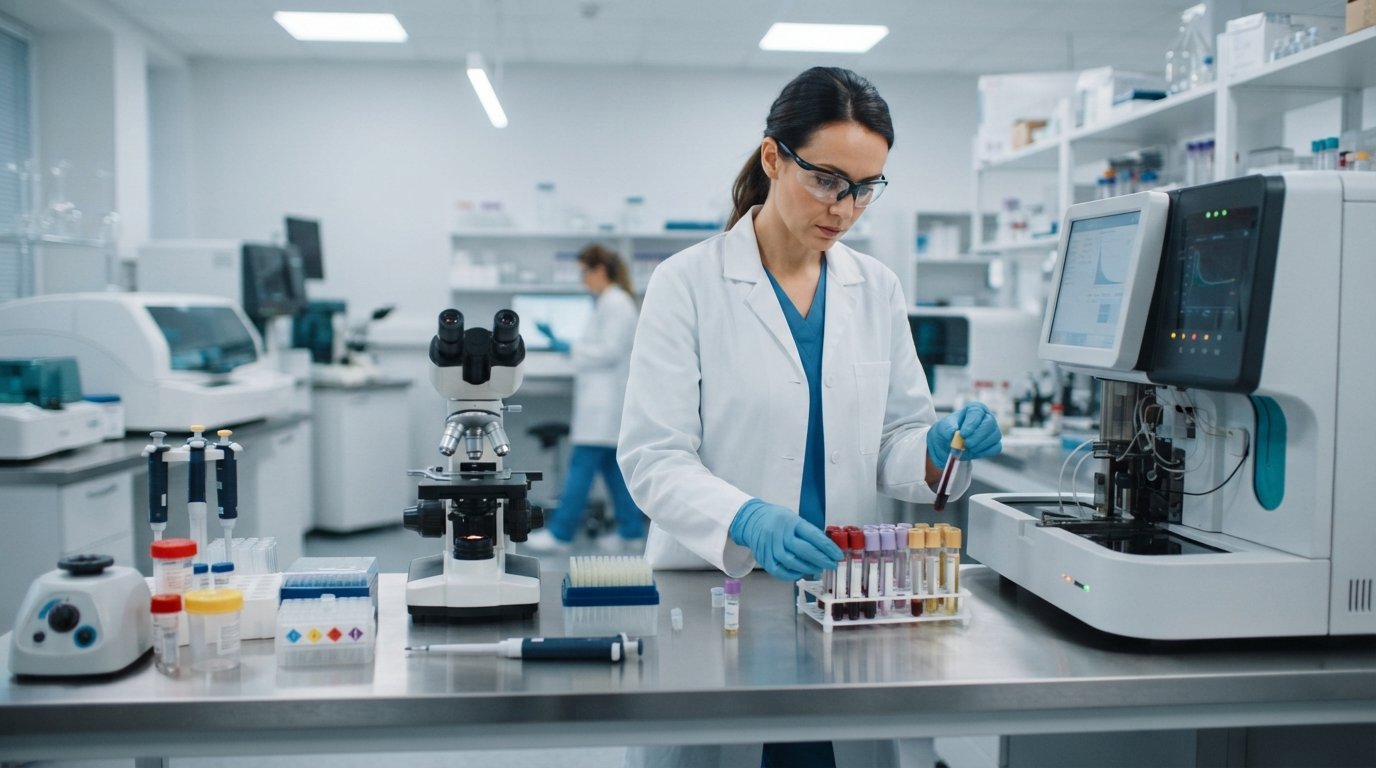
Medical laboratory technicians, often called MLTs, work in hospital labs, reference laboratories, physician offices, and public health agencies. They collect and process specimens, operate analyzers, perform manual testing, and report results that guide clinical decisions. A typical shift might include running chemistry panels, crossmatching blood for surgery, identifying bacteria in a culture, and confirming that a critical potassium value is accurate before it reaches the emergency department.
The role sits between the phlebotomist who draws the blood and the medical laboratory scientist who designs and oversees complex testing. MLTs perform moderate complexity testing independently and assist with high complexity work under supervision. Because hospitals run around the clock, evening, night, and weekend shifts are common, and many technicians use that schedule flexibility to pursue further education later.
Accuracy matters enormously. A mislabeled specimen or a miscalculated dilution can lead to a wrong diagnosis. That is why accredited programs emphasize quality control, safety protocols, and professional ethics alongside technical skills. Employers also value clear communication, since technicians frequently consult with nurses and physicians about specimen requirements and turnaround times.
Why the Central Community College Program Stands Out
Central Community College operates multiple campuses across central Nebraska, and its clinical laboratory technician program is designed around the realities of regional healthcare employers. The Clinical/Medical Laboratory Technician Associate's degree, usually 2 years In-person at Central Community College, blends general education courses with specialized laboratory science classes and a supervised clinical practicum in affiliated hospitals and clinics.
The in-person format is a deliberate strength. Laboratory work requires pipetting, microscopy, instrument operation, and sterile technique, skills that are difficult to master through a screen. Students practice in campus labs equipped with the same categories of analyzers and equipment used in working laboratories, then apply those skills during clinical rotations. This hands-on progression builds confidence and makes graduates productive quickly after hire.
Small cohort sizes mean instructors know students by name and can provide individualized coaching. Faculty members typically bring years of bench experience, so lessons include practical tips about troubleshooting instruments, managing workflow during busy periods, and communicating with other departments. The program also maintains articulation agreements with four-year institutions, giving graduates a clear pathway to a bachelor's degree in medical laboratory science if they later want to advance.
For adult learners balancing jobs and family obligations, the program's structure is worth discussing with an advisor. While the degree is in-person by design, some general education courses may be available in hybrid or evening formats, and clinical placements are arranged with local facilities to reduce travel burdens where possible.
Admission Requirements and How to Apply
Admission to allied health programs is typically more selective than general college admission because clinical seats and laboratory space are limited. Prospective students should plan ahead and confirm current requirements with Central Community College, since details such as test scores and deadlines can change from year to year.
Most applicants complete a college application, submit transcripts, and take a placement assessment in math, reading, and writing. Because laboratory science builds on chemistry and biology, strong preparation in those subjects helps. Some programs require a minimum GPA or completion of prerequisite courses such as anatomy and physiology before entering the technical phase of the degree.
Here is a practical sequence that most successful applicants follow:
- Apply to the college and submit official high school and any prior college transcripts.
- Complete placement testing and any developmental coursework in math or English.
- Meet with an academic advisor to map prerequisite courses and application deadlines.
- Complete required prerequisites, such as chemistry, biology, and medical terminology, with competitive grades.
- Submit the selective admission application for the laboratory technician program and prepare for a background check and health requirements.
After admission, students should expect additional compliance steps before clinical rotations, including immunizations, CPR certification, drug screening, and criminal background checks. These are standard across healthcare education and are required by clinical sites rather than by the college alone. Budgeting time and money for these items early prevents last-minute surprises.
What You Will Study: Curriculum Overview
The degree typically requires around 60 to 70 credits, split between general education and technical courses. General education includes English composition, college algebra or statistics, psychology or sociology, and humanities electives. These courses sharpen the communication and critical thinking skills that employers expect in healthcare settings.
The technical core covers the major laboratory disciplines. Students usually take courses in clinical chemistry, hematology, microbiology, immunohematology (blood banking), urinalysis, and immunology. Each course pairs lecture with laboratory sessions where students perform the same types of testing they will encounter in clinical practice. A course in laboratory operations covers quality assurance, safety, and regulatory standards.
Expect the workload to be demanding. Laboratory science requires memorization of normal values, understanding of physiological processes, and the ability to follow precise procedures under time pressure. Study groups, open lab hours, and instructor office hours are valuable resources. Students who treat the program like a full-time job, arriving prepared and practicing techniques until they become routine, tend to thrive.
The capstone experience is the clinical practicum, where students rotate through hospital departments under the supervision of working technologists. This is where classroom knowledge becomes professional judgment. Many students receive job offers from their clinical sites before graduation, which is one reason the in-person format at Central Community College pays dividends.
Costs, Financial Aid, and Return on Investment
Community college tuition is among the lowest in higher education, and Nebraska residents benefit from in-state rates at Central Community College. A two-year associate degree in laboratory technology typically costs a fraction of a four-year bachelor's degree, especially when students live at home or work part-time while enrolled. Additional costs include books, uniforms, lab fees, certification exam fees, and clinical compliance items.
Financial aid options include federal Pell Grants, Nebraska state grant programs, institutional scholarships, and employer tuition assistance for students already working in healthcare. The college financial aid office can help students complete the FAFSA and identify work-study opportunities. Because laboratory technician graduates often enter the workforce after two years, many finish with little or no debt, which dramatically improves the return on investment compared with longer degree paths.
Salary varies by region and setting, but medical laboratory technicians generally earn a solid middle-class income with opportunities for shift differentials and overtime. Hospitals in rural areas sometimes offer signing bonuses or relocation assistance because demand outpaces supply. Students who later complete a bachelor's degree and become medical laboratory scientists can expect higher pay and more responsibility. For a broader look at how associate degrees translate into career earnings, our guide to associate degree in management programs illustrates similar two-year pathways in another field. Families comparing total college costs across institutions can also use the planning resources at CollegeAndTuition to estimate expenses and explore scholarship options.
Certification and Career Outcomes
Graduates of accredited clinical laboratory technician programs are eligible to sit for national certification exams, such as those offered by the American Society for Clinical Pathology or the American Medical Technologists. While certification requirements vary by state and employer, many hospitals prefer or require it. Passing a certification exam signals that a technician has met a recognized standard of competence.
Career settings include hospital laboratories, clinic laboratories, blood banks, public health departments, veterinary reference labs, and industrial or research facilities. With experience, technicians can move into lead technician roles, quality control positions, or laboratory information systems support. Some pursue specialized certifications in areas like hematology or microbiology.
Job outlook is favorable. An aging population, advances in diagnostic testing, and retirements among current laboratory staff keep demand steady. The Bureau of Labor Statistics projects continued need for clinical laboratory workers, and rural areas often struggle to fill openings. For career changers, this means a two-year commitment can lead to a stable, in-demand position with clear advancement potential.
The profession also offers a sense of purpose. Laboratory results inform roughly most clinical decisions, from diagnosing diabetes to matching organ donors. Technicians who enjoy science, precision, and behind-the-scenes contributions to patient care often find the work deeply satisfying.
Is This Program Right for You?
The Clinical/Medical Laboratory Technician Associate's degree, usually 2 years In-person at Central Community College, suits students who enjoy science, prefer hands-on work over desk jobs, and want to enter healthcare without the time and cost of medical school or nursing programs. It also fits working adults who can commit to daytime classes and clinical rotations for two years in exchange for a credential that opens doors immediately.
Before enrolling, reflect on a few practical questions. Are you comfortable with blood, bodily fluids, and infectious specimens? Can you handle repetitive precision work while maintaining focus? Are you willing to work evenings, weekends, or holidays early in your career? If the answers are yes, the field offers stability and growth.
Prospective students should visit campus, meet faculty, and ask about pass rates on certification exams and job placement rates for recent graduates. These data points reveal how well a program prepares students for the realities of the workplace. It is also wise to shadow a working technician for a day to confirm the daily rhythm matches your expectations.
Finally, plan the financial and personal logistics. Confirm tuition, fees, and aid options with the financial aid office, arrange transportation for clinical rotations, and line up childcare or work flexibility for the practicum semester. A clear plan reduces stress and lets you focus on mastering the science.
Healthcare needs skilled laboratory professionals more than ever, and a two-year associate degree remains one of the fastest, most affordable routes into the field. With hands-on training, strong employer connections, and a clear path to certification and advancement, the program at Central Community College is a practical investment in a meaningful career.