
Chattahoochee Tech Radio and TV Certificate: In-Person Training
The Radio and Television Certificate, 1 year to less than 2 years In-person at Chattahoochee Technical College builds studio skills fast for entry-level media jobs.

By Ethan Green
If you want to work in broadcasting but are not ready to commit to a full degree, a short, hands-on credential can be the smartest first step. The Radio and Television Certificate, 1 year to less than 2 years In-person at Chattahoochee Technical College, is designed for exactly that kind of learner: someone who wants practical studio skills, a fast entry into the workforce, and a credential that employers in Georgia recognize. This program sits at the intersection of affordable career training and real production experience, and it can serve as either a launchpad into entry-level media jobs or a bridge toward further college study.
This article walks through what the certificate covers, who it is for, how the in-person format works in your favor, what it costs and how to pay for it, and how to decide whether it fits your career plan. Along the way, we will connect the dots to broader questions about degree pathways, transfer options, and financial planning, because the smartest students treat a certificate as one piece of a larger strategy rather than an isolated decision.
What the Radio and Television Certificate at Chattahoochee Technical College Actually Is
Chattahoochee Technical College, often shortened to CTC, is a public technical college in Georgia with multiple campuses serving the northwest metro Atlanta region. Its radio and television certificate is a stand-alone credential classified as a program of 1 year to less than 2 years in length. That length matters: it is long enough to include real production coursework and lab time, but short enough that you can finish and start applying for jobs without putting the rest of your life on hold for four years.
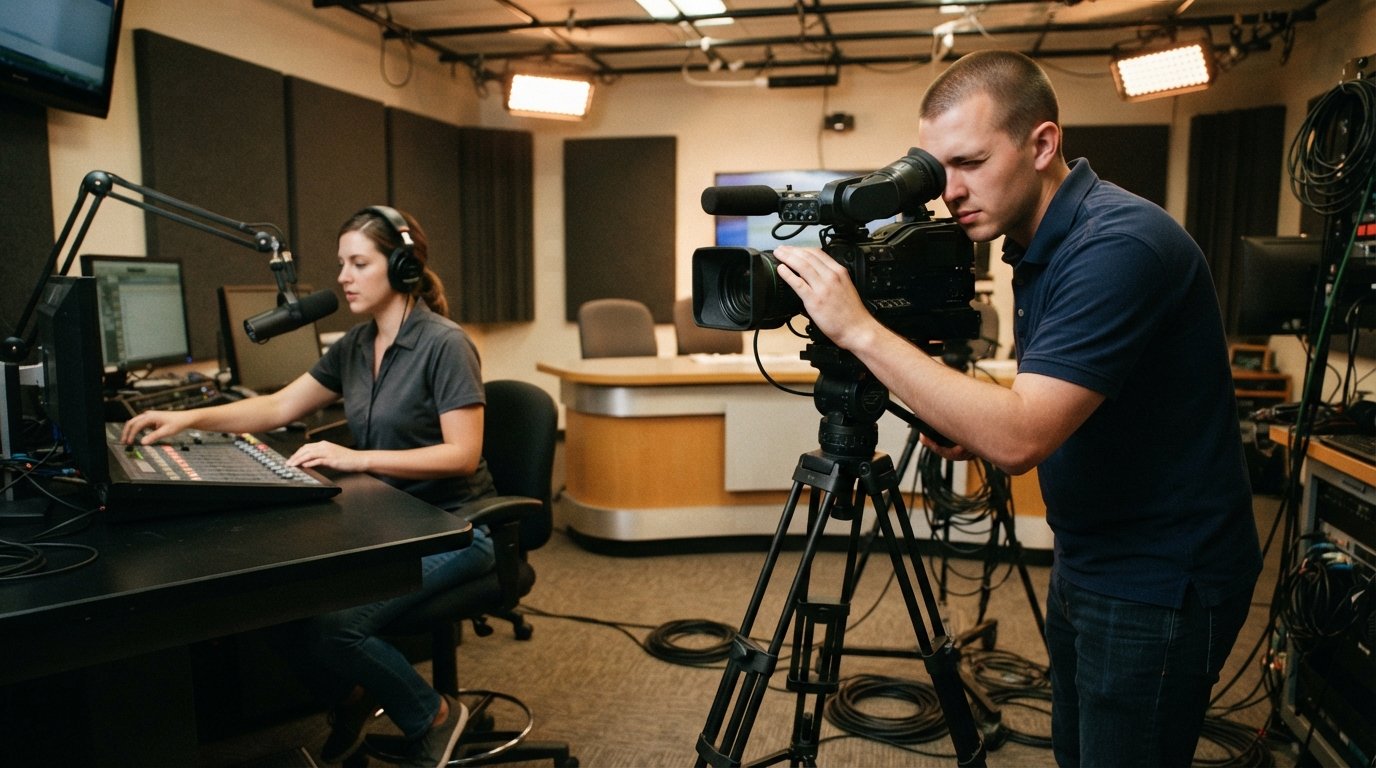
The key phrase in the program name is "In-person." This is not a fully online certificate. You will be in studios, control rooms, and editing labs, working with cameras, audio boards, and editing software under the supervision of instructors who know the local media market. For a field where collaboration and quick decision-making are the whole job, that physical presence is a feature, not a limitation.
Students in this kind of program typically build a foundation across several areas of broadcast and media production. While specific course titles and sequencing are set by the college and can change, the general skill set includes:
- Studio and field production, including camera operation, lighting, and audio capture
- Video and audio editing using industry-standard software
- Broadcast writing, announcing, and on-air performance
- Control room roles such as directing, technical directing, and graphics
- Media law, ethics, and workplace safety basics
Because the program is hands-on, you should expect to spend significant time producing actual content, not just reading about it. That portfolio of work is often the single most valuable thing you leave with, because hiring managers in radio and television care more about what you can do than what you can recite.
Who This Certificate Is Built For
The strongest fit for this credential is an adult learner or recent high school graduate who wants to enter media production quickly and affordably. If you are working a job you do not love and want a skills-based path into a creative field, a certificate of this length lets you test the water without a four-year commitment. It is also a good option for people already adjacent to media, such as church media volunteers, podcasters, or small business owners who produce their own video content and want formal training.
It is equally useful for students who plan to continue their education. A certificate can stack into an associate degree, and an associate degree can often transfer into a bachelor's program. If you are comparing short credentials with longer degree paths, it helps to see how other schools structure their broadcast programs. For example, our guide to the Radio and Television Associate's Degree at Aims shows how a two-year path can differ from a certificate, which is useful context when you are deciding how far you want to go.
Who should think twice? If your goal is a role that requires a bachelor's degree, such as certain management, corporate communications, or journalism positions, the certificate alone may not get you there. It is a starting point, not a terminal credential for every career. Likewise, if you cannot attend in person because of geography or scheduling, this specific program will not work for you, and you should look at online alternatives or schools closer to home.
Why the In-Person Format Gives You an Edge in Broadcasting
Radio and television is a collaborative, equipment-heavy field. You cannot learn to run a control room by watching videos any more than you can learn to drive by reading a manual. In-person instruction puts you in the room where the mistakes happen and where the feedback is immediate. When you call the wrong camera shot or miss a cue, an instructor can correct you in real time, and your classmates learn from it too.
There is also a networking dimension that online programs struggle to replicate. Your instructors are likely to have worked in or around the Georgia media market. Your classmates will go on to work at stations, production companies, and media departments across the region. Those relationships are how many entry-level jobs actually get filled. A certificate earned in person gives you a local professional network at the same time it gives you a credential.
Finally, the in-person format gives you access to equipment you probably cannot afford on your own: professional cameras, audio consoles, lighting kits, and editing suites. You will graduate having used the tools employers expect you to know, which shortens the ramp-up time on your first job and makes you more attractive to small stations and production houses that need someone productive from day one.
Cost, Financial Aid, and the Return on a Short Credential
One of the practical advantages of a certificate program at a public technical college is cost. Georgia technical colleges generally offer among the more affordable tuition rates in the country, and a program of 1 year to less than 2 years keeps your total outlay far below a bachelor's degree. That said, you should not assume the sticker price is the whole story. Books, equipment fees, and transportation to an in-person campus all add up, and you should build a realistic budget before you enroll.
Financial aid is available to eligible students at accredited institutions, and technical college certificates can qualify for federal and state aid, scholarships, and workforce grants. Georgia has specific programs aimed at adult learners and career changers, so it is worth talking to the financial aid office early. If you want a broader overview of how college costs and aid work, resources such as CollegeAndTuition explain tuition, scholarships, and planning in plain language, which can help you compare this certificate against other options.
To think about return on investment, ask three questions:
- What entry-level jobs does this certificate qualify me for in my local market, and what do they pay?
- How much will the program cost in total, including fees and lost income if I reduce my work hours?
- Can I stack this credential into a higher degree later, and will those credits transfer?
If the answers point to a quick entry into a job you want, with a clear path to earn more later, the math often works in your favor. If not, a different program or a longer degree may be the better call.
Admissions, Scheduling, and What to Expect Day to Day
Admission to a technical college certificate program is generally more accessible than admission to a four-year university. You should expect to complete an application, provide proof of high school completion or equivalent, and possibly take placement assessments in reading, writing, and math. Some programs have additional requirements or limited seats, so applying early matters.
Scheduling is where the in-person format becomes a real-life constraint. Classes may be offered during the day, in the evening, or in a mix, and production courses often run in longer blocks because you need time to set up, shoot, and strike. If you are working full time, talk to an advisor about whether the schedule can fit around your job, and be honest with yourself about commute time and childcare. Many adult learners succeed in these programs, but they do it by planning their weeks carefully.
Day to day, expect a mix of classroom instruction and lab work. You might spend a morning learning about lighting ratios and an afternoon setting up lights for a mock newscast. You might edit a package to a deadline, then review it with the class. The pace can be intense, but it is also the closest thing to a real newsroom or production house you can get before you are hired.
Career Outcomes and How to Build on the Certificate
Graduates of radio and television certificate programs typically move into entry-level roles such as production assistant, camera operator, editor, audio technician, master control operator, or on-air announcer at small and mid-market stations. Others find work in corporate video, education, worship media, and freelance production. Pay at the entry level is modest, but the field rewards demonstrated skill and reliability, and many people move up quickly once they have a reel and a track record.
The certificate is also a stepping stone. If you decide you want a broader education, you can often apply your credits toward an associate degree and then transfer to a bachelor's program in communications, media production, or a related field. That pathway can open doors to higher-paying roles in management, marketing, and content strategy. The important thing is to ask about transferability before you enroll, so you are not surprised later.
As you plan, keep the bigger picture in view. A short credential is a tool, not a destiny. The students who get the most out of a program like this are the ones who use it deliberately: they build a portfolio, cultivate relationships with instructors, and treat every project as a chance to prove they can deliver under pressure. If you do that, the Radio and Television Certificate, 1 year to less than 2 years In-person at Chattahoochee Technical College, can be a genuinely efficient way to start a media career without taking on four years of cost and commitment upfront.
Before you apply, visit the campus if you can, meet the faculty, and ask current students what the schedule and workload are really like. Those conversations will tell you more than any brochure, and they will help you decide whether this hands-on, local, affordable path is the right first move for you.