
CSUN Kinesiology and Fitness Graduate Programs
Earn your graduate degree in kinesiology at CSUN. Explore in-person programs, hands-on research, and career pathways beyond the bachelor's level.

By Oliver Brooks
Earning a graduate degree in kinesiology or a related fitness field can open doors to advanced careers in sports science, rehabilitation, education, and public health. California State University-Northridge (CSUN) offers in-person post-baccalaureate study in Sports, Kinesiology, and Physical Education/Fitness, General, providing students with rigorous academic training and hands-on experience. This article explores what makes CSUN's graduate offerings in this field stand out, from program structure and admission requirements to career outcomes and financial planning. Whether you are a working professional seeking to advance your skills or a recent graduate aiming for a research or teaching career, understanding the in-person graduate landscape at CSUN will help you make an informed decision about your educational investment.
Why Choose CSUN for Advanced Kinesiology Studies?
California State University-Northridge is located in the San Fernando Valley of Los Angeles, a region rich with sports organizations, rehabilitation clinics, schools, and community fitness programs. This proximity gives graduate students in kinesiology and fitness unparalleled access to internships, fieldwork, and collaborative research opportunities. CSUN's Department of Kinesiology is housed within the College of Health and Human Development, which fosters interdisciplinary collaboration with programs in public health, nutrition, and physical therapy prerequisites. The department emphasizes applied learning, and graduate students often work directly with faculty on research projects that address real-world problems in exercise physiology, biomechanics, motor behavior, and sport pedagogy.
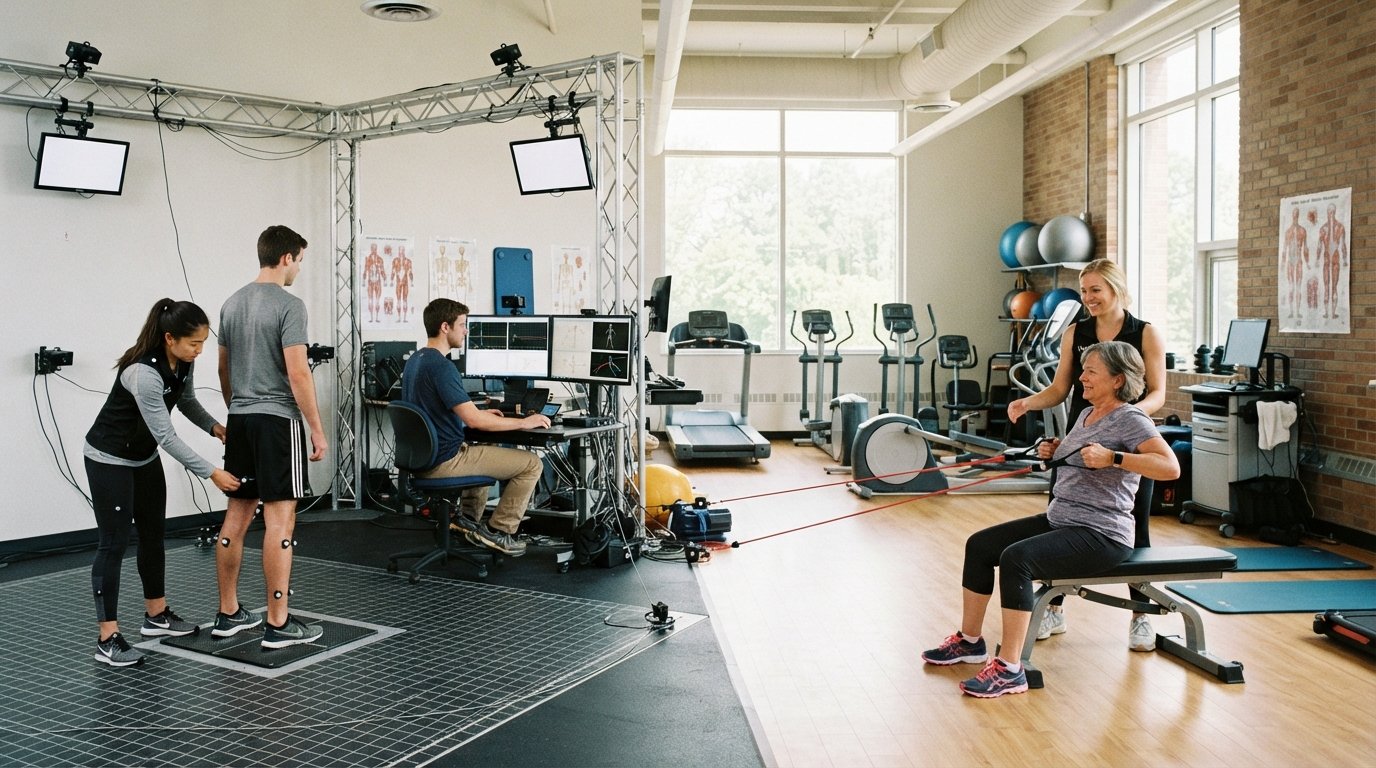
The in-person format is a deliberate strength. Advanced kinesiology study often requires access to laboratory equipment, motion capture systems, metabolic carts, and human performance testing facilities. At CSUN, graduate students have hands-on access to these resources, which is difficult to replicate in fully online programs. Furthermore, face-to-face interaction with faculty mentors and peers builds a professional network that can be invaluable when seeking employment or doctoral admission. For students who thrive in collaborative, lab-based environments, the in-person graduate experience at CSUN offers a distinct advantage over remote alternatives.
Another compelling reason to choose CSUN is the university's commitment to diversity and community engagement. The campus serves a large, diverse student body, and graduate seminars often include discussions about equitable access to physical activity, culturally responsive pedagogy, and community health disparities. These conversations prepare graduates to work effectively in a wide range of settings, from urban schools to clinical rehabilitation centers. The department also maintains partnerships with local school districts, sports medicine clinics, and municipal recreation departments, creating a pipeline for practical experience and eventual employment.
Program Options and Specializations Beyond the Bachelor's Degree
At the post-baccalaureate level, CSUN's Department of Kinesiology offers a Master of Science (M.S.) in Kinesiology with several areas of emphasis. While the university does not offer a standalone doctoral program in kinesiology, the master's program serves as an excellent foundation for students who plan to pursue a Ph.D. or Ed.D. at another institution. The M.S. program typically requires 30 to 36 units of coursework, including core classes in research methods and statistics, as well as electives tailored to the student's chosen specialization. Students may focus on exercise physiology, biomechanics, motor behavior, sport and exercise psychology, or physical education pedagogy. Each specialization includes a capstone experience, which may be a thesis, a project, or a comprehensive exam.
In addition to the M.S. in Kinesiology, students interested in physical education and fitness may pursue a Master of Arts (M.A.) in Education with a focus on physical education, offered through the Michael D. Eisner College of Education. This program is designed for current teachers and coaches who wish to enhance their instructional skills, develop curriculum, or move into administrative roles. The M.A. in Education with a physical education emphasis typically includes coursework in curriculum design, assessment, and inclusive teaching practices. For individuals seeking to work in community fitness or corporate wellness, the M.S. in Kinesiology with an emphasis in exercise physiology provides a strong scientific background in health risk assessment, exercise prescription, and lifestyle intervention.
Prospective students should note that the specific program names and emphasis areas may evolve. The university periodically updates its offerings to reflect changes in the field and student demand. Therefore, it is essential to consult the CSUN catalog and speak with a graduate advisor to confirm the current program structure. The following list summarizes the primary post-baccalaureate pathways related to sports, kinesiology, and fitness at CSUN:
- M.S. in Kinesiology with emphasis in exercise physiology, biomechanics, motor behavior, sport psychology, or pedagogy.
- M.A. in Education with a concentration in physical education (for teachers and coaches).
- Graduate certificate or credential programs in adapted physical education or coaching (availability varies).
- Interdisciplinary study through the College of Health and Human Development, including public health and nutrition electives.
Each pathway has distinct admission requirements and career trajectories. The M.S. in Kinesiology is research-oriented and often appeals to students who wish to work in clinical exercise physiology, sports science, or pursue doctoral study. The M.A. in Education is practice-oriented and ideal for educators seeking professional advancement or specialization in physical education leadership. Graduate certificates, when offered, provide focused training for specific roles such as adapted physical education specialist or strength and conditioning coach. Students should carefully review prerequisites; some specializations require undergraduate coursework in anatomy, physiology, and statistics.
Admission Requirements and Application Process
Admission to CSUN's graduate programs in kinesiology and physical education is competitive and holistic. Applicants must hold a bachelor's degree from an accredited institution with a minimum grade point average of 2.5 to 3.0, depending on the program. While a bachelor's degree in kinesiology is not always required, applicants without a related background may need to complete prerequisite courses in exercise physiology, biomechanics, and statistics before beginning graduate coursework. The application typically requires official transcripts, a statement of purpose, letters of recommendation, and a resume or curriculum vitae. Some programs may also require GRE scores, although many have waived this requirement in recent years. International applicants must demonstrate English proficiency through TOEFL or IELTS scores.
The application process for CSUN is managed through Cal State Apply, the centralized application system for the California State University system. Deadlines vary by program; most admit students for the fall semester, with applications typically due between January and April. Prospective students should verify the specific deadline for their intended program and submit all materials well in advance. The department encourages applicants to contact faculty members whose research aligns with their interests before applying, as this can strengthen the statement of purpose and clarify mentorship availability. Financial aid and scholarship opportunities are available through the university's financial aid office and the department itself.
For students who are also considering online options for their undergraduate or graduate education, resources such as our guide on best online IT degrees for career growth illustrate how online formats can complement certain career paths. However, for advanced kinesiology study that requires laboratory access and hands-on clinical practice, the in-person format at CSUN remains the more appropriate choice. Applicants should weigh their personal circumstances, including work and family commitments, when deciding between in-person and online programs. CSUN's graduate programs are designed for full-time or part-time study, and many courses are offered in the late afternoon or evening to accommodate working students.
Curriculum Highlights and Hands-On Learning
The graduate curriculum in kinesiology at CSUN blends rigorous theoretical study with practical application. Core courses in research methods and statistics equip students with the skills to design and evaluate studies, critically analyze literature, and interpret data. Specialization courses delve into advanced topics such as cardiovascular physiology, neuromuscular control, biomechanical analysis of movement, and psychosocial aspects of physical activity. Students in the physical education pedagogy track explore curriculum development, assessment strategies, and inclusive instructional practices for diverse learners. Across all tracks, faculty emphasize the application of research to real-world settings, whether in a clinical exercise lab, a school gymnasium, or a community fitness center.
Hands-on learning is a cornerstone of the CSUN graduate experience. The department maintains laboratories for exercise physiology, biomechanics, and motor behavior, where students conduct experiments and learn to use industry-standard equipment. Graduate assistantships are often available, providing students with the opportunity to teach undergraduate courses, assist faculty research, or work in community outreach programs. These assistantships not only offset tuition costs but also provide valuable professional experience and mentorship. Internships with local sports teams, rehabilitation clinics, and school districts are another hallmark of the program, allowing students to apply classroom knowledge in professional settings and build their resumes.
The capstone experience, whether a thesis or comprehensive exam, is designed to synthesize the student's learning and demonstrate mastery of the field. Thesis students work closely with a faculty committee to design and execute an original research study, often presenting their findings at regional or national conferences. Project-based capstones may involve developing a fitness program for a community organization, designing a curriculum for a school district, or conducting a program evaluation for a clinical setting. These projects often have immediate practical value and can serve as portfolio pieces when applying for jobs or doctoral programs. The department's commitment to applied learning ensures that graduates leave CSUN not only with a degree but with tangible skills and experiences that employers value.
Career Outcomes and Professional Pathways
Graduates of CSUN's post-baccalaureate programs in kinesiology and physical education pursue a wide range of careers. Many become clinical exercise physiologists, working in hospitals, cardiac rehabilitation centers, or sports medicine clinics. Others find roles as strength and conditioning coaches for collegiate or professional sports teams, personal trainers, or wellness coordinators in corporate settings. Physical education teachers and coaches often use the M.A. in Education to advance to curriculum specialist, athletic director, or school administrator positions. Some graduates pursue doctoral study in kinesiology, public health, or physical therapy, while others enter research roles in industry or government.
The job outlook for careers in kinesiology and fitness is generally positive, driven by growing awareness of the importance of physical activity for health and the aging of the population. According to the Bureau of Labor Statistics, employment of exercise physiologists is projected to grow faster than average, and demand for qualified fitness and wellness professionals continues to rise. Salaries vary by setting and experience; clinical exercise physiologists and strength and conditioning coaches in collegiate settings typically earn competitive salaries, while those in commercial fitness settings may earn less but have opportunities for advancement through specialized certifications. Graduates should consider earning relevant certifications, such as those offered by the American College of Sports Medicine or the National Strength and Conditioning Association, to enhance their marketability.
The in-person graduate experience at CSUN provides distinct advantages in the job market. Students build professional networks through internships, assistantships, and faculty connections, and they gain hands-on experience with equipment and techniques that employers value. The university's location in the Los Angeles metropolitan area offers access to a large job market in sports, healthcare, and education. Alumni of the program work in a variety of settings across Southern California and beyond, and the department maintains an active alumni network that can assist current students with job leads and mentorship. For students who wish to pursue doctoral study, the research experience gained at CSUN provides a strong foundation for competitive applications.
Financial Planning and Funding Your Graduate Degree
Pursuing a graduate degree is a significant financial investment, but several options can help offset the cost. CSUN offers graduate assistantships that often include a stipend and partial tuition remission. These positions are competitive and require a separate application, usually submitted along with the program application. Scholarships are available through the department, the College of Health and Human Development, and the university's financial aid office. Students should also complete the FAFSA to be considered for federal loans and work-study opportunities. For California residents, the state's Cal Grant program may provide additional assistance for graduate study in certain fields.
Prospective students should carefully estimate the total cost of attendance, including tuition, fees, books, and living expenses. In-state tuition for California residents is considerably lower than for out-of-state students, and the university offers payment plans to help spread costs over the semester. Students who are employed may be eligible for employer tuition assistance programs, and some school districts offer tuition reimbursement for teachers pursuing advanced degrees in education. It is also worth exploring external scholarships from professional organizations such as the American Kinesiology Association or the California Association for Health, Physical Education, Recreation and Dance. For a broader overview of college costs and financial aid strategies, resources like CollegeAndTuition provide guidance on planning and affordability.
Financial planning should also consider the return on investment. Graduates with a master's degree in kinesiology or physical education often earn higher salaries and have access to positions that require advanced credentials, such as community college instructor, clinical exercise physiologist, or school administrator. These roles can justify the cost of the degree over time. Students should research salary ranges for their intended career path and consider the potential for advancement. Assistantships and scholarships can significantly reduce the net cost, making graduate study more accessible. Speaking with a financial aid advisor and current students can provide realistic insights into funding options and the overall value of the program.
Preparing for Your Application and Next Steps
If you are considering the Sports, Kinesiology, and Physical Education/Fitness, General Beyond bachelor's degree In-person at California State University-Northridge, start by reviewing the program requirements and admission criteria on the CSUN website. Reach out to the graduate coordinator to discuss your interests and confirm the current program structure. Prepare for the application by gathering transcripts, identifying potential recommenders, and drafting a statement of purpose that clearly articulates your career goals and how the program aligns with them. If you lack prerequisite coursework, consider taking the necessary classes at a community college before applying. Visiting the campus and meeting with faculty can also strengthen your application and help you determine if the program is the right fit.
The in-person format at CSUN offers a rich, immersive educational experience that prepares graduates for advanced careers in kinesiology, fitness, and physical education. With its strong faculty, hands-on learning opportunities, and location in the Los Angeles area, the university provides a supportive environment for students to grow academically and professionally. By planning ahead and taking advantage of available funding and mentorship opportunities, you can make the most of your graduate experience and position yourself for success in a dynamic and rewarding field.