
Electrical Engineering Tech Associate Degree at DACC
The Electrical, Electronic, and Communications Engineering Technology/Technician Associate's degree at DACC builds lab-ready skills for technician careers in about two years.

By Madison Cooper
A two-year hands-on degree can put you in a lab, a substation, or a communications hub faster than almost any other path in engineering. The Electrical, Electronic, and Communications Engineering Technology/Technician Associate's degree, usually 2 years In-person at Dona Ana Community College of NMSU-C16 is built for students who want to wire, test, troubleshoot, and maintain real systems, not just read about them. If you learn best with a multimeter in your hand and a schematic on the bench, this program deserves a close look.
What This Associate's Degree Covers
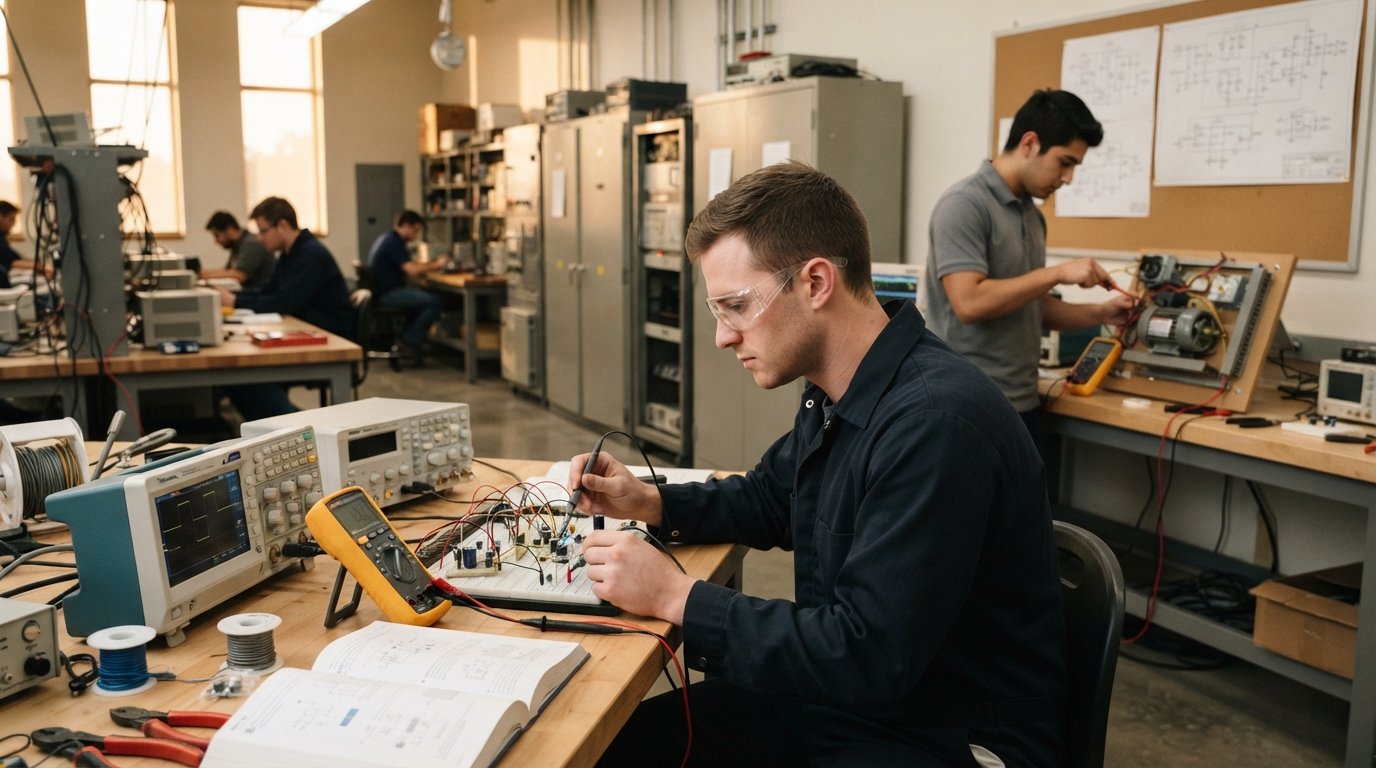
Dona Ana Community College (DACC), a branch campus of New Mexico State University, offers an Associate of Applied Science track in Electrical, Electronic, and Communications Engineering Technology. The curriculum blends electrical theory, electronics, digital systems, and communications so graduates can move into technician roles across utilities, manufacturing, defense, and telecom. Because the degree is delivered in person, students spend significant time in labs, practicing on the same equipment they will meet on the job.
Core coursework typically includes AC and DC circuits, solid-state devices, digital logic, microprocessors, motors and generators, programmable logic controllers, and communications systems such as antennas, cabling, and signal transmission. Supporting classes in mathematics, technical writing, and safety round out the technical core. The result is a graduate who can install, calibrate, test, and repair electrical and electronic systems while documenting the work clearly.
One feature that separates this credential from a generic electronics certificate is the communications component. Employers in southern New Mexico, from White Sands Missile Range contractors to regional telecom providers, need technicians who understand both power and signal. The program's combination of electrical, electronic, and communications engineering technology prepares students for that dual demand.
Why the In-Person Format Matters
Online degrees offer flexibility, and they work well for many fields. Electrical and electronic technology is not one of them, at least not at the entry level. You cannot safely learn lockout/tagout procedures or oscilloscope techniques through a video lecture alone. The in-person requirement at DACC means supervised lab hours, immediate instructor feedback, and practice with live circuits under controlled conditions.
That hands-on time builds the muscle memory employers screen for during interviews. When a hiring manager asks whether you have terminated a three-phase motor or traced a fault on a communications line, a lab-based graduate can answer with specifics. For adults weighing a return to school, the trade-off is real: in-person classes demand scheduled time on campus, but they also deliver the practical confidence that makes the degree pay off.
If you are comparing formats, it helps to see how other engineering pathways handle the same question. Our guide to the best online electrical engineering degree programs explains where remote study works well and where lab work remains essential. Use that comparison to decide whether a campus-based technician degree or a transfer-oriented engineering path fits your goals.
Admission Steps and Program Logistics
DACC maintains open-access admission for most programs, which means the entry process is manageable for first-time students and returning adults alike. You apply to the college, submit transcripts, complete placement testing if needed, and meet with an academic advisor to map the electrical technology sequence. Because courses build on one another, starting in the right term matters.
A practical sequence for most students looks like this:
- Apply to Dona Ana Community College and submit official high school or prior college transcripts.
- Complete math and English placement, then register for first-term courses such as DC circuits and technical math.
- Meet with your program advisor each term to confirm the next lab courses and avoid scheduling conflicts.
- Complete the communications and microprocessor sequence before your final capstone or internship term.
- File for graduation and connect with the career services office for job placement support.
Most full-time students finish in about two years, though part-time schedules stretch the timeline. Talk with the department about evening and daytime section availability, since lab courses often have limited offerings. Financial aid, including federal grants, loans, and New Mexico state programs, applies to eligible students, and the college's financial aid office can clarify what your specific situation allows.
Careers and Earning Potential After Graduation
Engineering technicians are in steady demand because they keep systems running. Graduates of electrical, electronic, and communications programs typically pursue roles such as electrical engineering technician, electronics technician, field service technician, communications technician, instrumentation technician, and maintenance technologist. Work settings range from utility substations and manufacturing floors to broadcast facilities and government installations.
Pay varies by region, industry, and shift, but technician roles generally offer solid entry-level wages with room to grow through certifications and experience. Many employers also fund additional training, which means your two-year degree can function as a launchpad rather than a ceiling. Students who later want to move into engineering roles can transfer credits toward a bachelor's degree, though they should confirm transfer agreements early with their advisor.
For a broader view of how degrees translate into career returns across fields, the resources at CollegeDegrees.School provide degree comparisons, higher education pathway guidance, and career planning material that complements what you learn from a community college advisor.
Skills You Will Build in the Lab
The technical skill set from this program is concrete and demonstrable. Employers want to see that you can read a schematic, select the right instrument, and interpret a reading correctly. The lab sequence at DACC is designed to produce exactly that competence, term after term.
- Circuit analysis: measuring voltage, current, and resistance in AC and DC systems.
- Electronics troubleshooting: diagnosing faults in solid-state devices and power supplies.
- Digital and microprocessor work: building and testing logic circuits and embedded controls.
- Communications systems: terminating cable, testing signal paths, and aligning transmission equipment.
- Safety and documentation: following codes, using PPE, and writing clear technical reports.
Those competencies transfer across industries. A technician who understands both power and communications can move between utility work, manufacturing automation, and telecom infrastructure without starting over. That versatility is one reason the associate's degree holds value even when the economy shifts.
How to Decide If This Program Fits You
This degree suits people who like tangible results: a machine that runs, a signal that reaches its destination, a fault that gets fixed. It also suits career changers who want a credential in roughly two years without committing to a four-year engineering curriculum. If you enjoy math at the technical level, prefer structured hands-on learning, and want to enter the workforce quickly, the fit is strong.
Before enrolling, visit the campus, tour the labs, and ask faculty about equipment, class sizes, and employer connections in the region. Ask about internship or cooperative education options, since work experience often leads directly to job offers. Also confirm the current curriculum map with an advisor, because course requirements can change and your plan should reflect the latest catalog.
Finally, weigh the in-person commitment against your schedule. The Electrical, Electronic, and Communications Engineering Technology/Technician Associate's degree, usually 2 years In-person at Dona Ana Community College of NMSU-C16 rewards students who show up consistently and practice deliberately. If you can make that commitment, you graduate with skills that employers can verify on day one.
A two-year technician degree is a practical investment, and DACC's program delivers the lab time, the communications depth, and the regional employer connections that turn coursework into a paycheck. Start with an advising appointment, map your terms, and let the hands-on work do the rest.