
EMT Ambulance Certificate at BTC: 12-Week Path
The Emergency Care Attendant (EMT Ambulance) Certificate, 12 weeks to less than 1 year In-person at Bellingham Technical College offers a fast, hands-on path into EMS careers.

By Lucas Scott
When a cardiac arrest happens on a city street or a multi-car collision shuts down an interstate, the first trained professional on scene often holds an Emergency Care Attendant credential. For adults who want to enter emergency medical services quickly, without committing to a multi-year degree, the Emergency Care Attendant (EMT Ambulance) Certificate, 12 weeks to less than 1 year In-person at Bellingham Technical College offers a compressed, hands-on route into that world. The program is short by design, but the preparation is serious: students learn patient assessment, airway management, bleeding control, splinting, and safe ambulance operations under the supervision of experienced instructors. This guide explains who the certificate suits, what the 12-week schedule looks like, how to prepare for admission, what it costs, and how to turn the credential into a paying job or a stepping stone toward paramedicine and other health careers.
What the Emergency Care Attendant Certificate Covers
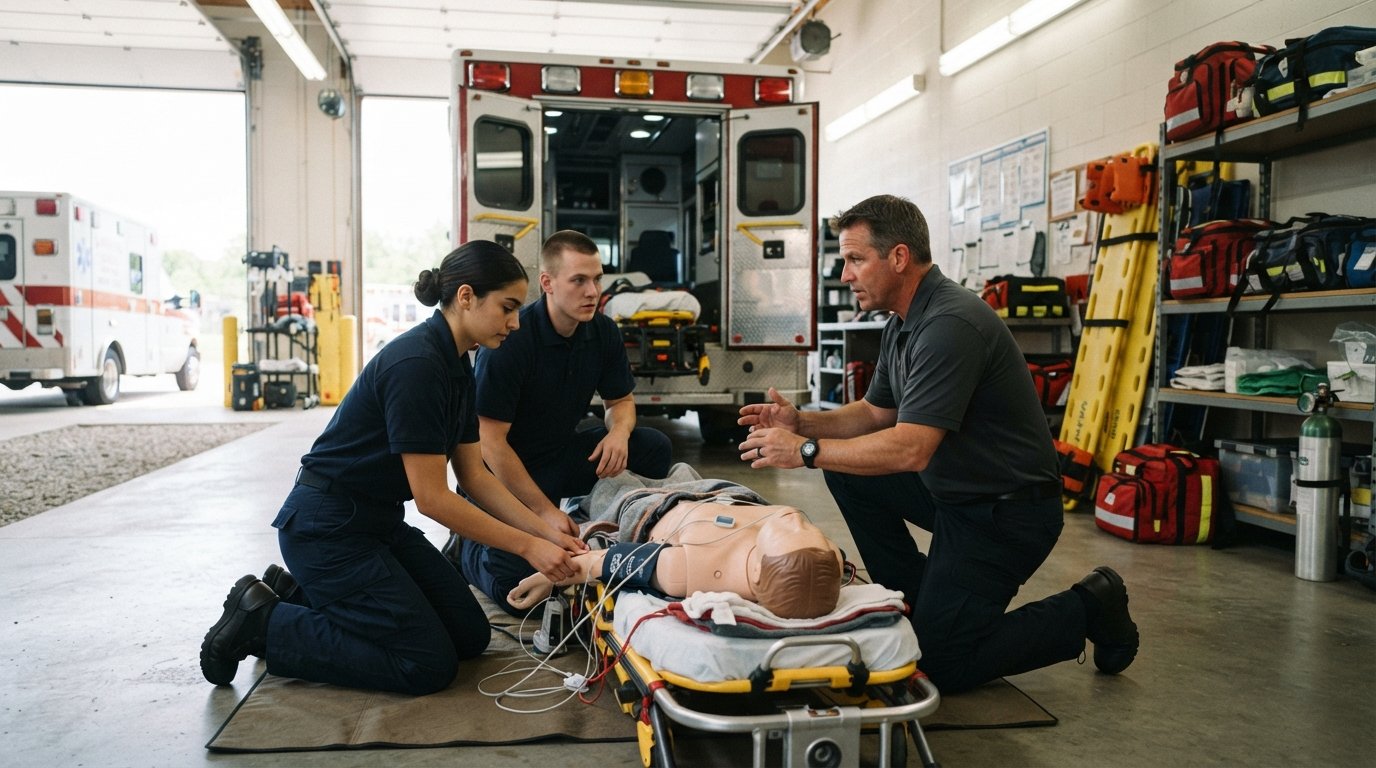
The Emergency Care Attendant (EMT Ambulance) Certificate, 12 weeks to less than 1 year In-person at Bellingham Technical College is built around the skills that ambulance crews use every shift. Coursework typically blends classroom instruction with practical labs and clinical or field observation hours, and the in-person format matters because emergency care is a physical, hands-on discipline. Students practice lifting and moving patients, applying tourniquets and dressings, inserting airway adjuncts, and running through simulated scenarios that mirror real 911 calls.
Because the credential sits below the paramedic level but above basic first aid, it fills a specific niche in the EMS workforce. Graduates are prepared to assist with emergency response, patient transport, and routine interfacility transfers. Many employers in Washington State and neighboring regions hire certificate holders for ambulance services, fire departments with transport divisions, and private medical transport companies. The training also provides a foundation for students who later decide to pursue full EMT certification, advanced EMT training, or a paramedic associate degree.
Core topic areas usually include:
- Patient assessment and vital signs, including scene size-up and history taking
- Airway management, ventilation, and oxygen administration
- Bleeding control, shock management, and wound care
- Splinting, traction, and safe patient movement
- Ambulance operations, documentation, and legal and ethical responsibilities
Each of these areas connects directly to the National Emergency Medical Services Education Standards, which shape the curriculum at Bellingham Technical College and similar institutions. Students should expect written exams, practical skills check-offs, and scenario-based evaluations rather than only multiple-choice tests. The in-person requirement is not a formality: instructors need to watch students perform skills correctly before signing off on competency.
How the 12-Week Schedule Fits Real Life
One of the strongest selling points of this certificate is its length. The Emergency Care Attendant (EMT Ambulance) Certificate, 12 weeks to less than 1 year In-person at Bellingham Technical College can be completed in a single academic quarter or a slightly longer window, depending on cohort scheduling and prerequisite timing. That compressed timeline appeals to career changers who cannot afford to spend two years in school before earning a paycheck, and to working adults who want to test their interest in emergency medicine before committing to a larger program.
A typical week blends lecture hours with lab sessions, and some cohorts add weekend or evening clinical shifts. Because the program is in person, students should plan for travel to the Bellingham campus and for physical activity during labs. The schedule is demanding but structured, and most students find that the intensity helps them retain skills. Here is a realistic way to think about the 12-week rhythm:
- Weeks 1 through 4: foundational coursework in anatomy, patient assessment, and basic life support skills.
- Weeks 5 through 8: trauma care, medical emergencies, airway management, and ambulance operations labs.
- Weeks 9 through 11: scenario practice, clinical or field observation, and skills remediation as needed.
- Week 12 and beyond: final practical exams, written certification testing, and job search support.
Students who need to work while enrolled often choose cohorts with evening labs, but they should confirm availability with the college before applying. The key is to treat the 12 weeks as a full-time commitment even if the clock hours look manageable, because skills practice outside class time is what separates passing students from struggling ones. Adult learners who want a broader comparison of short credential options can review guides such as the Machinist Certificate at Bellingham Technical College, which follows a similar hands-on, career-focused model at the same campus.
Admission Requirements and How to Prepare
Admission to the Emergency Care Attendant (EMT Ambulance) Certificate, 12 weeks to less than 1 year In-person at Bellingham Technical College generally requires a high school diploma or equivalent, placement into college-level reading and writing, and completion of any health and safety prerequisites the college specifies. Applicants should expect to provide immunization records, complete a background check, and possibly obtain CPR certification before the first lab session. Because requirements can change between cohorts, the college catalog and admissions office remain the authoritative source.
Competitive applicants prepare in advance rather than scrambling during orientation week. Strong preparation includes:
- Completing a basic life support or CPR course before classes start
- Reviewing basic anatomy and medical terminology through free or low-cost online modules
- Strengthening physical fitness for lifting and patient movement labs
- Arranging transportation and childcare so the 12-week schedule stays uninterrupted
- Budgeting for uniforms, stethoscope, and testing fees beyond tuition
Students should also plan for the emotional demands of the work. Emergency care exposes trainees to injury, illness, and stress, and instructors typically include resilience and communication training alongside clinical skills. Anyone unsure whether the field suits them can volunteer with a local fire department, explore first responder courses, or shadow a ride-along before applying. Those early experiences often clarify whether the certificate is the right fit and can strengthen an application narrative.
Costs, Financial Aid, and Return on Investment
Tuition for a short certificate is far lower than for a degree, but students should calculate the full cost rather than only the per-credit rate. The Emergency Care Attendant (EMT Ambulance) Certificate, 12 weeks to less than 1 year In-person at Bellingham Technical College involves tuition, lab fees, books, uniforms, immunizations, background checks, and certification exam fees. Adding those items together gives a realistic budget, and comparing that total against entry-level wages in ambulance and transport services shows how quickly the credential can pay for itself.
Financial aid options for short programs vary. Certificate-seeking students may qualify for federal Pell Grants, state workforce funds, employer tuition assistance, or scholarships from EMS associations. Workforce development offices and community organizations sometimes cover training costs for displaced workers or veterans. Students should also ask about payment plans through the college business office and look for employer partnerships that reimburse tuition after hiring. For a broader look at how families plan and pay for postsecondary training, CollegeAndTuition publishes guides on financial aid, scholarships, and college cost planning that apply to certificate programs as well as degrees.
Return on investment depends on the local job market. Ambulance services in Washington and neighboring states regularly hire entry-level attendants, and some employers pay for additional certification once an employee proves reliable. Graduates who later pursue paramedic training can often earn while they study, which improves the long-term financial picture. The certificate is best viewed as a low-cost entry ticket rather than a terminal credential: it opens the door, and further training raises the ceiling.
Career Outcomes and Next Steps After Graduation
Graduates of the Emergency Care Attendant (EMT Ambulance) Certificate, 12 weeks to less than 1 year In-person at Bellingham Technical College typically move into roles with private ambulance companies, fire-based EMS systems, hospitals with transport teams, and event medical services. Day-to-day duties include responding to calls, assessing patients, providing basic interventions, driving and operating ambulances, and documenting care. Shift work is common, and new hires should expect a mix of daytime, evening, and weekend rotations.
Career progression in emergency medical services follows a fairly predictable ladder. Many attendants work for a year or two before pursuing full EMT certification, then advanced EMT or paramedic credentials. Others pivot into emergency management, dispatch, fire service, or healthcare administration. The certificate also counts as relevant experience for nursing and allied health programs, and some students use it to confirm their interest before applying to competitive clinical programs. Professionals who want to compare degree-based routes can explore accredited online health administration and public safety programs through DegreesOnline.Education, which reviews flexible options for working adults.
Job search preparation should begin before the final exam. Students should update their resumes with clinical hours, scenario experience, and certifications, request reference letters from instructors, and apply to services that hire on a rolling basis. Local EMS agencies often post openings directly, and college career services can connect graduates with employers who recruit from the program. Within the first year, many attendants add certifications in emergency vehicle operations, incident command, or specialized transport, each of which improves scheduling priority and pay.
Anyone weighing this certificate against longer health career paths should think about time, cost, and lifestyle together. The 12-week format rewards students who learn by doing and who want to enter the workforce quickly, while degree programs reward those who need broader credentials for advancement. Neither route is universally better; the right choice depends on how soon a student needs income, how much debt they can tolerate, and where they want to be in five years. Visiting campus, talking with instructors, and speaking to working attendants gives prospective students the clearest picture before they commit.
The Emergency Care Attendant (EMT Ambulance) Certificate, 12 weeks to less than 1 year In-person at Bellingham Technical College is a practical, affordable entry point into emergency medical services for adults who learn best in hands-on settings. Students who prepare for admission, budget for the full cost, and plan their next certification before graduation get the most from the program. For career changers and working professionals, the certificate offers something increasingly rare: a credible path into a high-demand field in about one academic quarter, with clear options for advancement once the first job is secured.