
Exercise Science and Kinesiology Bachelor's at Concordia
The Exercise Science and Kinesiology Bachelor's degree, usually 4 years In-person at Concordia University-Irvine, builds lab skills and clinical practicum experience that employers reward.

By Madison Cooper
Choosing a major that blends your passion for human movement with a clear path to a stable career can feel overwhelming, especially when most programs look nearly identical on paper. The Exercise Science and Kinesiology Bachelor's degree, usually 4 years In-person at Concordia University-Irvine, stands apart because it pairs rigorous lab science with a faith-based liberal arts foundation and direct access to Southern California's sports medicine and performance industry. For adult learners and career changers comparing options, understanding what this specific program delivers, and how it compares to online alternatives, is the first step toward a decision you will not regret.
What an Exercise Science and Kinesiology Degree Actually Covers
Exercise science and kinesiology sit at the intersection of biology, biomechanics, and behavioral science. Coursework typically begins with anatomy and physiology, then moves into motor learning, exercise physiology, biomechanics, and nutrition. By junior and senior year, students apply that foundation in performance testing, electrocardiography, graded exercise testing, and program design for healthy and clinical populations. Concordia University-Irvine structures its in-person sequence so that lecture material is reinforced in the same week through hands-on laboratory sessions, which is one reason the residential format matters for this field.
The degree is not simply a coaching credential. Graduates leave prepared for roles in cardiac rehabilitation, corporate wellness, strength and conditioning, physical therapy assisting, and clinical exercise physiology, and many continue into graduate programs in athletic training, occupational therapy, or physician assistant studies. Because the curriculum aligns with American College of Sports Medicine and National Strength and Conditioning Association competencies, students often sit for certification exams before graduation. If you are still weighing broader health majors, our guide to a Bachelor's Degree in Health Science explains how that path differs from kinesiology in scope and clinical emphasis.
One practical distinction: exercise science focuses on how the body responds to physical activity, while kinesiology is the broader study of human movement. Concordia blends both, so your transcript shows coursework in movement science as well as applied exercise testing. That combination is attractive to employers who want graduates who can both interpret data and coach a client through a safe progression.
Why the In-Person, 4-Year Format at Concordia University-Irvine Matters
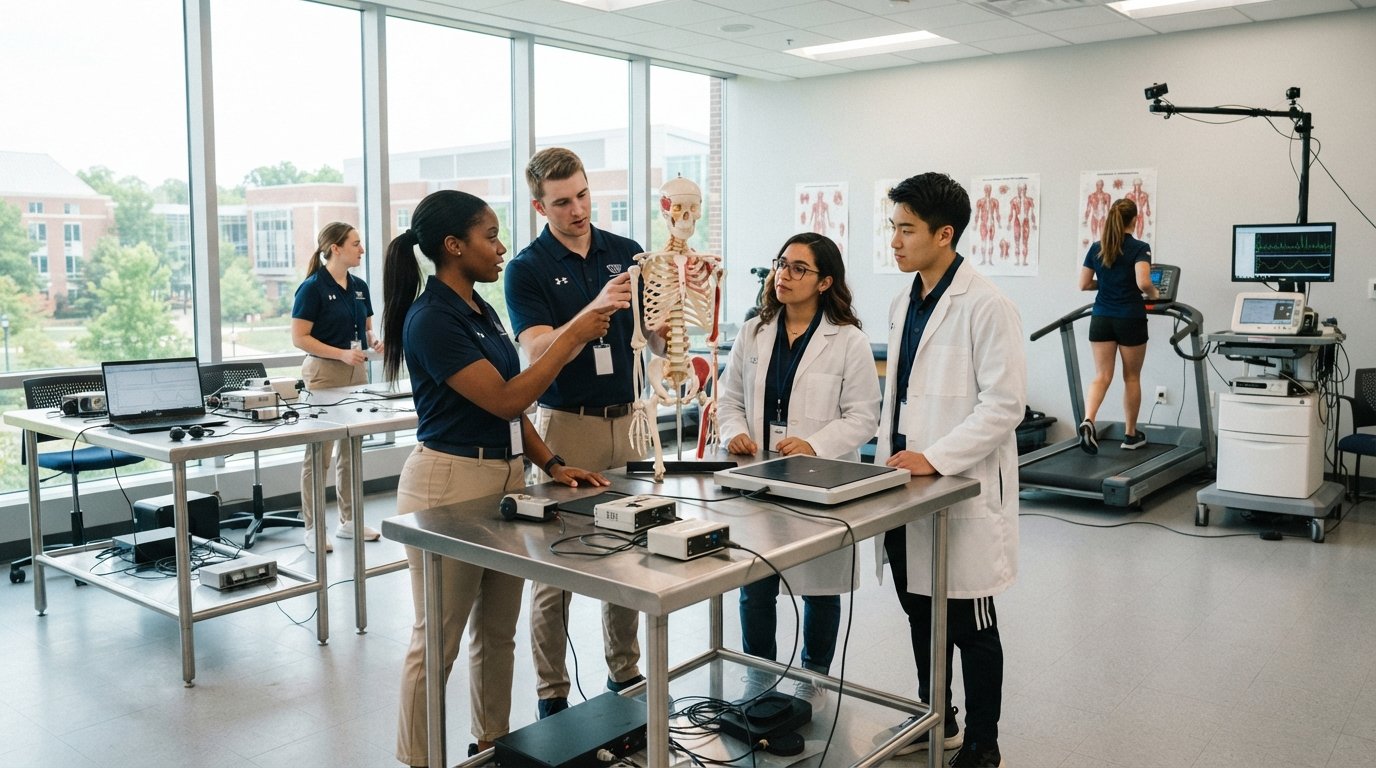
Laboratory science is difficult to replicate through a screen. At Concordia University-Irvine, students handle metabolic carts, blood pressure cuffs, ECG leads, and force plates in person, with faculty correcting technique in real time. That tactile repetition builds the confidence employers expect in the first week of an internship. The four-year residential structure also creates a cohort model: you progress through physiology, biomechanics, and practicum courses with the same peers, which mirrors the team-based environment of a sports medicine clinic or performance center.
Location is another advantage. Irvine sits in Orange County, within driving distance of hospital systems, university athletic departments, private performance facilities, and youth sports organizations. Students in the Exercise Science and Kinesiology Bachelor's degree, usually 4 years In-person at Concordia University-Irvine, complete practicum hours at sites that frequently convert interns into employees. That regional pipeline is hard to match in a fully online program, where you may be responsible for sourcing your own clinical placement from scratch.
That said, the in-person format is not the only route. Working adults who need flexibility often compare residential programs against accredited online options, and platforms such as CollegeDegrees.School help prospective students evaluate degree types, admission requirements, and career outcomes before committing. The key is matching format to your life stage: a traditional four-year residential experience suits students who can attend full time and want campus resources, while online or hybrid programs suit learners who must keep working while they study.
Admission and Prerequisite Checklist
Before applying to any kinesiology program, confirm that you meet the science prerequisites, since these are the most common reason applications stall. At Concordia University-Irvine, and at most comparable programs, the following items typically appear on the checklist:
- High school or transfer coursework in biology, chemistry, and algebra or precalculus
- A minimum cumulative GPA, often 2.5 to 3.0 for transfer applicants
- Official transcripts from every college attended, even if no degree was earned
- A personal statement or essay explaining your interest in human performance
- Evidence of CPR or first aid certification, which some programs require before practicum placement
Meeting these requirements early gives you room to retake a science course if needed without delaying graduation. It also strengthens your case for transfer credit, which can shorten the four-year timeline if you have already completed general education coursework at a community college.
Career Outcomes and Salary Expectations
Exercise science graduates enter a field with steady demand but wide salary variation depending on credentialing and setting. According to Bureau of Labor Statistics projections, exercise physiologists and kinesiotherapists earn a median annual wage in the mid $50,000s, while physical therapist assistants and athletic trainers often start higher when state licensure is required. Strength and conditioning coaches at the collegiate level may earn less initially but see rapid increases with certification and proven results.
Where you land depends heavily on the credentials you stack on top of the degree. The most common pathways include:
- Clinical exercise physiology in hospital-based cardiac or pulmonary rehab programs
- Strength and conditioning in collegiate, professional, or private performance settings
- Corporate wellness coordination, which often includes program design and health coaching
- Graduate study in physical therapy, occupational therapy, athletic training, or physician assistant programs
- Fitness entrepreneurship, including personal training studios and online coaching businesses
Each path has different return-on-investment math. A hospital-based role usually requires a clinical internship and certification, while entrepreneurship rewards business skills as much as exercise knowledge. Prospective students should map the credential requirements for their target role before choosing electives, because a well-chosen minor in business or psychology can widen options considerably.
Comparing In-Person and Online Kinesiology Programs
The Exercise Science and Kinesiology Bachelor's degree, usually 4 years In-person at Concordia University-Irvine, represents the traditional residential model: fixed semesters, face-to-face labs, and campus-based practicum coordination. Online kinesiology programs exist, but they tend to serve students who already work in fitness or rehabilitation and need a credential rather than a full laboratory experience. If your goal is clinical exercise physiology or graduate health professions, prioritize programs with in-person lab science, whether at Concordia or another residential institution.
Cost is the other major variable. Private residential tuition runs higher than in-state public rates, but Concordia and similar schools frequently offer merit scholarships, transfer agreements, and payment plans that reduce the sticker price. Adult learners should also compare opportunity cost: a four-year residential program means four years of reduced income, while an accelerated or part-time online path may allow full-time work throughout. Neither approach is universally better; the right answer depends on your timeline, savings, and career target.
For students who want to keep their options open, a hybrid strategy works well: complete general education and lower-division science courses at a community college or through accredited online courses, then transfer into the residential kinesiology program for upper-division labs and practicum. This approach can cut total tuition significantly while preserving the hands-on training that employers value.
How to Decide If This Program Fits Your Goals
Start by writing down the job title you want five years after graduation, then work backward to the credentials that role requires. If the answer involves direct patient care, laboratory testing, or collegiate athletics, an in-person program like Concordia's is likely the stronger fit. If the answer involves corporate wellness coordination, online coaching, or fitness management, a flexible or online degree may serve you just as well at a lower cost.
Next, visit campus if possible, sit in on a physiology lab, and ask current students where they completed their practicum and whether it led to a job. Ask faculty about certification pass rates and graduate school placement, since those numbers reveal more than marketing materials. Finally, run the financial math: estimate total tuition, fees, living costs, and foregone income for the four-year residential path, then compare that figure against the starting salary for your target role.
An Exercise Science and Kinesiology Bachelor's degree, usually 4 years In-person at Concordia University-Irvine, is a strong choice for students who want laboratory depth, a cohort experience, and regional industry connections in Southern California. It is a weaker fit for learners who cannot relocate or who need to work full time while studying. Match the format to your circumstances, verify the prerequisites, and confirm the credential requirements for your target career, and you will enter the field with both the knowledge and the practical experience that employers actually reward.