
Fast-Track Sterile Processing Certificate in 12 Weeks in NM
Launch a healthcare career in under 12 weeks with CNM's in-person Sterile Processing Technician Certificate, featuring hands-on training and certification prep.

By Madison Cooper
Healthcare facilities depend on a silent but critical workforce: sterile processing technicians. These professionals ensure that surgical instruments and medical devices are meticulously cleaned, disinfected, and sterilized, making them the frontline defense against healthcare-associated infections. If you are considering a career in healthcare but are seeking a path that is both swift and substantial, the Sterile Processing Technology/Technician Certificate, less than 12 weeks In-person at Central New Mexico Community College (CNM), offers an accelerated route into a high-demand field. This program is designed for individuals who want to move from classroom to career quickly, without sacrificing the depth of training required to excel in a hospital setting.
In this guide, we will explore how this concise, hands-on certificate program works, what you will learn, the career opportunities that follow, and why CNM's format is particularly well-suited for adult learners and career changers. We will also compare this intensive pathway to other educational routes, helping you determine if this is the right investment of your time and resources.
Why Choose a Less Than 12 Weeks Sterile Processing Program?
The traditional image of higher education often involves years of study. However, many allied health careers, including sterile processing, are skill-based and can be mastered in a focused, immersive period. A certificate program that spans less than 12 weeks is a deliberate design choice. It compresses the essential theory and practical skills into an intensive curriculum, ideal for those who are eager to enter the workforce and start earning. This accelerated model works exceptionally well for career changers who cannot afford to take a year or more off from their current jobs, and for recent graduates who want to quickly establish a professional credential.
Moreover, the demand for sterile processing technicians is projected to grow faster than the average for all occupations. Hospitals, outpatient surgery centers, and dental clinics all require certified professionals to manage their instrument inventories. By completing a program in under three months, you position yourself to fill these vacancies ahead of peers who are still in longer, more generalized degree programs. The speed of this training does not mean a compromise on quality; rather, it reflects a curriculum that is laser-focused on the competencies employers demand.
Inside the CNM In-Person Certificate Program
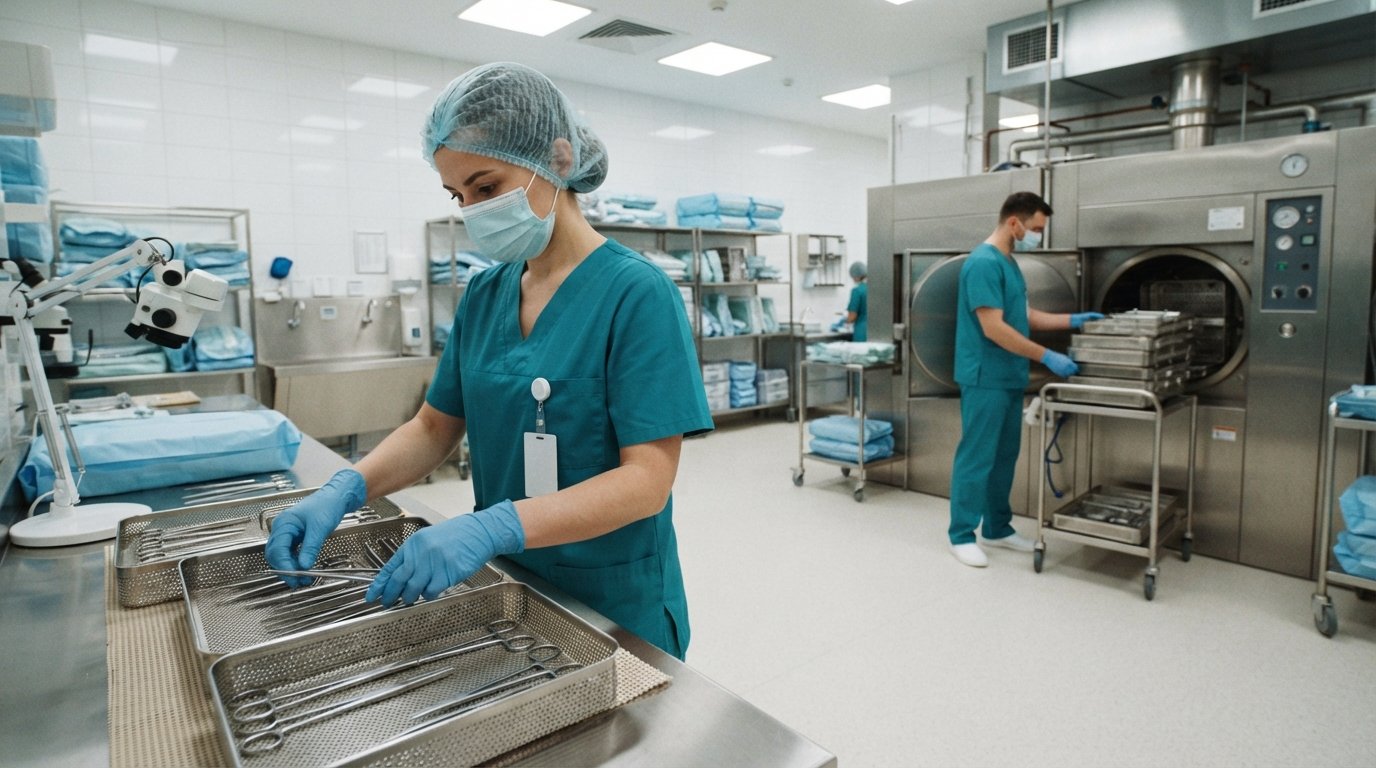
The Sterile Processing Technology/Technician Certificate, less than 12 weeks In-person at Central New Mexico Community College, is built on a foundation of rigorous, hands-on learning. Unlike online courses that may only offer theoretical instruction, this in-person format ensures you practice in real or simulated decontamination and assembly environments. You will learn to operate autoclaves, use chemical and biological indicators, and manage the complex logistics of surgical case carts. The face-to-face setting also allows for immediate feedback from instructors, which is crucial when mastering meticulous protocols.
The curriculum covers a broad spectrum of essential topics. You will start with medical terminology and anatomy, then move into the microbiology of pathogens and the principles of infection control. A significant portion of the training is dedicated to instrument identification and handling, as you will need to recognize hundreds of different tools and know exactly how to clean and assemble each one. The program also emphasizes documentation and quality assurance, teaching you how to maintain records that are vital for regulatory compliance and patient safety.
Key Skills You Will Master
Throughout the program, you will develop a specific set of technical and professional skills. These are the competencies that hiring managers will look for when you apply for your first technician role. Expect to become proficient in the following areas:
- Decontamination processes, including manual cleaning and ultrasonic washers.
- Packaging and wrapping techniques for sterilization.
- Operation and monitoring of steam, ethylene oxide, and other low-temperature sterilizers.
- Proper handling of delicate and complex surgical instruments.
- Understanding of the Spaulding Classification system for disinfection and sterilization.
Beyond these technical skills, you will also refine your attention to detail and ability to work under pressure. Sterile processing departments are fast-paced, and a single missed instrument can delay a surgery. The program's in-person nature helps you build the stamina and focus needed to thrive in such an environment. You will also learn to work as part of a team, communicating effectively with nurses and surgeons to ensure that all instruments are available and safe for use.
Career Outcomes and Certification Preparation
Graduates of the CNM certificate are well-prepared to pursue entry-level positions as sterile processing technicians in a variety of healthcare settings. The primary employers are hospitals, where technicians work in the central sterile supply department (CSSD) or sterile processing department (SPD). However, opportunities also exist in outpatient surgery centers, dental offices, and specialty clinics that perform invasive procedures. The credential you earn through this program signals to employers that you have met a standard of knowledge and practical skill.
Moreover, the program is designed to prepare you for professional certification, such as the Certified Registered Central Service Technician (CRCST) credential offered by the Healthcare Sterile Processing Association (HSPA) or the Certified Sterile Processing and Distribution Technician (CSPDT) from the Certification Board for Sterile Processing and Distribution. While certification is often not legally required, it is increasingly preferred by employers and can lead to higher starting salaries and more advancement opportunities. The curriculum at CNM aligns with the content areas covered on these national exams, giving you a strong foundation for passing on your first attempt.
Who Is This Program For?
This 12-week, in-person certificate is an excellent fit for a diverse range of individuals. If you are a career changer, this program offers a relatively quick pivot into a stable healthcare role. For example, a former retail manager or food service worker can transition into a technical position that offers better benefits and a more predictable schedule. The program is also ideal for those who prefer kinesthetic learning, where doing is the primary mode of understanding. If you have ever enjoyed working with your hands, solving puzzles, or following detailed procedures, sterile processing will feel like a natural fit.
Furthermore, this program is suitable for individuals who are just beginning their exploration of healthcare careers. It provides a clear, short-term goal that can be achieved without committing to a multi-year degree. For those who later wish to advance, this certificate can serve as a stepping stone to further education in nursing, surgical technology, or healthcare administration. In fact, many technicians use their experience in the SPD as a springboard to other clinical roles, as they gain an intimate knowledge of surgical procedures and instruments.
If you are a working professional in Albuquerque or the surrounding areas, the in-person requirement at CNM is a practical choice. The college's campus is accessible, and the 12-week timeline allows you to plan for a temporary reduction in work hours or other commitments. You will graduate just in time for the next hiring wave in local healthcare facilities, which often have ongoing needs for certified technicians.
How This Compares to Other Educational Paths
When considering sterile processing training, you will find options that range from six-month vocational school programs to two-year associate degrees. The less than 12 weeks format at CNM is on the shorter end of the spectrum, but it is by no means less rigorous. The key difference is the intensity. A longer program might spread the same number of instructional hours over a more extended period, which can be helpful for those who need to work full-time during their studies. However, for many learners, the accelerated format is a significant advantage, as it minimizes the time between deciding on a career and actually starting it.
Compared to an associate degree in a related field, the certificate is more focused and cost-effective. It does not include general education requirements, which means you spend every class session on sterile processing content. This specialization is the reason you can complete the program in under three months. However, it is important to note that some employers may prefer candidates with an associate degree for supervisory roles. Nevertheless, for an entry-level technician position, a certificate combined with national certification is often sufficient to secure a job and start gaining valuable experience.
Financial Considerations and Return on Investment
Cost is a major factor for most adult learners. The tuition for the 12-week certificate program at CNM is significantly lower than that of a full degree program. Furthermore, because the program is so short, you can quickly recoup your investment through your new salary. Sterile processing technicians in New Mexico earn a competitive wage, and the demand for these professionals is high. The Bureau of Labor Statistics groups this role under medical equipment preparers, and the median annual wage is respectable, with experienced technicians earning even more. Given the low upfront cost and the high probability of employment, the return on investment for this certificate is excellent.
Additionally, CNM offers financial aid and payment plans for eligible students. You may also qualify for scholarships specifically designed for healthcare training programs. It is wise to contact the financial aid office early to discuss your options. Also, consider that you will save on ancillary costs like textbooks and supplies, as these are often included in the program fee or available at the campus library. The short duration also reduces indirect costs, such as lost wages, compared to longer programs.
For a broader look at how this type of credential fits into the landscape of higher education and career planning, you might find it useful to review resources that compare different educational pathways. Websites like CollegeDegrees.School provide comprehensive guides on degrees and certificates, helping you understand how various credentials align with career goals. While this particular program is not an online degree, the principles of evaluating costs, outcomes, and accreditation are the same.
Steps to Enroll at CNM
Getting started is straightforward. First, you will need to apply to Central New Mexico Community College, if you are not already a student. Next, you will need to meet any prerequisites for the program, which may include a background check, immunization records, and a negative drug screen, as these are often required for clinical placements. It is essential to review the specific admission requirements on CNM's website or speak with an academic advisor to ensure you have all the necessary documentation.
Once admitted, you will be able to register for the certificate courses. Given the program's popularity and limited seats, it is advisable to register as early as possible. After you complete the coursework, you will receive your certificate and be eligible to sit for the national certification exam. CNM's career services office can assist you with resume writing, interview preparation, and job placement. Many graduates find positions before they even finish the program, thanks to the college's strong relationships with local healthcare providers.
Final Thoughts on Your Fast-Paced Healthcare Career
Choosing a career in sterile processing is a decision to become a guardian of patient safety. The Sterile Processing Technology/Technician Certificate, less than 12 weeks In-person at Central New Mexico Community College, is your fastest gateway to this noble and essential profession. Its accelerated format, combined with hands-on training, prepares you for immediate employment and certification. With the healthcare industry's continued growth, the need for skilled technicians will only increase, making this certificate a wise investment in your future. Take the step today, and in less than three months, you could be on your way to a rewarding new career.