
Fire Science Certificate at Community College of Aurora: Fast-Track Your Firefighting Career
Earn your Fire Science/Fire-fighting Certificate at Community College of Aurora in under a year with hands-on training for a rewarding firefighting career.

By Ethan Green
For many people, a career as a firefighter feels like a calling rather than just a job. It combines physical courage, quick thinking, and a deeply rooted desire to protect the community. If you have felt that pull toward the fire service, the path to certification can seem like a maze of physical tests, written exams, and academic prerequisites. One of the most direct and practical routes is the Fire Science/Fire-fighting Certificate, 12 weeks to less than 1 year In-person at Community College of Aurora. This program is designed to get you trained, certified, and ready to apply to fire departments without spending years in a classroom.
Choosing the right educational program is a pivotal decision. It affects not only how quickly you can enter the workforce but also how well prepared you are for the physical and mental demands of the job. Community College of Aurora (CCA) has structured its certificate to be both intensive and efficient, making it an attractive option for career changers and recent high school graduates alike. In this guide, we will explore what this certificate entails, how it fits into your career plans, and why the in-person, hands-on format at CCA is a powerful choice for aspiring firefighters.
Why Choose the Fire Science Certificate at CCA?
The primary advantage of a certificate program over a traditional two-year degree is speed. The Fire Science/Fire-fighting Certificate at Community College of Aurora is specifically designed to be completed in 12 weeks to less than 1 year, allowing you to enter the job market quickly. This condensed format is ideal for those who are eager to start their careers or for working professionals who cannot commit to a longer academic schedule. The curriculum is laser-focused on the essential skills and knowledge needed for entry-level firefighter positions, cutting out general education requirements that are not immediately relevant to your first job on the rig.
Furthermore, the in-person format is non-negotiable for fire science. Firefighting is a physically demanding profession that requires muscle memory, teamwork, and the ability to perform under extreme stress. You cannot learn to throw a ladder, advance a hose line, or perform a search and rescue from a textbook alone. CCA’s program emphasizes practical, hands-on training in realistic scenarios. You will work alongside experienced instructors who have been in the field, learning the tricks of the trade that only come from real-world experience. This immersive environment ensures you graduate not just with knowledge, but with the confidence and competence that fire departments look for.
For adult learners and career changers, this certificate offers a clear and structured path. It answers the question of "what next?" with a definitive plan. According to the U.S. Bureau of Labor Statistics, the median annual wage for firefighters was over $57,000 in 2023, with the job outlook projected to grow. This makes the investment of less than a year of your time a potentially life-changing step toward a stable, rewarding, and respected career.
What You Will Learn: Curriculum and Skills
The curriculum for the Fire Science/Fire-fighting Certificate at Community College of Aurora is comprehensive, covering all the core competencies required for Firefighter I and II certification, which are the industry standards for entry-level firefighters. The coursework is a blend of classroom theory and practical application, ensuring you understand the science behind the fire and the techniques to combat it. You will begin with the fundamentals of fire behavior, learning how fires start, spread, and can be controlled.
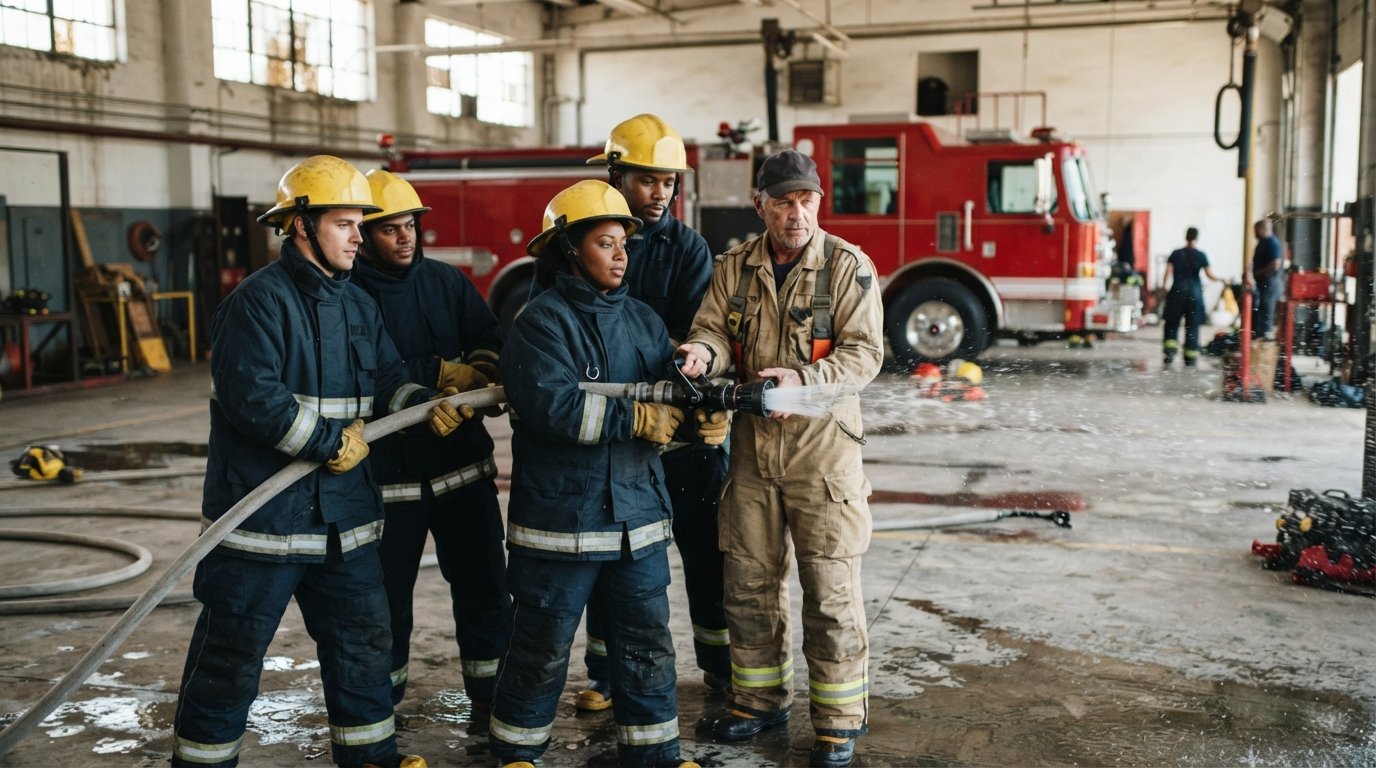
As you progress, you will dive into the technical skills. This includes everything from donning personal protective equipment (PPE) and self-contained breathing apparatus (SCBA) to performing vehicle extrication and hazardous materials awareness. A significant portion of your time will be spent on the drill ground, practicing with tools and equipment. You will learn to operate fire hoses, nozzles, and ladders, and you will participate in simulated rescue scenarios that test your agility and decision-making. The goal is to build proficiency through repetition, so that when you face a real emergency, your training takes over.
Beyond the physical skills, the program also covers crucial topics such as fire prevention, public education, and emergency medical care. Many fire departments require firefighters to be certified as Emergency Medical Technicians (EMTs), and while this certificate might not include full EMT certification, it will prepare you for the medical aspects of the job and help you understand the importance of patient care in the field. This holistic approach ensures you are not just a firefighter, but a well-rounded first responder.
To give you a clearer picture, here are some of the key topics and skills you can expect to master in the program:
- Fire behavior and combustion: Understanding the chemistry and physics of fire.
- Fire suppression techniques: Mastering the use of water, foam, and extinguishers.
- Search and rescue operations: Learning how to locate and remove victims from dangerous structures.
- Emergency medical response: Providing basic life support and first aid at the scene.
- Hazardous materials awareness: Identifying and responding to chemical and other dangerous spills.
This list represents the core of your training. Each of these areas is critical to your success and safety as a firefighter. The instructors at CCA bring years of experience, and they will push you to meet the high standards of the profession. For more context on how such a program can fit into a broader educational plan, you can review our guide on how to transfer credits from a community college to a university, as CCA’s certificate credits may also apply toward an associate degree later.
Admission Requirements and Prerequisites
Before you can start donning your gear, you need to meet the admission requirements for the program. The specific prerequisites for the Fire Science/Fire-fighting Certificate at Community College of Aurora can vary, so it is always best to check the official CCA website or contact an admissions counselor. However, there are some common requirements you should anticipate. Generally, you will need a high school diploma or GED. Because firefighting involves reading and interpreting complex procedures, a basic level of academic proficiency is expected.
Physical fitness is another crucial prerequisite. While you do not need to be an Olympic athlete to start the program, you should be in reasonably good shape. Firefighting is physically demanding, and the training will test your strength, endurance, and cardiovascular health. Some programs require a physical agility test as part of the admission process. It is wise to start a fitness regimen before the program begins. Focus on cardiovascular endurance, core strength, and upper body strength. You will be carrying heavy equipment and dragging victims, so prepare your body for that reality.
Additionally, many fire science programs require you to be at least 18 years old, and some may have a minimum age requirement of 19 or 21 for certain certifications. You will also likely need to pass a background check and a drug screening, as these are standard requirements for employment in public safety. A valid driver's license is usually required as well. Finally, you will need to meet any health requirements, which may include a physical exam and immunizations. It is important to be transparent about your history, as any discrepancies could jeopardize your ability to get certified.
For prospective students who are juggling work or family commitments, the accelerated timeline of this certificate is a major benefit. The program is structured to be intensive, but the college understands that students have lives outside of school. Classes are often scheduled in a way that allows for focused blocks of learning, but you should be prepared for a significant time commitment. You will need to dedicate time to studying, practicing skills, and completing assignments outside of scheduled class times. This is not a program you can coast through; it requires full engagement.
Career Paths and Opportunities After Graduation
Earning your Fire Science/Fire-fighting Certificate opens the door to a variety of career opportunities, not just within municipal fire departments. While becoming a firefighter for a city or county is the most common goal, your training will also prepare you for roles in other sectors. Many private industries, such as oil and gas, manufacturing, and aviation, employ trained firefighters to handle on-site emergencies. Industrial fire brigades are a growing field, and they value candidates with formal fire science training.
Another career path is in wildland firefighting. With the increasing frequency and intensity of wildfires, there is a high demand for wildland firefighters. These positions often require additional certifications, but your foundational training from CCA will give you a significant advantage. You could also look into roles with state and federal agencies, such as the U.S. Forest Service or the Bureau of Land Management. Your certificate will also be beneficial if you choose to pursue further education, such as an Associate of Applied Science (AAS) degree in Fire Science, which can lead to promotions to officer ranks and management positions.
The immediate job prospects for graduates of a certificate program are strong. Fire departments across the country are actively recruiting, and having a recognized certificate from a respected institution like Community College of Aurora makes you a more competitive candidate. The hands-on experience you gain in the program is exactly what hiring panels are looking for. When you walk into an interview, you will be able to speak confidently about your skills and demonstrate that you have already committed to the profession. To explore how this certificate can be a stepping stone to further education in fire science or related fields, you might find it useful to look at broader higher education planning resources that can help you map out your long-term academic and career goals.
Financing Your Education and Related Costs
Investing in your education is an investment in your future, but it is still important to understand the costs involved. The total cost for the Fire Science/Fire-fighting Certificate at Community College of Aurora will include tuition, fees, books, and equipment. Community colleges are generally more affordable than four-year institutions, making this an economical choice. For the most accurate and up-to-date tuition figures, you should consult the CCA website or their financial aid office. They can provide a detailed breakdown of costs specific to the program.
Thankfully, there are several ways to finance your education. The first step is to fill out the Free Application for Federal Student Aid (FAFSA). This determines your eligibility for federal grants, loans, and work-study programs. Grants, such as the Pell Grant, are essentially free money that you do not have to pay back. Many states also offer grant programs for students pursuing in-demand career fields like fire science. CCA’s financial aid office can help you navigate these options.
In addition to federal aid, there are scholarships specifically for fire science students. Professional organizations like the National Volunteer Fire Council offer scholarships, as do many local fire departments and community foundations. Some fire departments even offer tuition reimbursement programs for recruits who commit to working for them after certification. It is worth investigating these opportunities early, as scholarship deadlines can be months before the program starts. Your goal should be to minimize student debt, and with careful planning, you can achieve your certification with little to no financial burden.
Making the Most of the In-Person Experience
Choosing an in-person program over an online one is a significant decision, and for fire science, it is absolutely the right one. The in-person format at CCA provides a level of immersion that is impossible to replicate online. You will be working with your hands, using real tools, and practicing in real-life scenarios. This is where true learning happens. The camaraderie you build with your classmates is also a crucial part of the experience. You will learn to trust each other, communicate effectively, and work as a team, which are essential skills on the fireground.
To get the most out of your time at CCA, be proactive. Introduce yourself to your instructors and ask questions. They have a wealth of knowledge and experience, and they are there to help you succeed. Treat every drill as if it were a real emergency. The more you put into your practice, the more you will get out of it. Also, take advantage of any open gym hours or physical training facilities that the college offers. Maintaining your physical fitness throughout the program is crucial.
Networking is another key benefit of an in-person program. Your classmates will become your professional network. They will go on to work in different departments, and these connections can be invaluable when you are looking for a job. Instructors also often have connections with local fire chiefs and can provide references or recommendations. Make a good impression by showing up prepared, working hard, and demonstrating a positive attitude. The reputation you build in the program can follow you into your career.
The Fire Science/Fire-fighting Certificate at Community College of Aurora is more than just a piece of paper; it is a testament to your commitment and readiness. This 12-week to less-than-one-year program is your fast track to a career that is both challenging and rewarding. You will graduate with the skills, the confidence, and the professional network to make a real difference in your community. If you are ready to answer the call, this is the place to start. Take the first step today and investigate the requirements, visit the campus, and talk to an advisor. Your future in the fire service awaits.