
HVAC/R Technician Certificate at CAPITAL REGION BOCES: Fast-Track Your Career
Earn a 12-week HVAC/R certificate at CAPITAL REGION BOCES for hands-on training and a fast path to a stable, growing career.

By Ethan Green
If you are looking for a hands-on career with strong job growth and the satisfaction of solving real-world problems, the Heating, Ventilation, Air Conditioning and Refrigeration Engineering Technology/Technician Certificate at CAPITAL REGION BOCES might be your perfect launchpad. This 12-week to less than 1 year in-person program is designed for adults who want to enter the workforce quickly, without spending years in a traditional classroom. The program focuses on practical skills that employers need immediately, giving you a direct path to a rewarding career in a field that is essential to modern life. In this guide, we will explore what this certificate offers, what you will learn, how it compares to other educational paths, and the career opportunities waiting for you after graduation.
Why Choose a Fast-Track HVAC/R Certificate?
The demand for skilled HVAC/R technicians is consistently high. As buildings become more complex and climate control becomes more critical, the need for qualified professionals who can install, maintain, and repair these systems continues to grow. The Bureau of Labor Statistics projects a faster-than-average job growth for HVAC/R technicians over the next decade, making this a stable and promising career choice. For adult learners and career changers, the appeal of a certificate program that can be completed in less than a year is clear: you can gain essential skills and start earning sooner, often with less debt than a traditional degree.
This specific certificate at CAPITAL REGION BOCES is structured for efficiency without sacrificing depth. Unlike a two-year associate degree or a four-year bachelor's program, this training zeroes in on the core competencies that employers are looking for right away. You will not spend semesters on general education requirements; instead, you will spend your time in the lab and in the field, learning the actual systems and tools you will use daily. This focused approach is ideal for individuals who prefer hands-on learning and are eager to begin their careers without unnecessary delay.
What You Will Learn in the Program
The curriculum for the Heating, Ventilation, Air Conditioning and Refrigeration Engineering Technology/Technician Certificate is a comprehensive blend of theory and practice. You will start with the fundamentals of thermodynamics, electricity, and refrigeration cycles, then move into the specifics of system installation, diagnostics, and repair. Safety is a major emphasis throughout, as you will learn industry-standard protocols for handling refrigerants and working with electrical and gas systems. By the end of the program, you should be comfortable working on residential and light commercial systems, from central air conditioners and heat pumps to commercial refrigeration units.
Students can expect to gain proficiency in several key areas:
- Refrigeration cycle fundamentals and refrigerant handling.
- Electrical components, wiring diagrams, and troubleshooting.
- Heating systems, including furnaces and heat pumps.
- Air conditioning installation, maintenance, and repair.
- Ventilation and indoor air quality considerations.
Beyond technical skills, the program also covers customer service and professional communication, which are vital for success in this field. Many technicians work directly with homeowners or business managers, so being able to explain issues clearly and recommend solutions is a huge asset. The program often includes preparation for EPA Section 608 certification, which is required to handle refrigerants, and other industry-recognized credentials that boost your employability.
Hands-On Learning and In-Person Experience
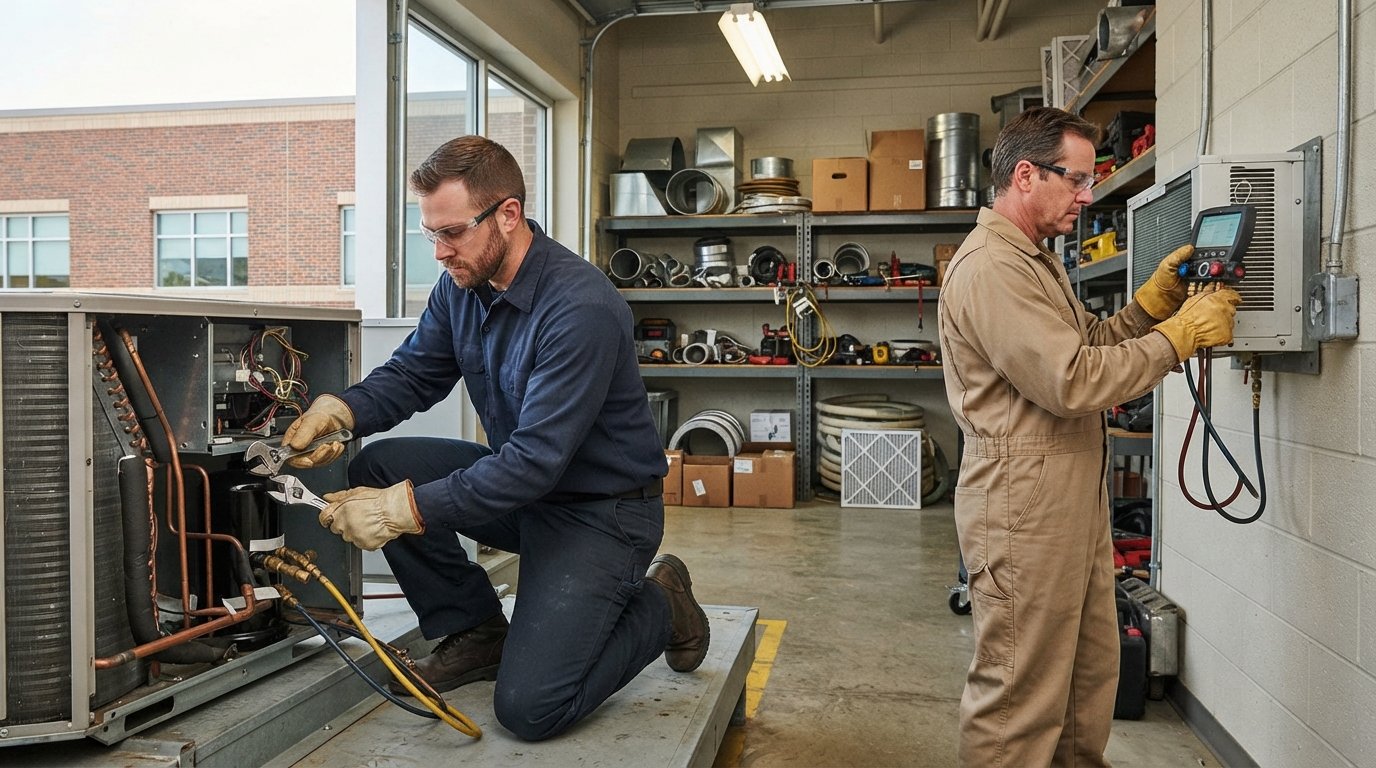
One of the biggest advantages of this certificate is the in-person format. HVAC/R is inherently a hands-on trade, and there is no substitute for working with actual equipment. At CAPITAL REGION BOCES, you will have access to training labs equipped with modern systems, allowing you to practice installation and diagnostic procedures in a realistic setting. This experiential learning means you graduate not just with theoretical knowledge, but with proven skills you can apply from day one on the job.
Instructors at CAPITAL REGION BOCES are often experienced professionals who bring real-world insights into the classroom. They can share stories from the field, teach you industry shortcuts, and help you avoid common mistakes. This mentorship is invaluable, as it bridges the gap between textbook concepts and the realities of working in the trade. The collaborative environment also helps you build a network of peers who will be entering the industry alongside you, which can be a great source of support and future job leads.
Career Paths and Job Outlook
Graduates of the Heating, Ventilation, Air Conditioning and Refrigeration Engineering Technology/Technician Certificate are prepared for entry-level positions in a variety of settings. Many start with HVAC/R installation or maintenance companies, while others find roles with commercial property management firms, schools, hospitals, or government agencies. Some technicians specialize in specific types of systems, such as refrigeration for grocery stores or solar heating systems, while others pursue further education to become estimators, project managers, or business owners.
The job outlook for HVAC/R technicians is exceptionally strong. According to the U.S. Bureau of Labor Statistics, employment in this field is projected to grow much faster than the average for all occupations through the early 2030s. This growth is driven by the increasing need for climate control in both residential and commercial sectors, as well as the growing focus on energy efficiency and the retrofitting of older systems. With the right training and certification, you can enter a field with strong job security and excellent earning potential.
Who Should Enroll in This Program?
This certificate is designed for a wide range of learners. It is an excellent fit for recent high school graduates who are exploring trade careers, as well as adults looking to make a career change. It is also a strong option for individuals already working in a related field, such as construction or maintenance, who want to add specialized skills to their resume. The program is structured to accommodate busy schedules, with a duration of 12 weeks to less than 1 year, making it a realistic option for those who need to balance other commitments.
If you enjoy working with your hands, solving puzzles, and helping people, HVAC/R could be a great fit. The work is varied and often involves interacting with customers, so good communication skills are a plus. You should also be comfortable with physical demands, as the job can involve lifting heavy equipment, working in tight spaces, and sometimes working outdoors in extreme temperatures. However, the rewards, including job stability and the satisfaction of a job well done, are well worth the effort.
Comparing the Certificate to Other Education Paths
When deciding on your education pathway, it is helpful to compare the certificate to other options. An associate degree in HVAC/R takes about two years and includes general education courses, which can be valuable for those who might later want to move into management or engineering roles. A bachelor's degree in mechanical engineering is a much longer and more theoretical path, typically leading to design and engineering positions rather than hands-on work. For someone who wants to start working as a technician as quickly as possible, the certificate is the most direct route.
The certificate also offers a strong return on investment. Tuition is typically much lower than a degree program, and since you can start working in under a year, you begin earning sooner. Many graduates find that their starting salary is competitive with entry-level jobs requiring a degree, and the potential for overtime and advancement is high. This makes the certificate an attractive option for those concerned about the cost of education and the time away from the workforce.
Financial Aid and Enrollment
Enrolling in the Heating, Ventilation, Air Conditioning and Refrigeration Engineering Technology/Technician Certificate at CAPITAL REGION BOCES is a straightforward process. You will need to meet the school's admissions requirements, which typically include a high school diploma or GED. The school can provide details on upcoming start dates and any prerequisite courses. For many adult learners, financial aid is a key consideration. CAPITAL REGION BOCES often has options for financial assistance, including federal aid, scholarships, and payment plans. It is wise to contact the school's financial aid office early to explore your options and ensure you can secure funding.
If you are also considering broader educational opportunities, you might find it helpful to explore resources that compare different training and degree programs. For instance, CollegeDegrees.School offers comprehensive guides on various higher education pathways, which can be useful if you are thinking about advancing beyond the certificate later. Additionally, our review of the Marine Maintenance and Ship Repair Tech Certificate at CLC shows how other technical certificates can open doors to specialized careers, providing a useful comparison for those exploring all their options.
Key Takeaways and Next Steps
The Heating, Ventilation, Air Conditioning and Refrigeration Engineering Technology/Technician Certificate at CAPITAL REGION BOCES is a smart, efficient step toward a stable and rewarding career. It offers hands-on training, a fast timeline, and a clear pathway to employment. If you are ready to take control of your future, this program is worth serious consideration.
To get started, visit the CAPITAL REGION BOCES website to learn about information sessions, campus tours, and application deadlines. Speaking with an admissions counselor can help you understand the program details, including the schedule, costs, and what to expect in the classroom. With the right preparation and commitment, you could be on your way to a new career in a matter of months. Take that first step today and see where this exciting field can take you.