
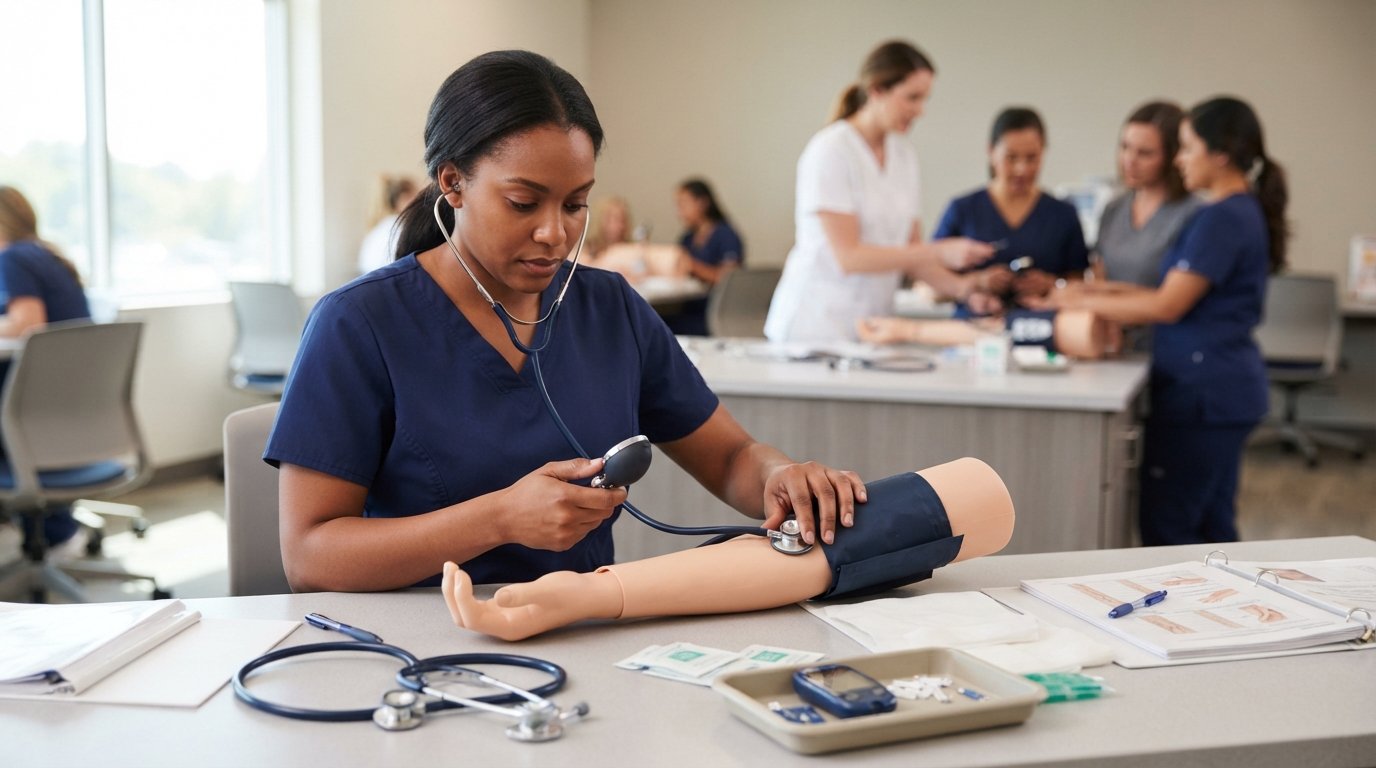
Medical/Clinical Assistant Certificate in 12 Weeks to Under 1 Year
The Medical/Clinical Assistant Certificate, 12 weeks to less than 1 year In-person at College and Career Advantage Regional Occupational Program, gets you job-ready fast with hands-on training.

By Oliver Brooks
Landing a healthcare job without a degree can feel like hitting a locked door, but a Medical/Clinical Assistant Certificate, 12 weeks to less than 1 year In-person at College and Career Advantage Regional Occupational Program, opens that door faster than you might expect. This short, hands-on program is designed for people who want to enter the medical field quickly, learn practical skills, and start earning without spending years in a classroom. If you are a career changer, a recent high school graduate, or someone returning to the workforce, this certificate offers a clear, structured path into one of the most in-demand roles in healthcare.
In this guide, you will learn what the program covers, how long it takes, what it costs, and how it compares to other training options. You will also see how the certificate fits into a larger career plan, and why an in-person format at a regional occupational program can be a smarter choice than a purely online course for many students. By the end, you will have a realistic picture of what to expect and how to decide if this is the right step for you.
What Is a Medical/Clinical Assistant Certificate?
A medical or clinical assistant certificate is a short-term credential that prepares you to work in doctors' offices, clinics, urgent care centers, and other outpatient settings. Unlike a full associate degree in medical assisting, which can take two years, this certificate focuses on the core skills employers need right away: taking vital signs, assisting with patient exams, managing medical records, handling basic lab tests, and communicating with patients and insurance companies. The goal is to get you job-ready in months, not years.
The program at College and Career Advantage Regional Occupational Program is delivered in person, which matters for this field. Medical assisting is a hands-on job, and employers want to see that you have practiced injections, sterilization, patient positioning, and other clinical tasks under supervision. An in-person format also gives you face-to-face access to instructors who have worked in healthcare, and it lets you build a network of peers who may become colleagues or job leads later.
Because the certificate takes 12 weeks to less than 1 year, it fits into a busy life. You can complete it between jobs, while working part-time, or before committing to a longer degree program. For many students, it is a low-risk way to test whether healthcare is the right fit before investing more time and money.
Program Format and Time Commitment
The Medical/Clinical Assistant Certificate, 12 weeks to less than 1 year In-person at College and Career Advantage Regional Occupational Program, is structured for students who need flexibility but also want real classroom and lab experience. Most students attend class several days per week, with a mix of lecture, lab practice, and clinical externship hours. The exact schedule varies by cohort, but the overall time frame is designed to get you into the workforce quickly.
Here is a typical breakdown of what the time commitment looks like:
- Classroom instruction: Lectures on anatomy, medical terminology, billing and coding basics, and patient communication.
- Hands-on lab: Practice with vital signs, venipuncture, EKGs, sterilization, and exam room setup.
- Externship: A supervised placement in a local clinic or doctor's office, often 100 to 160 hours.
- Exam preparation: Review sessions for certification exams such as the CMA (AAMA) or RMA (AMT).
Because the program is in person, you will need to plan for travel and set hours. However, the payoff is that you are not learning clinical skills from videos alone. You will handle equipment, practice on classmates, and get immediate feedback. That kind of training is hard to replicate online, and it is one reason employers often prefer candidates who completed in-person programs.
If you are comparing this to online options, keep in mind that most clinical assistant roles require hands-on competency. Some online programs offer hybrid formats, but the in-person lab and externship components are still essential. You can read more about how to evaluate online versus in-person medical assistant programs in our guide on how to choose accredited online medical assistant programs, which explains what to look for in accreditation and clinical placements.
What You Will Learn: Core Competencies
The curriculum for this certificate is built around the tasks medical assistants perform daily. You will learn both administrative and clinical skills, which makes you more versatile and employable. On the administrative side, expect training in scheduling, patient intake, electronic health records, insurance verification, and basic coding. On the clinical side, you will practice taking vital signs, preparing patients for exams, assisting with minor procedures, drawing blood, performing EKGs, and maintaining infection control.
Soft skills are also a big part of the program. Medical assistants are often the first and last person a patient sees, so communication, empathy, and professionalism are emphasized. You will practice explaining procedures, calming nervous patients, and working as part of a care team. These skills are just as important as technical knowledge when it comes to getting hired and succeeding on the job.
By the end of the program, you should be able to:
- Perform routine clinical tasks such as vital signs, venipuncture, and EKGs.
- Manage patient records and use electronic health record systems.
- Assist physicians and nurses during exams and procedures.
- Communicate effectively with patients and insurance companies.
- Apply safety and infection control standards in a clinical setting.
These competencies align with entry-level requirements for medical assistant positions in most states. While certification requirements vary, many employers prefer or require a credential such as the Certified Medical Assistant (CMA) or Registered Medical Assistant (RMA). The program prepares you to sit for these exams, which can boost your earning potential and job prospects.
Admission Requirements and Enrollment Steps
Admission to the program is typically straightforward, but you should plan ahead. Most regional occupational programs require a high school diploma or equivalent, a background check, and proof of immunizations. Some programs also require a short interview or assessment to ensure you are ready for the coursework. Because the program is in person, you will also need to confirm your availability for daytime or evening classes, depending on the cohort.
Here is a general step-by-step process to enroll:
- Contact College and Career Advantage Regional Occupational Program to request an information packet and schedule a tour.
- Complete the application and submit transcripts or proof of high school completion.
- Provide immunization records and consent to a background check.
- Attend an orientation session to meet instructors and review the schedule.
- Register and pay tuition, or apply for financial aid if available.
Keep in mind that cohort sizes may be limited, so applying early is smart. If you are unsure about funding, ask about payment plans, scholarships, or workforce development grants. Some programs partner with local employers who sponsor training, so it is worth asking about those options during your information session.
For students who are also considering longer-term education pathways, it helps to understand how short-term certificates fit into the broader landscape of higher education costs. Resources like CollegeAndTuition provide guides on financial aid, scholarships, and college planning that can help you compare the cost of a certificate versus a degree program and make a decision that fits your budget.
Cost and Financial Aid Options
One of the biggest advantages of a short-term certificate is the lower cost compared to a two-year or four-year degree. Tuition for a medical assistant certificate at a regional occupational program is often a fraction of what private schools charge, and you can finish without taking on heavy student loan debt. However, costs vary by program and location, so you should request a detailed fee schedule that includes tuition, books, uniforms, background checks, and certification exam fees.
Financial aid options may include:
- Federal Pell Grants and state grants for eligible students.
- Workforce development funding through local workforce boards.
- Scholarships from healthcare employers or community organizations.
- Payment plans offered directly by the program.
It is important to ask whether the program is accredited and whether it qualifies for federal financial aid. Accreditation affects your ability to use federal aid and transfer credits later. If you plan to continue your education, check with the program about articulation agreements with local colleges. Some certificates can be applied toward an associate degree in medical assisting, which can lead to higher-paying roles or supervisory positions.
When comparing costs, look beyond tuition. A cheaper program that does not include externship placement or exam preparation may end up costing more in the long run if you have to pay for those services separately. The in-person format at College and Career Advantage includes hands-on training and often externship support, which can save you time and money down the road.
Career Outcomes and Job Outlook
Medical assistants are in demand across the country. As healthcare services expand and the population ages, clinics, hospitals, and urgent care centers need trained support staff. According to the U.S. Bureau of Labor Statistics, employment of medical assistants is projected to grow much faster than the average for all occupations over the next decade. That means a certificate can position you for a stable career with room for advancement.
Typical entry-level job titles include:
- Clinical Medical Assistant
- Administrative Medical Assistant
- Medical Office Assistant
- Patient Care Coordinator
- Externship-to-hire roles in clinics and specialty practices
Salaries vary by region, experience, and certification. In many areas, certified medical assistants earn more than those without credentials, and specialty clinics may pay higher wages. With experience, you can move into roles such as lead medical assistant, office manager, or clinical coordinator. Some assistants use the certificate as a stepping stone to nursing, radiology technology, or healthcare administration degrees.
If you are thinking about long-term career growth, the certificate gives you a fast entry point and a way to earn while you learn. You can work as a medical assistant while pursuing an associate or bachelor's degree in a related field, often with employer tuition assistance. That makes this program a practical first step rather than a dead end.
Why Choose an In-Person Regional Occupational Program?
Regional occupational programs (ROPs) are designed to prepare students for immediate employment. They are often more affordable than private career schools and have strong ties to local employers. The in-person format at College and Career Advantage means you learn in a real lab environment, practice with actual medical equipment, and build relationships with instructors who can serve as references.
Another advantage is the externship. Many ROPs partner with local clinics and hospitals to place students in supervised work settings. This gives you real-world experience and a foot in the door with potential employers. In fact, many students receive job offers from their externship sites. That kind of direct pipeline is hard to find in purely online programs.
Finally, in-person programs offer structure and accountability. If you are the type of learner who benefits from set class times, face-to-face instruction, and hands-on practice, this format can help you stay on track and complete the certificate on schedule. Online programs require strong self-discipline, and not everyone thrives in that environment.
How to Succeed in the Program
Success in a fast-paced certificate program requires focus and organization. Because the program is short, missing a few classes can put you behind. Treat it like a job: arrive on time, participate actively, and review material regularly. Form study groups with classmates, especially for anatomy and medical terminology, which are often the most challenging subjects for new students.
Here are a few tips to make the most of your training:
- Practice clinical skills in the lab as much as possible; repetition builds confidence.
- Ask instructors for feedback and clarification when you are unsure.
- Network with peers and externship supervisors; they can be valuable references.
- Prepare for certification exams early by using practice tests and review guides.
- Keep a professional portfolio of your skills and externship evaluations.
Also, take care of yourself. The program is intense, and balancing work, family, and school can be challenging. Build a schedule that includes study time and rest. If you run into difficulties, talk to your instructor or program coordinator; they often have resources to help students succeed.
Is This Certificate Right for You?
The Medical/Clinical Assistant Certificate, 12 weeks to less than 1 year In-person at College and Career Advantage Regional Occupational Program, is a strong fit for people who want to enter healthcare quickly, prefer hands-on learning, and are ready to commit to a short but intensive program. It is less suitable for those who cannot attend in-person classes or who want a degree that transfers to a four-year university without additional coursework. However, for many students, it is the fastest and most affordable route to a healthcare career.
If you are still weighing options, consider your timeline, budget, and learning style. A short certificate can get you working and earning sooner, and you can always continue your education later. The key is to choose a program that is accredited, includes externship placement, and prepares you for certification. With those elements in place, you will be well positioned to start a rewarding career as a medical assistant.
Taking the first step can feel daunting, but the payoff is a practical skill set, a credential employers recognize, and a pathway to stable employment in a growing field. If you are ready to move forward, contact the program to learn about upcoming start dates and enrollment requirements.