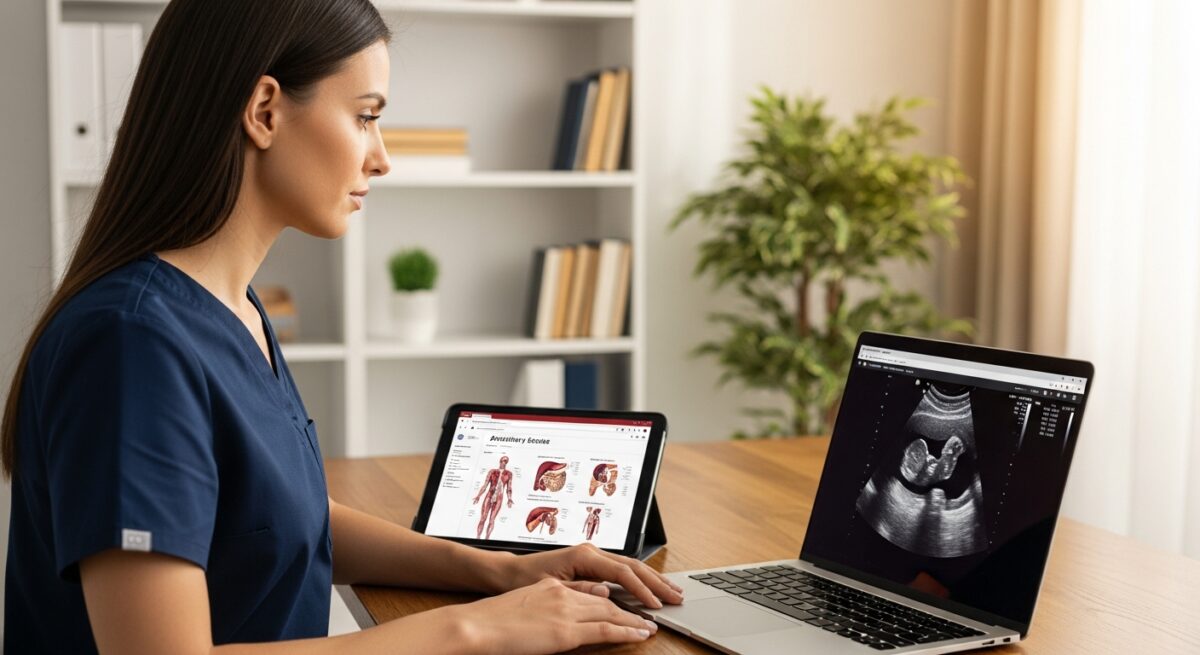
The healthcare industry runs on data, and at the center of that data flow is the medical coder. These professionals translate patient diagnoses, treatments, and procedures into standardized alphanumeric codes used for billing, insurance claims, and public health research. If you are looking for a stable, well-paying career that does not require direct patient care or a four-year degree, medical coding online programs offer a direct and flexible route. The best part is that you can start training from home, often completing a certificate in less than a year. This guide explains what these programs involve, how to choose the right one, and what you can expect from a career in this growing field.
What Are Medical Coding Online Programs?
Medical coding online programs are structured educational courses delivered via the internet that teach you how to assign medical codes to patient records. These codes come from three main classification systems: ICD-10-CM (diagnosis codes), CPT (procedure codes), and HCPCS Level II (supplies and equipment codes). The goal is to ensure accurate billing and compliance with healthcare regulations. Programs range from short certificate courses lasting a few months to associate or bachelor’s degree programs that take two to four years. Most reputable online programs are designed to prepare you for a national certification exam, such as the Certified Professional Coder (CPC) exam offered by the American Academy of Professional Coders (AAPC) or the Certified Coding Associate (CCA) exam from the American Health Information Management Association (AHIMA).
The flexibility of online learning is a major draw. You can study at your own pace, fitting coursework around your current job or family responsibilities. Many programs are asynchronous, meaning you watch recorded lectures and complete assignments on your own schedule. Others include live, instructor-led sessions for real-time feedback and discussion. Before enrolling, it is critical to verify that the program is accredited by a recognized body such as the Commission on Accreditation for Health Informatics and Information Management Education (CAHIIM) or is approved by a major certifying organization like AAPC or AHIMA. Accreditation ensures that the curriculum meets industry standards and that your credential will be respected by employers.
Key Benefits of Learning Medical Coding Online
Choosing an online pathway over a traditional on-campus program offers several distinct advantages. First, the cost is often lower. Online programs typically have lower tuition and eliminate commuting, housing, and campus fees. Many programs also offer payment plans or financial aid, and you can often find scholarship opportunities specifically for healthcare students. Second, the time to completion can be shorter. Certificate programs can be completed in as little as four to six months, allowing you to enter the workforce quickly. Third, you gain valuable technical skills that are directly applicable to the job. Most medical coding work is done on a computer using specialized software, and online programs naturally build your comfort with digital tools and remote workflows.
Another benefit is the breadth of program options. You can choose from self-paced courses, instructor-led cohorts, or hybrid models that combine online theory with a local externship. Some programs even include a guaranteed externship placement, which is invaluable for gaining hands-on experience. For example, a typical online medical coding course will cover anatomy, physiology, medical terminology, coding guidelines, reimbursement methodologies, and legal and ethical issues. The best programs also provide access to coding software simulators and practice exams to help you prepare for certification. In our guide on LPN to ADN Online Programs Guide: Fast-Track Your Nursing Career, we discuss similar accelerated pathways for healthcare professionals, and the same principles of efficiency and quality apply to coding programs.
How to Choose the Best Online Medical Coding Program
With so many options available, selecting the right program requires careful research. Start by defining your career goals. If you want to become a certified coder as quickly as possible, a focused certificate program from a reputable provider is your best bet. If you are considering a long-term career in health information management, an associate or bachelor’s degree from a CAHIIM-accredited school may be more appropriate. Here are five critical factors to evaluate when comparing programs:
- Accreditation and Certification Alignment: Ensure the program is accredited by CAHIIM or is a recognized partner of AAPC or AHIMA. This directly affects your eligibility to sit for the certification exam.
- Curriculum Depth: Look for courses that cover ICD-10-CM, CPT, HCPCS Level II, medical terminology, anatomy, and reimbursement methodologies. Avoid programs that skip foundational subjects.
- Cost and Financial Aid: Compare total tuition, fees, and the cost of books and software. Check if the school offers payment plans, scholarships, or federal financial aid (FAFSA).
- Student Support Services: Does the program offer tutoring, career counseling, or job placement assistance? Is there an active student community or forum for networking?
- Externship or Capstone Opportunities: Practical experience is highly valued by employers. Programs that include an externship or a hands-on capstone project give you a significant advantage.
After evaluating these factors, narrow your list to three to five programs and read recent student reviews on independent sites. Be cautious of programs that promise immediate job placement or guarantee certification without rigorous study. A quality program will be transparent about its exam pass rates and job placement statistics. It is also wise to contact the admissions office directly with any specific questions about the curriculum, instructor qualifications, and technology requirements.
Typical Curriculum and Skills You Will Learn
While curricula vary, most medical coding online programs cover a core set of subjects designed to build your competence from the ground up. The first courses typically focus on medical terminology and anatomy. You will learn the language of healthcare, including root words, prefixes, suffixes, and the major body systems. This foundation is essential because you cannot code what you do not understand. Next, you dive into the coding systems. ICD-10-CM coding teaches you how to select the correct diagnosis code for each patient encounter. CPT coding covers procedures and services, while HCPCS Level II focuses on supplies, equipment, and services not covered by CPT. You will also learn about Evaluation and Management (E/M) coding, which is a complex area that requires careful reading of documentation.
Beyond coding itself, programs teach reimbursement methodologies such as Medicare Severity Diagnosis Related Groups (MS-DRGs) for inpatient stays and Ambulatory Payment Classifications (APCs) for outpatient services. You will study medical necessity, fraud and abuse laws, and the Health Insurance Portability and Accountability Act (HIPAA) privacy rules. Many programs also include coursework on using electronic health record (EHR) systems and coding software. By the end of the program, you should be able to review a medical record, extract the relevant diagnoses and procedures, assign the correct codes, and sequence them according to official guidelines. This skill set is the same whether you are learning medical coding online or in a classroom, but online programs often emphasize self-discipline and time management as part of the learning process.

Certification: The Key to Employment
Employers in medical coding almost always prefer or require certification. While you can find entry-level positions without it, certified coders earn significantly more and have better job prospects. The two most recognized certifying bodies are AAPC and AHIMA. AAPC offers the Certified Professional Coder (CPC) credential, which is the gold standard for outpatient and physician office coding. AHIMA offers the Certified Coding Associate (CCA) for entry-level coders and the Certified Coding Specialist (CCS) for more advanced inpatient coding. Most online programs are designed to prepare you for one or more of these exams. To sit for the CPC exam, for example, you need to have completed a coding course or have two years of professional experience. Many online programs include the exam fee in their tuition, so be sure to ask about this.
Passing the certification exam requires dedicated study. Most successful candidates spend several weeks reviewing coding guidelines, taking practice exams, and using coding manuals or software. Some online programs offer exam prep boot camps or review courses as part of their curriculum. After you pass the exam, you must maintain your certification through continuing education units (CEUs). This ensures that your skills remain current as coding guidelines and regulations change. The investment in certification pays off: according to the AAPC, certified coders earn an average of 20 percent more than non-certified coders. Additionally, certification opens doors to remote work opportunities, which are abundant in this field.
Frequently Asked Questions
How long does it take to complete a medical coding online program?
Certificate programs can be completed in 4 to 12 months depending on whether you study full-time or part-time. Associate degree programs typically take two years, and bachelor’s programs take about four years. Self-paced programs allow you to accelerate completion if you have more time to dedicate.
Can I get a job without certification?
It is possible but much more difficult. Some employers hire entry-level coders and then require them to obtain certification within a certain timeframe. However, most job listings prefer or require a credential like the CPC or CCA. Completing a program that includes certification preparation is the safest route to employment.
What is the average salary for a medical coder?
According to the U.S. Bureau of Labor Statistics, the median annual wage for medical records specialists (which includes coders) was around $48,000 in 2023. Certified coders with experience can earn $60,000 or more, especially in hospital settings or specialized areas like surgical coding.
Are online medical coding programs respected by employers?
Yes, provided the program is from an accredited institution or a recognized training partner of AAPC or AHIMA. Employers care about your certification and your ability to code accurately, not whether you studied online or on campus. However, you should avoid unaccredited or diploma mill programs that lack proper oversight.
Do I need prior healthcare experience to enroll?
No, most certificate programs are designed for beginners. You do not need a medical background, but a strong attention to detail and basic computer skills are helpful. Some associate degree programs may require prerequisite courses in English or math.
Medical coding offers a stable, rewarding career path that combines analytical thinking with a vital role in healthcare operations. With the flexibility of medical coding online programs, you can gain the skills and certification needed to enter this field without putting your current life on hold. By choosing an accredited program, committing to certification, and leveraging the job placement resources available to you, you can build a successful career as a medical coder. The demand for skilled coders continues to grow as the healthcare system expands, making this an excellent time to invest in your education and future.