
Online Art Degrees: A Guide to Programs and Specializations
Explore accredited online art programs degree options that offer flexible, portfolio-driven paths to careers in graphic design, animation, and illustration.

By Amelia Brown
For aspiring artists, designers, and creative professionals, the traditional path to a degree no longer requires relocating or putting life on hold. The landscape of online art programs degree options has matured dramatically, offering rigorous, accredited curricula that rival on-campus experiences. This evolution in digital education provides unprecedented access to foundational art theory, hands-on studio practice, and specialized digital skills, all designed to fit around work and family commitments. Whether your goal is to build a professional portfolio, pivot into a creative career, or achieve a lifelong dream of formal art training, understanding the scope and structure of available online art degrees is the first critical step.
Understanding the Types of Online Art Degrees Available
The spectrum of online art degrees is broad, catering to different educational backgrounds and career objectives. At the foundational level, Associate of Arts (AA) or Associate of Fine Arts (AFA) degrees provide a two-year pathway that covers core principles like drawing, color theory, and art history. These programs are excellent for building a portfolio for transfer to a four-year institution or for entering entry-level positions in creative fields. The Bachelor of Fine Arts (BFA) is the standard professional undergraduate degree for artists. An online BFA delves deeply into studio practice and conceptual development, often requiring a final thesis project or senior exhibition. For those interested in the academic, historical, or theoretical side of art, a Bachelor of Arts (BA) in Art or Art History offers a broader liberal arts education alongside art studies.
At the graduate level, Master of Fine Arts (MFA) programs represent the terminal degree in studio art. Pursuing an MFA online is increasingly viable, with low-residency models being particularly popular. These programs typically combine intensive online coursework with short, required on-campus residencies for critique and community building. Master of Arts (MA) degrees are also available, often focusing on art education, theory, or arts administration. Each degree type serves a distinct purpose: the BFA builds professional competency, the BA provides a versatile foundation, and the MFA prepares artists for teaching at the collegiate level or achieving the highest level of studio practice.
Core Components and Specializations in Online Art Curricula
A quality online art degree program balances timeless foundational skills with cutting-edge digital tools. Regardless of specialization, students can expect core coursework in drawing, two-dimensional and three-dimensional design, art history survey courses, and visual culture studies. These foundational courses are crucial for developing a critical eye and a strong technical base. The delivery of these hands-on subjects online is facilitated through digital submissions, live video demonstrations, virtual critiques, and specially designed kits mailed to students containing paints, canvases, or sculpting materials.
Where online art programs truly shine is in their array of specializations tailored to modern creative industries. Unlike generic programs, these focused paths allow students to build expertise in high-demand areas. Prospective students should carefully compare specializations to align with their career goals. For example, a specialization in Illustration prepares students for book, editorial, or concept art, while Graphic Design focuses on branding, typography, and layout for print and web. To help navigate these choices, here are some of the most common and valuable specializations available:
- Graphic Design & Visual Communication: Focuses on typography, branding, user interface (UI) design, and layout for both digital and print media.
- Digital Media & Animation: Covers 2D and 3D animation, motion graphics, video editing, and interactive media production.
- Illustration: Develops skills in digital and traditional illustration techniques for publishing, advertising, and concept art.
- Photography: Explores technical camera skills, lighting, composition, and digital image processing and editing.
- Art Direction & Creative Leadership: Combines design skills with project management, budgeting, and creative team leadership.
Choosing a specialization is not just about skill acquisition, it is a strategic career decision. A focused program enables you to build a cohesive, professional-grade portfolio targeted to a specific industry, which is your most important asset when seeking employment or freelance clients. Many programs also integrate software training into the curriculum, ensuring graduates are proficient in industry-standard tools like the Adobe Creative Suite, Autodesk Maya, or Procreate.
The Practical Realities of Studio Art in a Digital Space
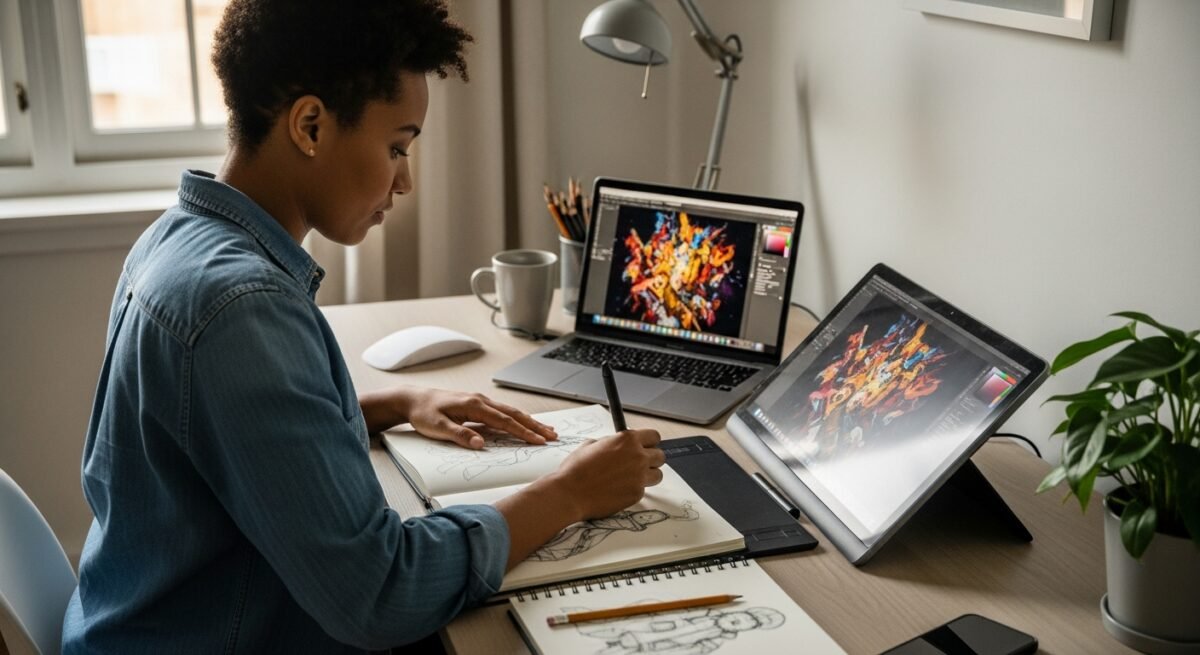
A common concern for prospective students is how a discipline rooted in physical practice translates to an online format. Accredited institutions have developed robust methodologies to overcome this challenge. Studio courses are conducted through a combination of synchronous (live) and asynchronous (recorded) sessions. Instructors provide video demonstrations of techniques, from charcoal drawing to ceramic glazing. Students then complete assignments independently, documenting their process and final work through high-quality photography or scanning. The critique, a cornerstone of art education, happens in virtual classrooms via video conference, where students present work and receive feedback from peers and professors in real time.
Logistics are managed through comprehensive course kits and clear technical requirements. Many programs supply students with curated kits containing essential art supplies, which eliminates guesswork and ensures everyone has the correct materials. On the technical side, students need a reliable computer, a high-speed internet connection, a quality digital camera or smartphone for documentation, and specific software. The ability to manage file sizes, participate in video calls, and upload work to digital learning platforms is essential. This hybrid model of physical creation and digital presentation not only facilitates learning but also mirrors the modern professional practice where artists constantly digitize and share their work online.
Evaluating Accreditation, Faculty, and Student Support
Not all online art programs are created equal, and due diligence is non-negotiable. Regional accreditation is the most critical factor, as it ensures the institution meets high standards of educational quality and that credits will transfer to other schools. Within the arts, seeking programs with additional accreditation from bodies like the National Association of Schools of Art and Design (NASAD) is a strong indicator of a rigorous, professionally recognized curriculum. Always verify accreditation status directly on the institution’s website or through the U.S. Department of Education’s database.
The faculty’s expertise directly shapes the educational experience. Investigate the professors’ professional backgrounds: are they practicing artists, exhibited in galleries, or published designers with current industry experience? A faculty of active professionals provides relevant, real-world insights and valuable networking connections. Furthermore, robust student support services are the backbone of a successful online education. Look for programs that offer dedicated academic advising for art students, 24/7 technical support, access to digital library resources (including art journals and image databases), and comprehensive career services. These services are vital for navigating your academic journey and transitioning to a career. For students concerned about managing the pace of online learning, exploring resources on flexible exam and assessment options can provide valuable strategies for success in a remote setting.
Career Pathways and Building Your Portfolio
An online art degree is a versatile credential that opens doors to numerous career paths. Graduates find roles as graphic designers, web designers, illustrators, animators, art directors, photographers, and museum or gallery staff. The skills learned, such as visual problem-solving, critical thinking, and project management, are also highly transferable to fields like marketing, advertising, and user experience (UX) design. The key to unlocking these opportunities is a stellar portfolio. Your portfolio is more important than your GPA; it is a visual resume that demonstrates your skills, creativity, and professional voice.
The best online art programs are portfolio-driven, meaning coursework is designed to produce high-quality pieces for your collection. From your first semester, you should be curating your best work. Seek programs that include portfolio review courses or capstone projects that result in a polished, professional presentation. Furthermore, take advantage of any opportunity for virtual internships, freelance project boards, or industry partnerships offered by the school. Building a professional network while studying is invaluable. Engaging with a resource hub for online academic pathways can also help you connect your artistic training to broader educational and career trajectories, ensuring a holistic approach to your professional development.
Frequently Asked Questions
Can I really get a quality art education online? Yes. Accredited online art programs offer the same curricula, faculty, and degrees as their on-campus counterparts. The delivery method is different, but the rigor and outcomes are designed to be equivalent, with the added benefit of flexibility.
Do I need to be tech-savvy to succeed? You need basic digital literacy: the ability to use email, navigate learning management systems, participate in video calls, and upload/download files. Programs will teach you any specialized software required for your major.
How do critiques and collaboration work online? Critiques are conducted via video conference (like Zoom), where students share their screens to display work. Collaboration happens through shared digital workspaces, cloud storage, and communication tools, mirroring how many modern creative teams work remotely.
What are the technology requirements? Requirements vary but generally include a computer (Mac or PC) with sufficient processing power and RAM, a reliable high-speed internet connection, a webcam, a digital camera for documenting work, and specific software (e.g., Adobe Creative Cloud).
Are online art degrees respected by employers? Employers primarily care about the skills displayed in your portfolio and the accreditation of your degree. As online education has become mainstream, the stigma has largely disappeared, especially when the degree is from a well-known, accredited institution.
The decision to pursue an online art degree is an investment in your creative future. By carefully selecting an accredited program with a strong faculty and a specialization that aligns with your passions, you can build the technical skills, theoretical knowledge, and professional portfolio needed to thrive. The flexibility of online learning allows you to integrate this transformative education into your existing life, turning artistic aspiration into tangible achievement. Start by researching programs, reaching out to admissions counselors, and reviewing student work to find the path that will best help you realize your creative and professional vision.