
Online Biology Degree Concentrations and Lab Requirements
Compare online biology degree program concentrations and laboratory requirements, from virtual labs and home kits to hybrid residencies and pre-health tracks.

You can earn a biology degree online, but the laboratory science is where the details matter. Most accredited online biology programs blend virtual simulations, home lab kits, and short on-campus residencies to satisfy the same bench-science competencies that traditional students develop in person. Understanding how those labs work, which concentrations fit your goals, and what science prerequisites you need before enrolling will save you time, money, and a few surprises. This guide walks through the major concentration options, the lab delivery models you are likely to encounter, transfer expectations, and how graduates position themselves for careers and graduate school.
How Online Biology Programs Deliver Lab Science Requirements
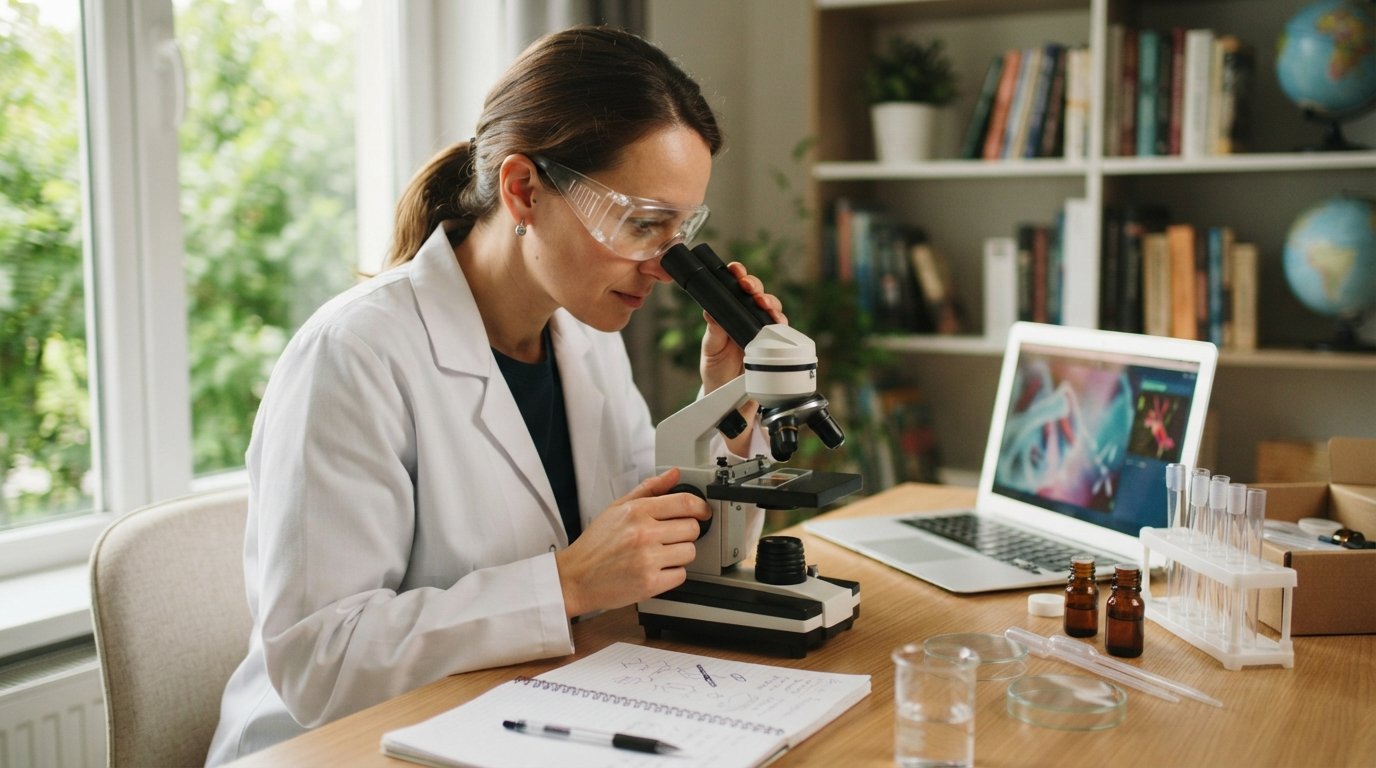
Accredited online biology degrees do not skip the lab. They redesign it. Programs accredited by regional institutional bodies, and increasingly by specialized agencies, must document that every graduate meets the same learning outcomes as an on-campus student. That means the lab component is built into the curriculum, not optional. The delivery model varies by school, and the mix you encounter will shape your weekly schedule and budget. Most programs combine two or three of the following approaches.
- Virtual lab simulations: cloud-based platforms that replicate experiments such as gel electrophoresis, microscopy, and enzyme assays, with software tracking your data collection and analysis.
- Home lab kits: schools ship equipment and reagents to your door for experiments in cell biology, genetics, and general chemistry that can be safely performed in a kitchen or home office.
- Hybrid lab weekends: short, intensive on-campus or regional lab sessions, often one or two weekends per term, for techniques that require fume hoods, centrifuges, or biosafety cabinets.
- Partner-site labs: arrangements with local community colleges or testing centers where you complete supervised lab hours close to home.
Each model has tradeoffs. Virtual labs are flexible and inexpensive to travel to, but they cannot fully replicate pipetting precision or instrument troubleshooting. Home kits build genuine hands-on skills but require storage space and, in some cases, a household safety review. Hybrid weekends give you authentic bench experience and face time with faculty, but they add travel and lodging costs that are easy to overlook. When comparing programs, ask how many lab credits are delivered in each format, whether lab fees are included in tuition, and what happens if a kit ships late or a residency conflicts with your work schedule.
The best programs publish a lab schedule and equipment list before you enroll. If a school is vague about lab delivery, treat that as a red flag. You should be able to name the platform or kit vendor, the number of required residencies, and the approximate cost of each before you commit. For students weighing multiple science and technology pathways, our guide to online computer programming degree programs shows how other technical fields structure hands-on requirements, which can help you benchmark what a well-designed online lab component looks like.
Concentrations That Fit Different Science Careers
A general biology degree is versatile, but a concentration signals your specialty to employers and graduate committees. Online programs typically offer four to six tracks, and the right choice depends on whether you want to work in a lab, a field site, a hospital, or a classroom. The most common concentrations are cell and molecular biology, ecology and environmental science, pre-health professions, and general biology with a minor or elective focus.
Cell and Molecular Biology
This concentration leans heavily on genetics, biochemistry, microbiology, and immunology. It is the strongest preparation for laboratory careers in biotechnology, pharmaceutical quality control, and clinical research, and it is the track most graduate programs in molecular biology expect. Lab requirements tend to be the most demanding here: expect upper-level labs in recombinant DNA techniques, protein analysis, and cell culture, often delivered through a combination of virtual simulations and on-campus intensives. If your goal is a research master's or a Ph.D., check whether the concentration includes an independent research course and whether faculty supervise remote research projects.
Ecology and Environmental Science
Ecology concentrations emphasize organismal biology, conservation, field methods, and environmental policy. Lab work shifts outdoors: sampling protocols, species identification, water quality testing, and geographic information systems. Online programs often satisfy field requirements through regional field courses, citizen-science partnerships, or a capstone project you complete in your own region with faculty approval. This track suits students aiming at environmental consulting, park and wildlife management, or sustainability roles in government and industry. Ask whether the program helps place you in a field course near your home state, because travel to a distant field station can add significant cost.
Pre-Health Professions
Pre-medical, pre-dental, pre-pharmacy, and pre-physician assistant students need a biology degree that covers the prerequisite courses medical schools require: two semesters of general biology with lab, organic chemistry, physics, and often biochemistry. An online pre-health concentration can work, but you must verify two things. First, confirm that the lab sciences are accepted by the professional schools you plan to apply to, since some health professions programs prefer or require in-person labs. Second, confirm that the school offers committee letters or advising for professional school applicants. Many online programs coordinate with local labs for organic chemistry and physics, which are rarely delivered by home kit.
General Biology and Interdisciplinary Tracks
Some programs offer a general concentration with room for electives in neuroscience, bioinformatics, or science education. This is a flexible option for students who want a biology credential for teaching, science communication, or a career pivot that does not require a narrow specialty. The tradeoff is less depth: you may graduate without the upper-level lab portfolio that specialized tracks provide, so plan your electives carefully if graduate school is a possibility.
Transfer Credits and Prerequisite Science Coursework
Online biology programs are less forgiving about transfer credit than many other majors, because lab sciences must match both content and contact hours. Most schools accept general education courses readily, but they scrutinize biology, chemistry, and physics credits. A common policy is to accept science courses taken within the past five to seven years, with a grade of C or better, and to require that any transferred lab course included a hands-on component. Courses taken fully online at another institution may be accepted if the lab delivery is documented, but this varies widely.
Before you apply, gather syllabi for every science course you have taken. Admissions offices use syllabi, not just transcripts, to evaluate lab hours and topic coverage. If you completed a two-semester sequence at a community college, that is often the smoothest path: many online universities have articulation agreements that guarantee credit for specific course codes. If your science background is older or incomplete, you may be asked to take a placement exam or to repeat a prerequisite, which adds time and tuition.
Prerequisites for the major itself typically include introductory biology, general chemistry, and college algebra or statistics. Some concentrations add organic chemistry, physics, or calculus. If you are missing a prerequisite, look for programs that offer a conditional admission pathway or a foundational term that lets you complete the missing course before starting major coursework. Also confirm the minimum GPA for major courses, which is often 2.5 or higher, and whether repeated courses are allowed. Students who plan to use financial aid should check how prerequisite and repeated courses affect satisfactory academic progress, and resources like Scholarship.Education can help you identify scholarships and aid options that reduce the cost of those extra terms.
Career and Graduate School Readiness After an Online Biology Degree
Employers and graduate committees care about what you can do, not how you learned it. An accredited online biology degree with a documented lab component is accepted by most employers in biotechnology, environmental services, healthcare support, and education. The key is to build evidence of hands-on competence. Keep a lab notebook portfolio, ask faculty for letters of recommendation that specifically address your lab skills, and pursue internships or part-time lab positions in your area. Many online programs maintain employer partnerships and internship coordinators who can help place you.
For graduate school, the calculus is more cautious. Research master's and doctoral programs in the life sciences usually expect substantial in-person research experience, so plan to complete at least one summer research internship or a senior thesis with a local lab. Professional schools in medicine, dentistry, and pharmacy have their own lab and advising expectations, and you should confirm them directly with each school. If your goal is a career in laboratory science, a concentration in cell and molecular biology combined with an in-person research experience is the strongest preparation. If your goal is field biology or environmental policy, the ecology concentration plus a regional field course gives you credible outdoor credentials.
Whichever path you choose, treat the lab requirement as the center of your program search rather than an afterthought. Ask admissions for a written summary of lab delivery, costs, and residency dates, compare that summary across at least three schools, and confirm that the concentration you want is available fully online. With that diligence, an online biology degree can deliver the same scientific foundation as a campus program, on a schedule that fits your life.