
Online Degree Programs for Digital Healthcare Transformation Roles
Online degree programs for digital healthcare transformation roles build in-demand skills. Call (877)-218-7081 to explore accredited options and next steps.
By James Morgan
Hospitals are now technology companies that happen to deliver care. Electronic health records, telehealth platforms, remote patient monitoring, and AI-assisted diagnostics have turned clinical operations into data operations, and someone has to lead that shift. That demand has created a fast-growing category of jobs known as digital healthcare transformation roles, and it has made online degree programs for digital healthcare transformation roles one of the most practical ways for working adults to enter or advance in the field. If you already work in healthcare, IT, or administration, the question is no longer whether you need formal credentials, but which credential fits the role you want next.
What Digital Healthcare Transformation Roles Actually Do
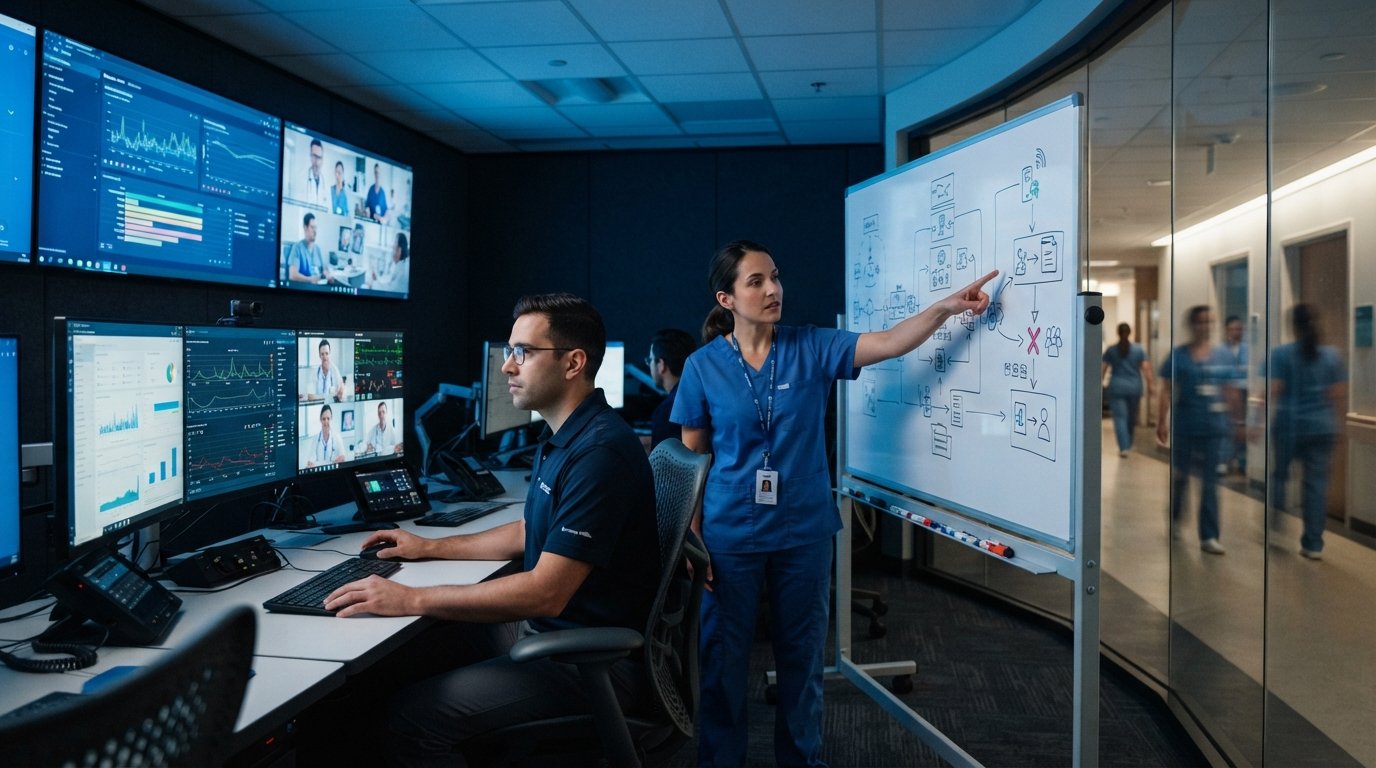
Digital transformation in healthcare is not a single job title. It is a cluster of responsibilities spread across informatics, operations, analytics, and strategy. On a typical day, professionals in these roles might map clinical workflows before an EHR rollout, test interoperability between systems, train nurses on a new documentation tool, or build dashboards that show executives where patient throughput is breaking down. The common thread is translation: turning clinical needs into technical requirements and turning technical capabilities into safer, faster, more affordable care.
The roles generally fall into a few families. Health informatics specialists focus on data systems and clinical information flow. Healthcare data analysts build models and reports that guide decisions. Digital health project managers run technology implementations across departments. Clinical informatics coordinators bridge bedside practice and IT. Transformation or innovation managers sit higher up, aligning technology investments with organizational strategy. Salaries vary widely by region and employer, but the Bureau of Labor Statistics projects much faster than average growth for health information and medical records roles, and informatics-adjacent positions often command premiums over general administrative roles.
What unites these positions is that employers rarely hire for technology alone. They hire for someone who understands why a clinician resists a new alert system, how HIPAA constrains data sharing, and what a revenue cycle team needs from a scheduling module. That blend of clinical context and technical fluency is exactly what a well-chosen online degree is designed to build.
Which Majors Prepare You for These Roles
The most direct path is a degree in health informatics or health information management. These programs combine coursework in databases, health data standards, privacy law, and clinical workflows, and they are offered at the bachelor's and master's levels online. A master of science in health informatics is often the terminal credential for analyst and informatics specialist roles, while a bachelor's degree is sufficient for many entry-level coordination and support positions.
Healthcare administration is the second major pathway, especially for management-track roles. An online Master of Health Administration (MHA) or an MBA with a healthcare concentration adds budgeting, operations, and leadership training to the technology conversation. Graduates often move into transformation manager, project director, or operations leadership positions where they oversee digital initiatives rather than build them hands-on. If your goal is to run a department rather than query a database, this is often the stronger choice.
A third option is a data science or analytics degree with a healthcare focus. These programs are more technical and suit people who want to build predictive models, work with population health data, or lead analytics teams. Some universities offer hybrid tracks, such as an MBA in healthcare analytics or a health informatics degree with a data science concentration.
- Health informatics: best for EHR, interoperability, and clinical systems roles.
- Healthcare administration (MHA or MBA): best for management, strategy, and implementation leadership.
- Data science or analytics: best for population health, reporting, and AI-adjacent roles.
- Public health informatics: best for government, nonprofit, and population-level programs.
- Nursing informatics: best for RNs moving into clinical systems and quality roles.
Choosing among them comes down to your background and target job. A nurse with ten years of bedside experience will get more from a nursing informatics or health informatics master's than from a general MBA. An IT professional without clinical exposure may benefit from a program that includes healthcare-specific coursework in reimbursement, ethics, and care delivery. If you want a broader comparison of how online technology degrees are structured, this guide to software engineering online degree programs shows how technical curricula are typically organized, which helps you evaluate informatics programs that lean heavily on software and systems coursework.
The Skills Employers Expect You to Bring
Job postings for informatics and transformation roles tend to list a predictable mix of technical and clinical competencies. On the technical side, employers expect familiarity with electronic health record platforms (Epic and Cerner dominate), data query languages such as SQL, visualization tools like Tableau or Power BI, and an understanding of interoperability standards including HL7 and FHIR. Project management frameworks, usually Agile or waterfall, appear in most implementation-focused listings. Increasingly, postings mention AI governance, cybersecurity awareness, and cloud platforms.
On the clinical and organizational side, employers want candidates who understand care workflows, quality reporting programs, and privacy regulations such as HIPAA. Communication skills matter more than the job descriptions suggest: transformation work fails when analysts cannot explain a data problem to a physician or a workflow problem to a vendor. Change management experience, even informal, is a common differentiator in hiring.
Strong online programs build these skills deliberately rather than leaving them to chance. Look for curricula that include hands-on assignments with real or simulated EHR data, group projects that mimic cross-functional implementation teams, and courses in health law, quality improvement, and organizational behavior. Internships or practicums, discussed below, are where many students first apply these skills in a live environment.
How Online Programs Handle Practicums and Field Experience
This is the question prospective students ask most often, and the answer is more reassuring than many expect. Accredited health informatics and healthcare administration programs typically require a practicum, internship, or capstone, and online students complete these requirements in their own communities. A student in Ohio can fulfill a practicum at a local hospital, a clinic, a health insurer, or even a public health department, with the school providing supervision and academic oversight remotely. Some programs allow working students to use their current employer for the field experience if the project meets learning objectives.
Capstone courses are another common format. Instead of a traditional placement, students complete a substantial project, often for a real organization, that demonstrates applied skills in data analysis, systems planning, or process improvement. For adult learners already employed in healthcare, this arrangement is usually more practical than relocating for a semester.
Because placement logistics vary by school, verify the details before enrolling. Ask how practicum sites are approved, whether the program maintains a placement coordinator, what the hour requirements are, and whether virtual placements are accepted. Programs that serve working adults tend to have flexible, well-documented policies, and admissions staff should be able to answer these questions without hesitation.
Accreditation and Certification: What to Check Before You Enroll
Accreditation is the single most important quality filter for any online degree, and healthcare adds an extra layer. At the institutional level, look for regional accreditation, the gold standard for U.S. colleges. At the program level, health information management programs are accredited by CAHIIM, and healthcare management programs may hold accreditation from CAHME. Attending an accredited program matters for financial aid eligibility, employer tuition reimbursement, and in some cases licensure or certification eligibility.
Certification is a separate but related consideration. The American Health Information Management Association offers the Registered Health Information Administrator (RHIA) credential, and eligibility to sit for that exam requires graduating from a CAHIIM-accredited program. Other relevant credentials include the Certified Professional in Healthcare Information and Management Systems (CPHIMS) and the Project Management Professional (PMP) for implementation roles. Many employers list these certifications as preferred or required, so choosing a program that aligns with a certification path can pay off directly in hiring.
Cost is the other variable that deserves scrutiny. Online programs range from roughly $15,000 to more than $60,000 depending on the institution and degree level, and financial aid, employer benefits, and scholarship options vary widely. Before committing, compare total tuition, fees, and the return on investment for the roles you are targeting. Resources such as CollegeAndTuition can help you understand financial aid options and college planning basics, and speaking directly with admissions and financial aid offices will clarify what a specific program will actually cost you.
Building a Realistic Path From Where You Are
The most successful candidates treat the degree as one component of a deliberate career plan rather than a standalone credential. A practical sequence looks like this: first, identify two or three target job titles and read twenty postings for each to see which skills recur. Second, evaluate programs against those requirements, prioritizing accredited options with practicum support and coursework that matches the tools employers name. Third, while enrolled, pursue a certification or a workplace project that gives you applied experience before graduation. Fourth, use the practicum and capstone as networking opportunities, since many students receive job offers from their placement sites.
It also helps to be honest about time and cost. Most online master's programs take 18 to 24 months at a part-time pace, and working students typically juggle coursework in evenings and weekends. Employer tuition assistance, scholarships through professional associations, and federal aid can reduce the burden, but the investment only pays off if the credential maps to a role that exists in your market. Informational interviews with people already in informatics or transformation roles are free and often more informative than any brochure.
Digital healthcare transformation is not a temporary trend. Health systems continue to spend heavily on data infrastructure, virtual care, and automation, and the professionals who can connect clinical reality to technical systems remain in short supply. Online degree programs for digital healthcare transformation roles give working adults a structured way to build that connection without leaving their jobs. The right program will be accredited, practicum-friendly, and aligned with the certifications and job titles you are actually pursuing, and a few hours of careful comparison before you enroll can make the difference between a credential that opens doors and one that merely decorates a resume.