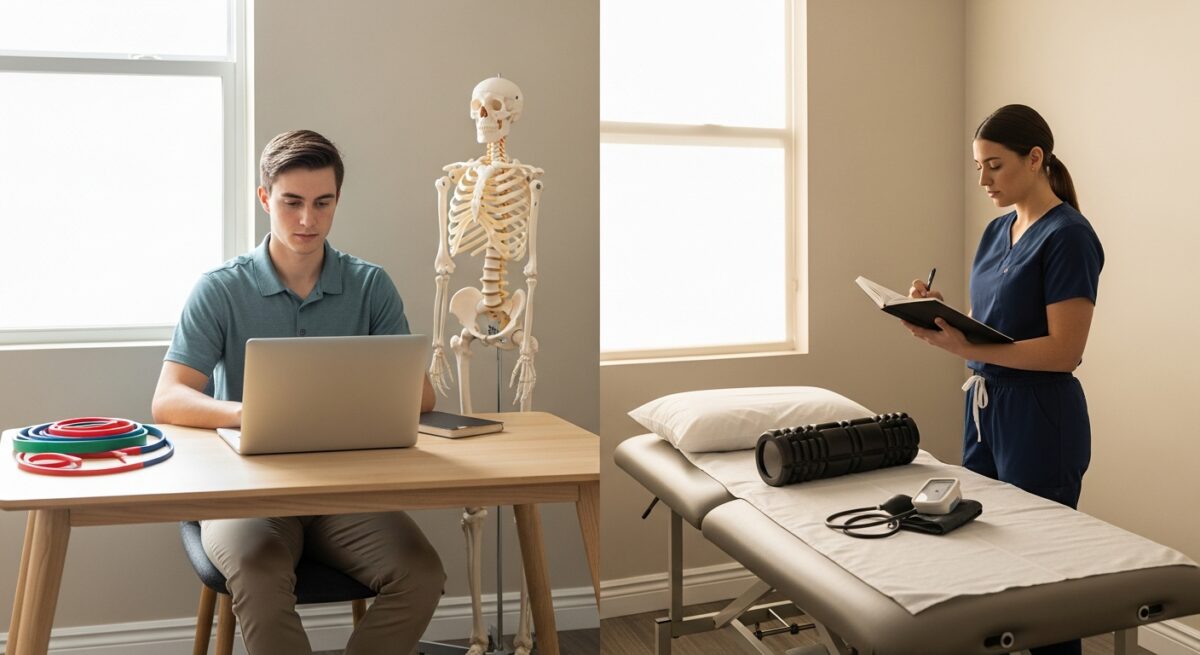
The demand for physical therapists continues to grow as the healthcare industry prioritizes rehabilitation and mobility. For working professionals and career changers, balancing current commitments with advanced education can feel impossible. That is where online DPT programs and physical therapy degree paths offer a practical solution. These programs combine the rigor of a clinical doctorate with the flexibility of digital learning, allowing students to complete coursework remotely while fulfilling in-person clinical requirements locally. This article provides a comprehensive look at what these programs entail, how to choose the right path, and what steps lead to licensure.
Understanding the Doctor of Physical Therapy Online Option
A Doctor of Physical Therapy (DPT) is the terminal degree required to practice as a physical therapist in the United States. Traditionally, these programs required full-time, on-campus attendance. However, many accredited institutions now offer a hybrid model where didactic instruction is delivered online. This approach is often referred to as a doctor of physical therapy online program. Students access lectures, simulations, and assessments through a learning management system, then complete hands-on lab experiences and clinical rotations at affiliated sites near their home.
The shift to hybrid delivery has opened doors for students who cannot relocate or leave their jobs. A doctor of physical therapy online program typically takes three years to complete, similar to a campus-based program. The key difference lies in the flexibility of the classroom portion. Students can study in the evenings or on weekends while maintaining their current employment. This makes physical therapy programs online an attractive option for those seeking a career change or advancement without uprooting their lives.
Accreditation and Quality in Online DPT Programs
Accreditation is the most critical factor when evaluating any DPT program. The Commission on Accreditation in Physical Therapy Education (CAPTE) is the recognized accrediting body for physical therapy education in the United States. Graduation from a CAPTE-accredited program is a prerequisite for taking the National Physical Therapy Examination (NPTE) and obtaining licensure. Therefore, any online DPT programs you consider must hold CAPTE accreditation.
Accredited online programs undergo the same rigorous review as campus-based programs. They must meet standards for curriculum, faculty qualifications, clinical education, and student outcomes. When researching physical therapy programs online, confirm the program’s accreditation status on the CAPTE website. Avoid programs that claim to be “candidates for accreditation” without a clear timeline, as this can delay your eligibility for licensure. In our guide on how to choose a healthcare management degree online programs guide, we explain how to verify program credentials and avoid unaccredited institutions.
Prerequisites and Admission Requirements
Admission to a DPT program is competitive, regardless of the delivery format. Most online DPT programs require applicants to hold a bachelor’s degree from an accredited institution. Common prerequisite courses include human anatomy, physiology, biology, chemistry, physics, and statistics. Many programs also require a minimum GPA, typically 3.0 or higher, and completion of the Graduate Record Examination (GRE).
Beyond academic requirements, programs look for candidates with relevant experience. This often includes:
- Observation or volunteer hours in a physical therapy setting, usually 100 to 200 hours.
- Letters of recommendation from physical therapists or academic instructors.
- A personal statement explaining your motivation for pursuing a career in physical therapy.
- Evidence of leadership, community service, or healthcare experience.
Meeting these requirements takes planning. Start accumulating observation hours early and build relationships with professionals who can write strong letters. Some online DPT programs also require an interview, which may be conducted virtually. Preparing a thoughtful response to questions about your clinical interests and professional goals can set you apart from other applicants.
Curriculum and Clinical Education Structure
The curriculum in an online DPT program mirrors that of a traditional program. It covers foundational sciences, clinical reasoning, patient management, and professional practice. Courses often include musculoskeletal physical therapy, neurological rehabilitation, cardiopulmonary care, pediatrics, geriatrics, and pharmacology. The difference is that lectures and assignments are delivered online, while lab sessions occur during intensive on-campus immersions or at local clinical sites.
Clinical education is a core component of any DPT program. Students must complete a minimum number of clinical hours under the supervision of a licensed physical therapist. In online DPT programs, the program director or clinical coordinator helps arrange placements near the student’s home. This allows students to gain experience in their local healthcare community. Most programs require multiple full-time clinical rotations, each lasting several weeks. These rotations provide hands-on experience with diverse patient populations and settings, from hospitals to outpatient clinics to skilled nursing facilities.
Technology plays a significant role in online learning. Students use video conferencing for live lectures, virtual dissection tools for anatomy, and simulation software to practice clinical decision-making. Some programs also require students to attend on-campus residencies for one or two weeks per semester to practice hands-on skills like manual therapy, goniometry, and therapeutic exercise. These residencies are intensive and essential for developing psychomotor skills that cannot be taught online.
Comparing Hybrid and Fully Online Formats
Not all online DPT programs are created equal. Some are fully online with no on-campus requirement, while others are hybrid programs that require periodic on-campus visits. Fully online programs are rare and often require students to arrange their own clinical placements. Hybrid programs are more common and provide structured opportunities for hands-on learning under faculty supervision.
When evaluating programs, consider your learning style and logistical constraints. If you thrive with structured, in-person guidance, a hybrid program with regular on-campus immersions may be a better fit. If you are highly self-disciplined and prefer maximum flexibility, a fully online option could work. However, be cautious: any program that lacks a mechanism for hands-on skill assessment may not adequately prepare you for clinical practice. Always ask about how the program teaches and evaluates manual skills, such as joint mobilization and soft tissue techniques, before enrolling.
Another consideration is the program’s cohort model. Some online DPT programs admit students in cohorts, meaning you progress through the curriculum with the same group of peers. This builds community and accountability. Other programs allow students to start at multiple points throughout the year, offering more flexibility. Each model has advantages, and the right choice depends on your personal preference and schedule.
Licensure and Career Outlook After Graduation
After completing an accredited DPT program, graduates must pass the NPTE to obtain licensure in their state. The NPTE is a comprehensive exam that tests knowledge across the physical therapy curriculum. Many online DPT programs offer board preparation resources, including practice exams and review courses. Additionally, some states require a jurisprudence exam on state-specific laws and regulations.
Licensure requirements vary by state. Some states require background checks, additional coursework, or proof of clinical hours. It is important to research the requirements in the state where you plan to practice. Most online DPT programs provide guidance on state licensure and can help you navigate the process. The American Physical Therapy Association (APTA) also offers resources for licensure and career development.
The career outlook for physical therapists is strong. The Bureau of Labor Statistics projects a 15% growth in employment for physical therapists from 2022 to 2032, much faster than the average for all occupations. This growth is driven by an aging population, increased prevalence of chronic conditions, and advances in rehabilitation technology. Graduates of online DPT programs can pursue careers in hospitals, outpatient clinics, sports medicine, home health, skilled nursing facilities, and school systems. Some also choose to specialize in areas like orthopedics, neurology, pediatrics, or geriatrics after gaining clinical experience.
Financial Considerations and Return on Investment
Pursuing a DPT is a significant financial investment. Tuition for online DPT programs typically ranges from $60,000 to $120,000 for the entire program, depending on the institution and residency status. This cost does not include fees for clinical placements, travel to on-campus immersions, textbooks, or technology requirements. However, many online programs allow students to continue working during the first year of didactic coursework, offsetting some lost income.
Financial aid options are available for graduate students. Federal student loans, including Direct Unsubsidized Loans and Graduate PLUS Loans, can help cover tuition and living expenses. Some employers offer tuition reimbursement for employees pursuing advanced degrees in healthcare. Additionally, scholarships and grants are available through professional organizations like the APTA and individual schools. It is important to complete the Free Application for Federal Student Aid (FAFSA) each year to determine eligibility for federal aid.
The return on investment for a DPT is generally positive. The median annual wage for physical therapists was $97,720 in 2022, with the top 10% earning more than $128,000. Graduates who specialize or work in high-demand settings may earn even more. When evaluating programs, consider the total cost, the program’s graduation rate, and the average NPTE pass rate. These metrics indicate the program’s quality and the likelihood of a successful career outcome. For more details on financial planning, visit collegedegrees.school for resources on funding your education and calculating potential earnings.
Frequently Asked Questions
Can I become a physical therapist entirely online?
No. A DPT requires hands-on clinical education. While didactic coursework can be completed online, all programs require in-person clinical rotations and some require on-campus lab immersions. You cannot complete a DPT entirely without face-to-face patient care experience.
How long does an online DPT program take?
Most online DPT programs take three years of full-time study. Some programs offer accelerated tracks for students with strong science backgrounds, but these are less common. Part-time options are rare due to the sequential nature of clinical education.
What is the difference between a DPT and a PTA?
A Doctor of Physical Therapy (DPT) is a clinical doctorate that qualifies you to practice as a physical therapist. A Physical Therapist Assistant (PTA) is an associate degree that allows you to work under the supervision of a physical therapist. The roles, responsibilities, and earning potential differ significantly.
Are online DPT programs respected by employers?
Yes, as long as the program is CAPTE-accredited. Employers care about your skills, licensure, and clinical experience, not the format of your education. Graduates from accredited online programs are eligible for the same jobs as graduates from campus-based programs.
Can I work while completing an online DPT program?
Many students work part-time during the didactic portion of the program, especially during the first year. However, clinical rotations in the second and third years are full-time and may require flexibility with your work schedule. It is important to plan your finances and time accordingly.
Choosing the right path to a career in physical therapy requires careful research and planning. Online DPT programs and physical therapy degree paths offer a viable route for motivated students who need flexibility. By focusing on accreditation, curriculum quality, and clinical placement support, you can find a program that fits your life and prepares you for a rewarding career. Start by identifying CAPTE-accredited programs, reviewing their prerequisites, and reaching out to admissions advisors with your questions. With dedication and the right educational partner, you can achieve your goal of becoming a licensed physical therapist.