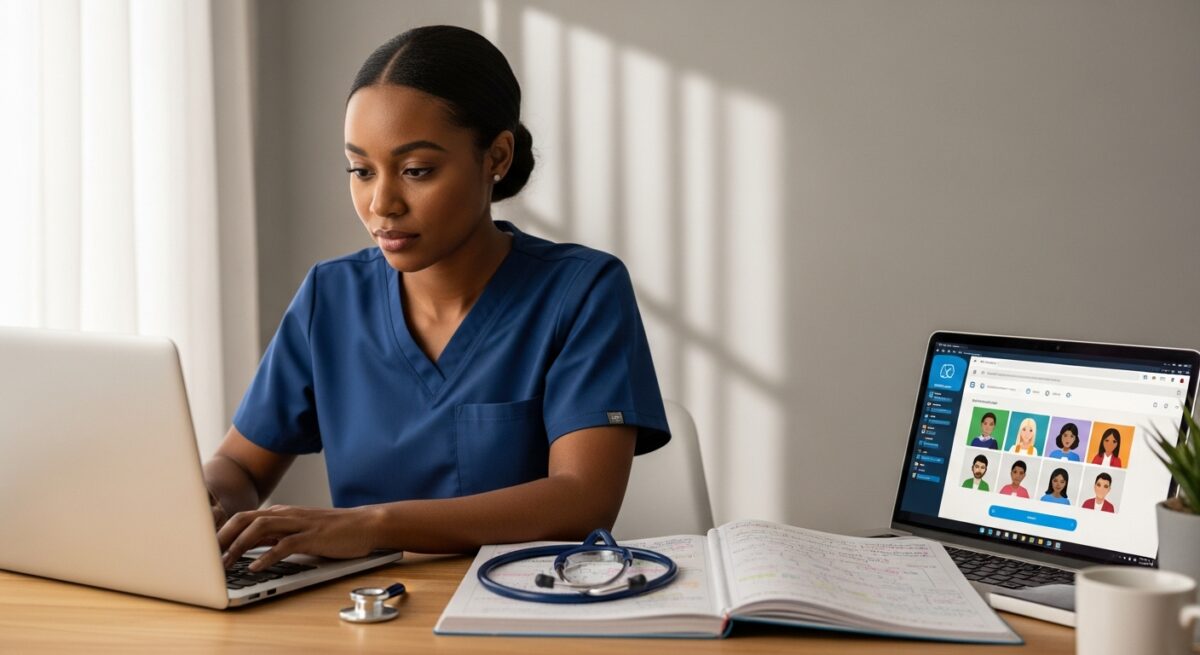
Registered nurses who want to expand their clinical authority and take on greater responsibility often look toward advanced practice roles. The family nurse practitioner (FNP) position is one of the most versatile and in-demand advanced practice nursing careers available today. For working RNs balancing shifts, family obligations, and personal commitments, the path to becoming an FNP frequently begins with a search for flexible educational options. Online MSN FNP programs have emerged as a leading choice for nurses who need to keep working while earning their graduate degree. These programs combine rigorous academic coursework with clinical practicum experiences arranged near the student’s home community. This article explores the structure of online MSN FNP programs, the career paths they unlock, and how to evaluate program quality to make a sound investment in your future.
What Are Online MSN FNP Programs?
An online MSN FNP program is a master’s degree in nursing designed to prepare registered nurses for certification and practice as family nurse practitioners. The curriculum typically covers advanced health assessment, pharmacology, pathophysiology, and primary care management across the lifespan. Unlike traditional on-campus programs, online MSN FNP programs deliver most didactic instruction through digital platforms. This allows students to access lectures, assignments, and discussion boards from home or during breaks at work. Clinical hours, which are a core requirement for licensure, are completed in local healthcare settings under the supervision of a qualified preceptor. The combination of online theory and in-person clinical training makes these programs highly accessible without sacrificing the hands-on experience essential for safe practice.
Program Structure and Delivery
Most online MSN FNP programs follow a cohort model where a group of students progresses through the curriculum together over two to three years. Courses are often asynchronous, meaning students can watch recorded lectures and complete assignments on their own schedule within weekly deadlines. Some programs include synchronous components such as live case discussions or virtual simulation labs. Clinical placements are usually coordinated by the student with support from the program’s clinical placement team. Many reputable programs require students to complete 500 to 700 supervised clinical hours. This structure allows nurses in rural areas or those with irregular shifts to pursue advanced education without relocating or quitting their jobs.
Career Paths for Family Nurse Practitioners
Graduates of online MSN FNP programs enter a field with exceptional job prospects and diverse practice settings. The U.S. Bureau of Labor Statistics projects that nurse practitioner positions will grow by 45 percent from 2022 to 2032, a rate far faster than the average for all occupations. This demand is driven by an aging population, increased emphasis on preventive care, and a shortage of primary care physicians. Family nurse practitioners are qualified to diagnose and treat common illnesses, prescribe medications, order and interpret diagnostic tests, and manage chronic conditions. They practice in clinics, hospitals, private practices, urgent care centers, and community health organizations. Some FNPs also work in telehealth, providing remote consultations to patients in underserved areas.
The scope of practice for FNPs varies by state. In full-practice authority states, FNPs can evaluate patients, diagnose conditions, interpret tests, and initiate treatments without physician oversight. In reduced or restricted practice states, collaborative agreements or physician supervision may be required. Understanding these regulations is important when choosing a state for licensure and employment. Many FNPs eventually open their own practices or take on leadership roles in healthcare organizations. The career trajectory often includes opportunities for specialization in areas such as adult-gerontology, pediatrics, psychiatric mental health, or acute care through post-master’s certificates or doctoral programs.
Key Factors to Consider When Choosing a Program
Selecting the right online MSN FNP program requires careful evaluation of several factors. Accreditation is the most critical element. Look for programs accredited by the Commission on Collegiate Nursing Education (CCNE) or the Accreditation Commission for Education in Nursing (ACEN). Accreditation ensures the curriculum meets national standards and that graduates are eligible to sit for national certification exams. Without proper accreditation, you may not qualify for federal financial aid or licensure in your state. For more details on evaluating accredited programs, see our guide on Accredited FNP Online Programs for Nursing Career Advancement.
Other important considerations include the program’s clinical placement support, faculty qualifications, graduation rates, and first-time pass rates on the FNP certification exam. Tuition costs and financial aid availability should also be compared across programs. Many employers offer tuition reimbursement for nurses pursuing advanced degrees, so check with your human resources department before enrolling. Additionally, consider whether the program offers part-time or accelerated options to match your timeline. A helpful resource for comparing tuition, financial aid options, and return on investment across multiple programs is DegreeOnline.Education, which provides comprehensive information to help you make an informed decision.
Admission Requirements and Prerequisites
Admission to online MSN FNP programs typically requires a Bachelor of Science in Nursing (BSN) from an accredited institution, an active and unencumbered RN license, and a minimum GPA of 3.0. Most programs also require at least one to two years of clinical nursing experience. Some programs accept RNs with associate degrees through RN-to-MSN bridge pathways that include additional coursework to fulfill BSN requirements. Prerequisite coursework often includes statistics, health assessment, and nursing research. Letters of recommendation, a personal statement, and a resume are standard parts of the application. Competitive programs may also require an interview or a writing sample. Plan to start the application process at least six months before your intended start date to gather transcripts, secure recommendations, and meet all deadlines.
Certification and Licensure After Graduation
After completing an online MSN FNP program, graduates must pass a national certification exam to practice as a family nurse practitioner. The two primary certifying bodies are the American Nurses Credentialing Center (ANCC) and the American Academy of Nurse Practitioners Certification Board (AANPCB). Both exams test clinical knowledge in areas such as health promotion, disease prevention, diagnosis, and management of acute and chronic conditions. Certification is valid for five years and can be renewed through continuing education or reexamination. Once certified, FNPs apply for state licensure as advanced practice registered nurses (APRNs). Each state has specific requirements for licensure, including background checks and proof of malpractice insurance. Maintaining certification and licensure requires ongoing professional development, which many employers support through paid time off for conferences or tuition assistance for additional certifications.

Financial Considerations and Return on Investment
Tuition for online MSN FNP programs varies widely based on the institution, residency status, and program length. Public universities often offer lower tuition rates for in-state students, while private institutions may charge higher flat rates. Total program costs can range from $20,000 to $60,000 or more. Financial aid options include federal student loans, grants, scholarships, and employer tuition reimbursement programs. The return on investment for FNP education is strong. According to the U.S. Bureau of Labor Statistics, the median annual wage for nurse practitioners was $126,260 in May 2023. Many FNPs earn more in high-demand specialties or in states with full practice authority. The earning potential combined with job stability and career satisfaction makes the investment in an online MSN FNP program worthwhile for most graduates.
Balancing Work, Life, and Online Study
Earning a graduate degree while working as a nurse requires discipline and effective time management. Online MSN FNP programs offer flexibility, but they still demand significant commitment. Most students spend 15 to 25 hours per week on coursework, reading, and assignments. Clinical rotations add additional hours. Successful strategies include setting a consistent study schedule, communicating with family and employers about your commitments, and using productivity tools to stay organized. Many programs assign academic advisors or success coaches to help students navigate challenges. Peer support through online discussion boards and study groups also helps maintain motivation. Nurses who complete these programs often report that the temporary sacrifice of free time is well worth the long-term career advancement and increased autonomy.
Frequently Asked Questions
Can I work full-time while enrolled in an online MSN FNP program?
Yes, many students work full-time while completing their coursework. Clinical rotations typically require daytime availability during the later stages of the program. Some employers offer flexible scheduling or part-time options for nurses in school. Plan your clinical hours around your work schedule with your preceptor and program coordinator.
How long does it take to complete an online MSN FNP program?
Most programs take two to three years of full-time study. Part-time options may extend to four years. Accelerated programs that run continuously can be completed in as few as 18 to 24 months. The exact timeline depends on the program structure and whether you transfer any credits.
Are online MSN FNP programs respected by employers?
Yes, as long as the program is accredited by CCNE or ACEN. Employers and licensing boards focus on accreditation and certification exam pass rates rather than the delivery format. Many top universities now offer online MSN FNP programs with the same faculty and curriculum as their on-campus versions.
What is the difference between an FNP and a CNP?
FNP stands for family nurse practitioner, which is a specific population focus within the broader category of certified nurse practitioner (CNP). FNPs provide primary care to patients of all ages, from infants to older adults. Other CNP specialties focus on specific populations such as pediatrics, adult-gerontology, or psychiatric mental health.
Do online MSN FNP programs help find clinical placements?
Some programs offer clinical placement assistance, while others require students to find their own preceptors. Before enrolling, ask about the program’s clinical coordination services. Programs with dedicated placement teams can save you significant time and stress. Verify that the program can place you in your geographic area.
Pursuing an online MSN FNP program is a strategic move for registered nurses seeking greater clinical responsibility, higher earning potential, and career flexibility. The online format makes advanced education accessible without requiring you to pause your career or relocate. By choosing an accredited program, planning your finances carefully, and committing to the rigors of graduate study, you can position yourself for a rewarding career as a family nurse practitioner. The demand for primary care providers continues to grow, and FNPs are at the forefront of meeting that need. Whether you aim to work in a bustling urban clinic, a rural health center, or a growing telehealth practice, the path starts with the right educational foundation. Take the time to research programs, compare costs, and align your choice with your personal and professional goals. Your future as a family nurse practitioner begins with that first step.