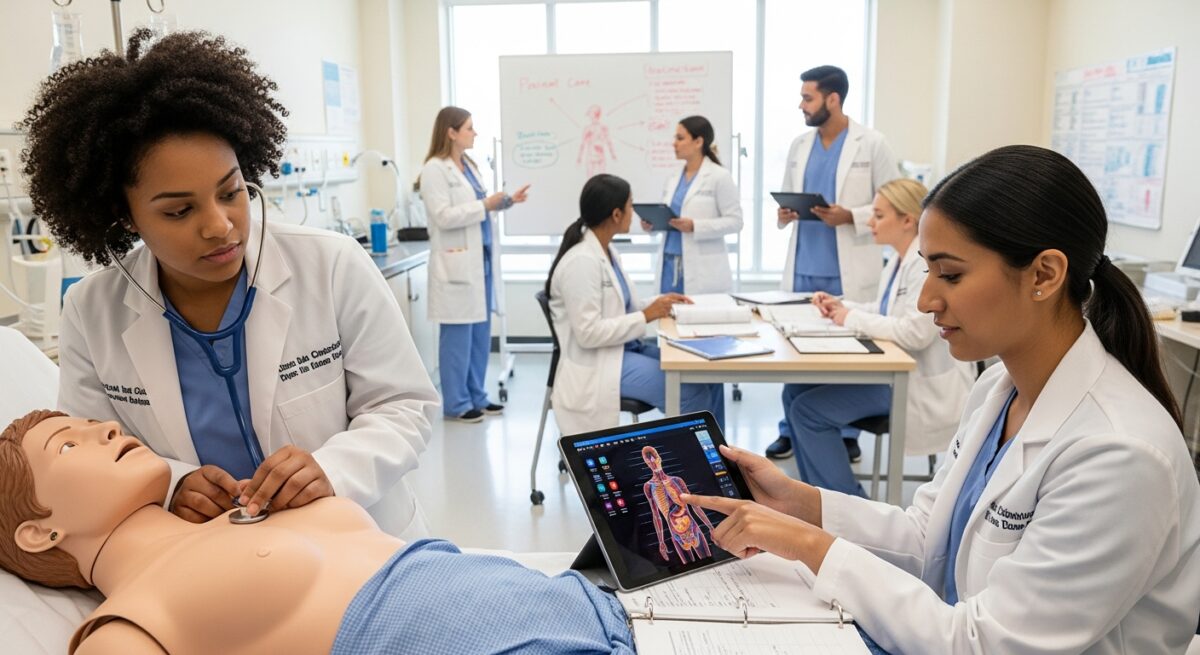
Healthcare remains one of the fastest-growing sectors in the United States, and nursing sits at its heart. For working professionals, career changers, and adult learners, the path to a nursing career no longer requires relocating or quitting a job. Online nursing courses and degree program options have expanded dramatically, offering flexible pathways from licensed practical nurse (LPN) certifications to Doctor of Nursing Practice (DNP) degrees. This article explores the landscape of online nursing education, helping you evaluate programs, understand accreditation, and choose the right fit for your goals.
Understanding the Scope of Online Nursing Education
Online nursing education has evolved far beyond simple correspondence courses. Today, accredited institutions deliver rigorous curricula through interactive platforms, virtual simulations, and clinical placement coordination. The key distinction is that while theory and coursework happen online, clinical hours remain hands-on and in-person. This hybrid model allows students to complete lectures, assignments, and discussions remotely while gaining essential patient care experience at approved healthcare facilities near their homes.
Nursing courses online cover a broad spectrum of subjects, including anatomy, pharmacology, pathophysiology, health assessment, and nursing ethics. Programs also incorporate leadership, research, and community health. The flexibility of online learning appeals to those balancing jobs, families, or other commitments. However, not all programs are created equal. Accreditation from organizations like the Commission on Collegiate Nursing Education (CCNE) or the Accreditation Commission for Education in Nursing (ACEN) is critical for ensuring the program meets national standards and that graduates qualify for licensure exams.
Types of Online Nursing Degrees and Certificates
The range of online nursing programs matches the diversity of nursing roles. Below is a breakdown of the most common degree levels and certificate options available through distance learning.
Certified Nursing Assistant (CNA) and Licensed Practical Nurse (LPN) Programs
Entry-level roles like CNA and LPN often have hybrid formats. While theory can be completed online, skills labs and clinical rotations require in-person attendance. These programs typically take a few months to one year. They serve as stepping stones to higher nursing degrees.
Associate Degree in Nursing (ADN)
An ADN is a common starting point for registered nurses (RNs). Many community colleges offer online ADN programs where general education and nursing theory are delivered remotely. Clinical placements are arranged locally. Graduates sit for the NCLEX-RN exam. This path is often the most affordable and quickest way to become an RN.
Bachelor of Science in Nursing (BSN)
The BSN has become the standard for many healthcare employers. Online BSN programs fall into two categories: traditional pre-licensure BSN for students without a nursing background, and RN-to-BSN for current RNs holding an ADN or diploma. RN-to-BSN programs are among the most popular online nursing programs because they allow working nurses to earn a bachelor’s degree while continuing their careers. These programs typically take 12 to 24 months and focus on leadership, community health, and evidence-based practice.
For those exploring broader educational pathways, our guide on Best Online Cybersecurity Bachelor’s Degree Programs illustrates how online degrees across fields share common features like flexibility and accreditation standards. While nursing has unique clinical requirements, the principles of evaluating online programs apply broadly.
Master of Science in Nursing (MSN)
An MSN opens doors to advanced practice roles such as nurse practitioner, clinical nurse specialist, nurse educator, or nurse administrator. Online MSN programs allow students to specialize in areas like family practice, pediatrics, mental health, or informatics. Most require a BSN and some clinical experience. Students complete coursework online and fulfill clinical hours at approved sites, often with a preceptor. Many programs offer part-time options for working professionals.
Doctor of Nursing Practice (DNP) and PhD in Nursing
For those seeking the highest level of clinical practice or research, online doctoral programs are available. The DNP focuses on clinical leadership and quality improvement, while the PhD emphasizes research and academia. Both require significant self-direction and typically involve a capstone project or dissertation. Online DNP programs are popular among nurse executives and advanced practitioners aiming to influence healthcare policy and systems.
Key Factors to Consider When Choosing an Online Nursing Program
Selecting the right program requires careful evaluation. Here are essential criteria to guide your decision.
- Accreditation status: Verify that the program holds national accreditation from CCNE or ACEN. Regional accreditation of the institution is also important for transfer credits and graduate school eligibility.
- Clinical placement support: Does the program help arrange clinical rotations near you? Some programs require students to find their own preceptors and sites, which can be challenging.
- NCLEX pass rates: For pre-licensure programs, the first-time NCLEX pass rate is a strong indicator of program quality. Look for rates above 80%, ideally above 90%.
- Faculty qualifications: Instructors should hold advanced degrees and current clinical experience. Check if faculty are accessible for office hours and mentoring.
- Technology and simulation resources: Quality online programs use virtual simulation platforms, interactive case studies, and telehealth training tools to supplement clinical hours.
- Cost and financial aid: Compare tuition rates, fees, and available scholarships. Many employers offer tuition reimbursement for RN-to-BSN and MSN programs.
- Program length and flexibility: Look for programs that offer asynchronous classes, allowing you to learn on your own schedule. Some programs have accelerated tracks for full-time students.
These factors help ensure that your investment of time and money leads to a degree that is respected by employers and licensing boards. Always check with your state board of nursing to confirm that an online program meets licensure requirements in your state.
Accreditation: Why It Matters for Online Nursing Programs
Accreditation is the backbone of credible online nursing education. It assures that the curriculum meets professional standards and that graduates are prepared for safe, competent practice. Without proper accreditation, you may not be eligible for federal financial aid, and your credits may not transfer to other institutions. More critically, many state boards of nursing require graduation from an accredited program to qualify for the NCLEX exam.
Two primary accrediting bodies for nursing programs are the Commission on Collegiate Nursing Education (CCNE) and the Accreditation Commission for Education in Nursing (ACEN). Additionally, institutional accreditation from agencies recognized by the U.S. Department of Education is essential. When researching programs, look for accreditation information prominently displayed on the school’s website. If it is not clear, contact the admissions office directly.
Beware of diploma mills or unaccredited programs that promise quick degrees without clinical requirements. These can waste your money and time, leaving you ineligible for licensure. Always verify accreditation through the U.S. Department of Education’s database or the Council for Higher Education Accreditation (CHEA).
Clinical Requirements and How They Work Online
A common misconception is that online nursing programs lack hands-on training. In reality, clinical hours are a mandatory component of any nursing degree. Online programs coordinate these experiences through partnerships with hospitals, clinics, and community health agencies. Students typically complete clinical rotations at facilities near their homes, under the supervision of a licensed preceptor. The program’s clinical coordinator helps arrange placements, though in some cases students must identify their own sites.
Virtual simulations are another important tool. High-fidelity simulation software allows students to practice assessment, decision-making, and emergency response in a safe environment. These simulations count toward clinical hours in many programs, though the ratio of simulation to in-person hours is regulated by state boards and accrediting bodies. Students should ask about the simulation technology used and how it integrates with the curriculum.
For advanced practice (MSN/DNP) programs, clinical hours are more extensive, often exceeding 500 hours for nurse practitioner tracks. These hours are completed in primary care or specialty settings. Online programs typically require students to have a preceptor who is a licensed advanced practice provider. The program may provide a list of approved preceptors or require the student to find one, which can be a hurdle in some regions.
Financial Aid, Scholarships, and Employer Support
Online nursing programs can be surprisingly affordable compared to on-campus alternatives, but costs still vary widely. Tuition for an RN-to-BSN program might range from $10,000 to $30,000, while an MSN can cost $20,000 to $60,000. Many students rely on a combination of federal financial aid, scholarships, and employer tuition assistance.
Federal financial aid is available for accredited programs. Complete the Free Application for Federal Student Aid (FAFSA) to determine eligibility for grants, loans, and work-study programs. Many states also offer nursing-specific scholarships or loan forgiveness programs for those who work in underserved areas. Additionally, organizations like the American Nurses Association and the National League for Nursing offer scholarships for nursing students.
Employer support is a major resource for working nurses. Hospitals and healthcare systems often provide tuition reimbursement or tuition discounts through partnerships with online universities. Some employers require a commitment to work for them for a set period after graduation. Before enrolling, check with your human resources department about available benefits. For those exploring degrees beyond nursing, resources like collegedegree.education can help you compare costs and outcomes across various online programs.
Frequently Asked Questions
Can I become a registered nurse completely online?
No. While coursework can be completed online, all nursing programs require in-person clinical hours for licensure. Hybrid programs combine online theory with local clinical placements.
How long does it take to complete an online nursing degree?
It depends on the level. An ADN may take 2 years, an RN-to-BSN 12-24 months, an MSN 2-3 years, and a DNP 3-5 years. Accelerated programs can shorten timelines.
Are online nursing degrees respected by employers?
Yes, when earned from an accredited, reputable institution. Employers focus on licensure and clinical competence rather than delivery format.
What is the hardest part of online nursing school?
Self-discipline and time management are the biggest challenges. Without a fixed class schedule, students must stay motivated and organized. Clinical placement coordination can also be stressful.
Can I work while earning an online nursing degree?
Many students work part-time or full-time while studying. Flexibility is a key advantage, but balancing clinical hours with work can be demanding. Part-time program options help.
Do online nursing programs require proctored exams?
Yes, most programs use online proctoring services to ensure academic integrity. You may need a webcam and a quiet space for exams.
Choosing the right online nursing program is a significant decision that shapes your career trajectory. By focusing on accreditation, clinical support, cost, and program fit, you can find a pathway that matches your lifestyle and professional aspirations. Whether you are starting as a CNA or advancing to a doctoral role, the flexibility of online nursing courses and degree program options makes nursing education more accessible than ever before.