
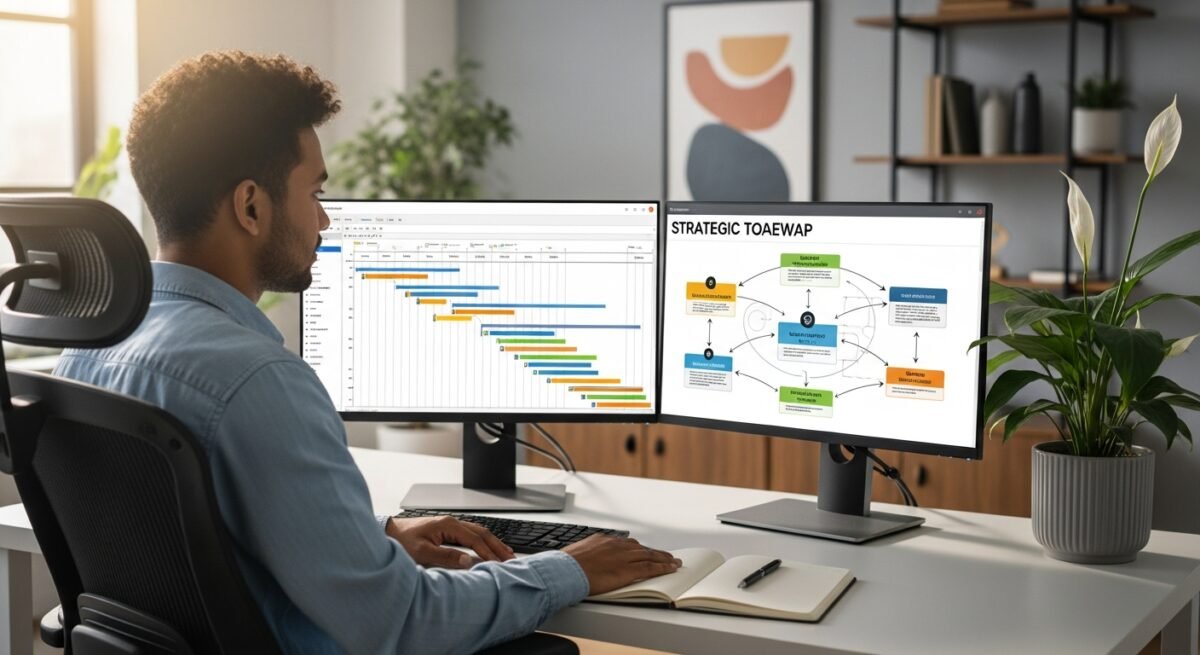
Online Program Management Degrees: A Strategic Career Path
Online program management courses and degrees provide the strategic framework to lead complex initiatives, unlocking senior leadership roles and higher earning potential.
By writerx Contributor
In today’s fast-paced, project-driven economy, the ability to orchestrate complex initiatives from conception to completion is a superpower. Organizations across every sector, from tech giants to non-profits, are in constant need of professionals who can align resources, manage budgets, mitigate risks, and deliver value. This demand has propelled program management from a niche IT function to a core strategic discipline. For working adults and career-changers, pursuing online program management courses and degrees offers a powerful, flexible pathway to enter this high-impact field. These accredited digital programs provide the rigorous curriculum, practical frameworks, and recognized credentials needed to transition into leadership roles without pressing pause on your current career or personal obligations.
Understanding Program Management vs. Project Management
Before exploring educational pathways, it is crucial to distinguish program management from its more familiar cousin, project management. This distinction shapes the focus of your studies and your future career trajectory. Project management is tactical, concerned with the execution of a single, defined initiative with a specific scope, budget, and deadline. Think building a website, launching a marketing campaign, or developing a new product feature. Program management, however, is strategic and holistic. A program is a collection of related projects, managed in a coordinated way to achieve benefits and strategic objectives that would not be possible if the projects were managed independently.
A program manager is less a taskmaster and more a strategic conductor and business leader. They are responsible for the overarching vision, ensuring all constituent projects align with organizational goals. They manage interdependencies between projects, optimize resource allocation across the entire portfolio, and navigate higher-level stakeholder politics. While project managers focus on “doing things right,” program managers focus on “doing the right things.” Therefore, online program management degrees delve deeper into areas like organizational change management, benefits realization, strategic alignment, governance, and advanced risk management. Understanding this scope is key to selecting the right program management courses online that will equip you for this broader leadership role.
Types of Online Program Management Credentials
The educational landscape for this field is diverse, offering options for every career stage and goal. Your choice depends on your prior experience, time commitment, and professional aspirations.
For those new to the field or seeking foundational knowledge, non-degree certificates and individual courses are an excellent starting point. These are often offered by universities, professional associations like the Project Management Institute (PMI), and specialized online platforms. They provide focused training on specific methodologies (e.g., Agile, Scrum, Waterfall) or tools, and can often be completed in a few weeks or months. They are ideal for upskilling or testing your interest before committing to a full degree.
For a comprehensive career shift or advancement, formal degrees are the gold standard. An online Bachelor’s in Project or Program Management provides the undergraduate foundation, covering business fundamentals alongside core management principles. The most common and impactful credential for aspiring program managers is the online Master’s degree. These programs, often titled Master of Science in Project Management or Master in Program and Portfolio Management, are designed for professionals with some work experience. They delve into advanced topics like financial analysis, organizational behavior, complex contracting, and global team leadership. Crucially, many are designed to prepare students for the Program Management Professional (PgMP) certification from PMI, a highly respected credential that signifies advanced experience and competency.
Core Curriculum and Skills Developed
What can you expect to learn in a quality online program management degree? The curriculum is a blend of hard and soft skills designed to create strategic leaders. While specific courses vary, a robust program will cover several key domains.
First, you will master advanced project and program methodologies. This goes beyond basic PMI frameworks to include Agile program management (e.g., SAFe, LeSS), hybrid models, and benefits realization management. Second, strategic alignment and governance are paramount. Courses will teach you how to select the right programs to pursue based on organizational strategy, establish governance frameworks, and define key performance indicators (KPIs) to measure success beyond simple on-time, on-budget metrics. Third, financial and resource management at the program level is critical. You will learn to build and manage complex multi-project budgets, perform earned value management (EVM) at scale, and optimize the allocation of people, funds, and technology across competing initiatives.
Perhaps the most vital skills are those related to leadership and communication. Program managers must be adept at stakeholder engagement, influencing without direct authority, leading change, and managing conflict across diverse teams. The best online programs simulate this through group projects, case studies, and presentations. For a deeper look at curriculum evaluation in a related management field, our guide on choosing healthcare management courses online outlines a similar evaluative framework for specialized programs.
Selecting the Right Online Program: Key Evaluation Criteria
With numerous options available, choosing the right program requires careful research. Your decision should be guided by several non-negotiable and important factors.
- Accreditation: This is the foremost criterion. Ensure the institution is accredited by a recognized regional accrediting body. For the program itself, look for additional accreditation from bodies like the PMI Global Accreditation Center for Project Management Education Programs (GAC). This signals the curriculum meets rigorous global standards.
- Curriculum Relevance and Specialization: Scrutinize the course list. Does it cover the strategic topics mentioned earlier, or is it merely a repackaged project management curriculum? Some programs offer specializations in areas like IT, construction, or healthcare, which can be a major advantage.
- Faculty and Industry Connection: Research the instructors. Are they academics, or do they have real-world program management leadership experience? Programs with strong industry ties often provide better networking opportunities and more practical insights.
- Delivery Format and Flexibility: Understand how the program is delivered. Is it asynchronous (learn on your own schedule) or synchronous (live online classes)? What is the expected weekly time commitment? Ensure the structure fits your work and life.
- Career Support and Outcomes: Investigate the school’s career services for online students. Do they have strong job placement rates? What is the alumni network like? A program that actively supports your career transition is invaluable.
Beyond these, consider the total cost, including tuition, fees, and materials, and explore financial aid options. Investigating online academic pathways for scholarship and funding resources is a critical step in planning your educational investment. Many working professionals utilize employer tuition reimbursement programs, making this an even more accessible career move.
The Career Outlook and Value of the Credential
Investing in an online program management degree is a strategic decision with a compelling return on investment. The U.S. Bureau of Labor Statistics groups program managers with administrative services and facilities managers, noting a steady demand. However, specific data from organizations like PMI consistently shows a significant talent gap and higher median salaries for those with advanced skills and credentials. Program managers are employed in virtually every industry: information technology, finance, healthcare, engineering, government, and aerospace.
Career paths can lead to titles like Senior Program Manager, Director of Program Management, Portfolio Manager, or even VP of Operations. The skill set is also highly transferable to executive roles like Chief Operating Officer (COO). The value extends beyond salary. Program managers operate at the heart of an organization’s most important work, giving them high visibility, cross-functional experience, and a direct impact on business success. The credential from a reputable online program signals strategic thinking, leadership capability, and a mastery of complex systems, making you a valuable asset in any organizational context.
Frequently Asked Questions
Q: Can I become a program manager without a degree in the field?
A: Yes, it is possible, often by progressing from a project management role. However, a specialized degree significantly accelerates the path, provides the formal strategic knowledge often required for senior roles, and is increasingly a differentiator in competitive job markets.
Q: How important is PMI’s PgMP certification compared to a master’s degree?
A: They serve different purposes and are complementary. A master’s degree provides the broad, deep educational foundation and credential. The PgMP certification validates your experience and competency in applying that knowledge. Many top online master’s programs are explicitly designed to prepare you for the PgMP exam. Having both is a powerful combination.
Q: Are online program management degrees respected by employers?
A> Absolutely, provided they are from accredited institutions. The quality of instruction and rigor of coursework in reputable online programs match their on-campus counterparts. Employers primarily value the skills and accreditation, not the delivery mode. The ability to complete a demanding degree while working is often viewed as a testament to time management and dedication.
Q: What technical tools will I need to learn?
A> While tools vary by industry, you will likely encounter and study enterprise-level software for program and portfolio management (PPM) like Microsoft Project Online, Jira Align, Smartsheet, or Planview. The focus in a degree program, however, is less on specific software proficiency and more on the principles of scheduling, resource management, and reporting that these tools enable.
Q: How long does it typically take to complete an online master’s in this field?
A> For a working professional, most programs are designed to be completed in 18 to 24 months of part-time study. Some accelerated or full-time online tracks may allow completion in 12 months.
Pursuing online program management courses and degrees is a decisive step toward positioning yourself at the strategic helm of organizational change. It is an investment in a skill set that transcends specific technologies or business trends, focusing instead on the timeless principles of leadership, alignment, and value delivery. By carefully selecting an accredited program that aligns with your career goals and learning style, you can build the expertise to manage complexity, drive innovation, and lead the ambitious initiatives that define successful organizations. The flexibility of online education makes this transformative career path more accessible than ever, allowing you to learn, apply, and lead simultaneously.