
Sonography Associate's Degree at Concorde San Diego
Explore the 2-year in-person Diagnostic Medical Sonography Associate's degree at Concorde Career College-San Diego and start a hands-on healthcare career.

By Henry Adler
Choosing the right educational path for a career in healthcare can feel overwhelming, especially when you are eager to enter the workforce and start making a difference. If you are drawn to the intersection of technology and patient care, a career in diagnostic medical sonography offers a direct and rewarding route. The Diagnostic Medical Sonography/Sonographer and Ultrasound Technician Associate's degree, usually 2 years In-person at Concorde Career College-San Diego is a focused program designed to take you from a curious beginner to a skilled professional ready for the clinical environment. This pathway is ideal for hands-on learners who thrive in dynamic settings and want to play a critical role in patient diagnosis without the need for a decade of schooling.
For adult learners and career changers, the prospect of returning to school often raises questions about time commitment, cost, and flexibility. While many programs have moved online, sonography is a field that demands in-person, tactile training. You cannot learn to manipulate a transducer or position a patient through a screen. This is why the on-campus format at Concorde in San Diego is not just a logistical detail; it is a pedagogical necessity. The program structure is built around the reality that sonographers are the eyes of the medical team, requiring immediate feedback and supervised practice to master the art of capturing diagnostic images.
In this guide, we will break down exactly what this specific associate's degree entails, from the curriculum and clinical requirements to the career outcomes you can expect in the San Diego market. We will also explore how this program fits into the broader landscape of healthcare education and how you can determine if it is the right investment for your future. Whether you are a recent high school graduate or a working professional seeking a more stable and fulfilling career, understanding the nuances of this 2-year, in-person commitment is the first step toward a successful application.
Why the In-Person Format Matters for Sonography Training
In an era where online degrees are increasingly common, the strictly in-person nature of the Diagnostic Medical Sonography/Sonographer and Ultrasound Technician Associate's degree, usually 2 years In-person at Concorde Career College-San Diego stands out as a deliberate and essential feature. Sonography is a psychomotor skill. It requires hand-eye coordination, spatial reasoning, and the physical ability to apply pressure and angle a transducer to capture specific anatomical structures. A virtual simulation cannot fully replicate the variability of human anatomy or the immediate pressure of a clinical setting.
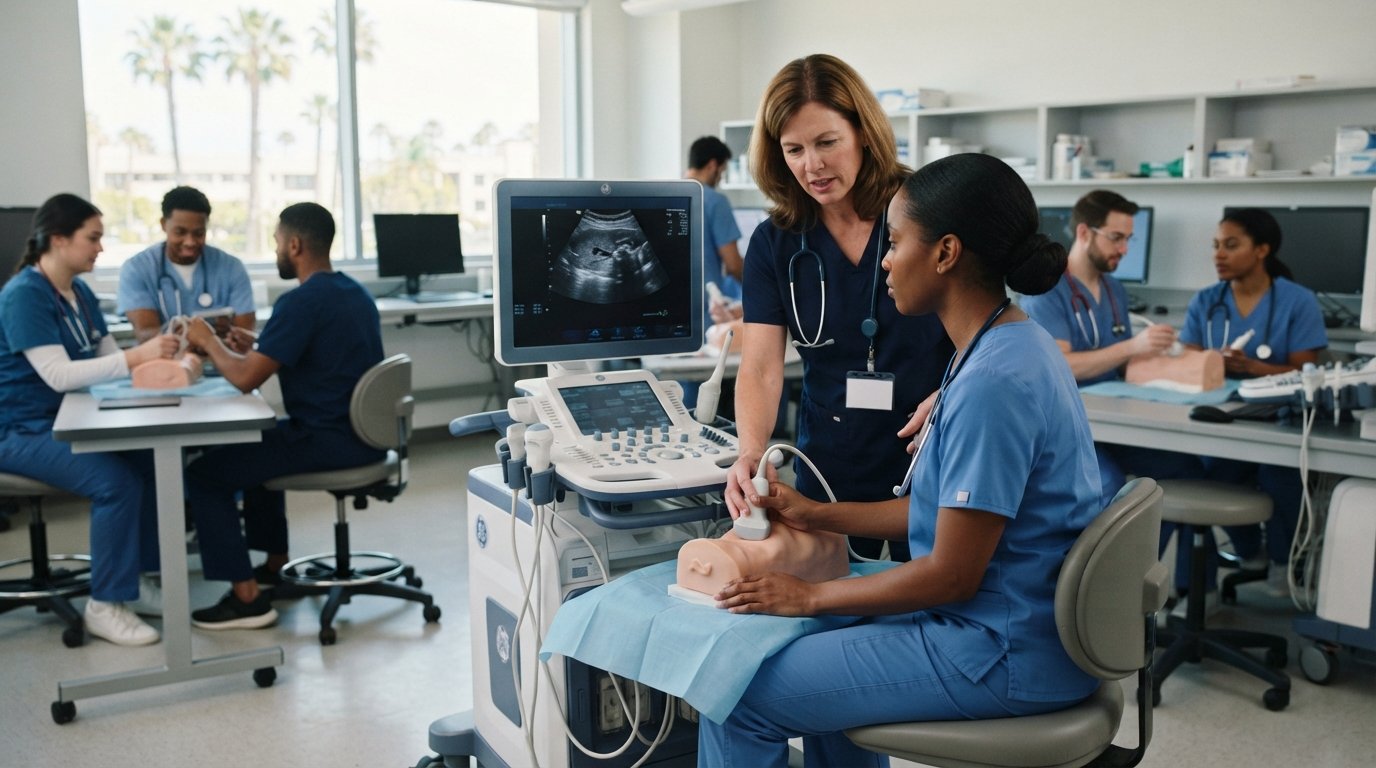
Concorde Career College-San Diego emphasizes hands-on learning because employers expect new hires to be day-one ready. The in-person environment allows instructors to correct your scanning technique in real-time. If you are struggling to locate a gallbladder or differentiate a cyst from a solid mass, the instructor is right there to guide your hand. This level of immediate feedback is crucial for building the confidence and competence required to pass the rigorous certification exams and to function effectively during clinical rotations.
Furthermore, the in-person format fosters a collaborative learning environment. Sonography students often practice scanning on one another, which helps them understand both the patient experience and the sonographer's role. This peer-to-peer practice is supervised and structured, ensuring that students are not only learning the technical aspects but also the professional bedside manner required in healthcare. While online programs for other fields might offer flexibility, this program prioritizes your clinical proficiency above all else.
What to Expect from the 2-Year Associate's Degree Curriculum
The Diagnostic Medical Sonography/Sonographer and Ultrasound Technician Associate's degree, usually 2 years In-person at Concorde Career College-San Diego is designed to be completed in approximately 24 months. This timeline is intensive, covering general education requirements alongside core technical courses. The curriculum is typically divided into classroom instruction, laboratory practice, and clinical externships. The first year often focuses on foundational sciences like anatomy, physiology, and physics, while the second year shifts heavily toward specialized scanning techniques and direct patient care.
Students can expect to study several key areas of sonography, including abdominal, obstetrics and gynecology, and vascular technology. The program is structured to ensure that graduates are eligible to sit for the American Registry for Diagnostic Medical Sonography (ARDMS) exams, which are the industry standard for certification. The coursework is rigorous and fast-paced, but it is designed to mirror the intensity of the hospital environment. You will not just be memorizing facts; you will be applying them in a lab setting from the very beginning.
Here is a breakdown of the typical core components you will encounter in this program:
- Sonographic Physics and Instrumentation: Understanding the physics behind sound waves and how the machine interprets them to create an image.
- Abdominal Sonography: Scanning the liver, kidneys, pancreas, and other abdominal organs to detect abnormalities.
- Obstetric and Gynecologic Sonography: Monitoring fetal development and examining the female reproductive system.
- Vascular Sonography: Assessing blood flow and detecting blockages in veins and arteries.
- Clinical Practicum: Hands-on experience in actual healthcare facilities under the supervision of registered sonographers.
Beyond the technical skills, the curriculum also covers professional development, ethics, and patient communication. You will learn how to explain procedures to anxious patients, how to document findings accurately, and how to work as part of a multidisciplinary healthcare team. The combination of general education and technical training ensures that you graduate as a well-rounded professional, not just a technician.
Accreditation, Certification, and Career Outcomes
When evaluating any healthcare program, accreditation is a critical factor. Concorde Career College-San Diego is institutionally accredited, and the sonography program is designed to meet the standards that allow graduates to pursue certification. Employers look for graduates who hold credentials from the ARDMS. The 2-year associate's degree is the standard entry-level requirement for this field, and completing it at an accredited institution ensures that your education is recognized by hospitals, clinics, and imaging centers.
The career outlook for diagnostic medical sonographers is positive. As the population ages and demand for non-invasive diagnostic imaging grows, the need for skilled sonographers continues to rise. In the San Diego area, there are numerous hospitals and healthcare networks that regularly hire graduates. The role offers stability, a competitive salary, and the satisfaction of knowing that your work directly contributes to patient care. Unlike many other healthcare roles, sonography often allows for a better work-life balance, though it does require physical stamina and the ability to stand for long periods.
For those considering this path, it is helpful to compare it with other healthcare programs. While nursing or radiology tech programs are also popular, sonography offers a unique niche. If you are still exploring your options, you might find it useful to look at guides like the best online ultrasound technician programs for 2026 to see how different formats compare, though for hands-on training, the in-person model is generally preferred by employers. The associate's degree you earn at Concorde is a terminal degree for entry into the field, meaning you can start working immediately after graduation and passing your boards, without needing a bachelor's degree.
When you graduate, you will be prepared for roles in hospitals, diagnostic imaging centers, and physician's offices. The skills you learn are portable and in demand across the country. The clinical rotations included in the program often serve as a pipeline for employment, as many students receive job offers from the sites where they complete their externships. This practical experience is invaluable and gives you a foot in the door at potential employers.
Admissions, Cost, and Financial Aid Considerations
Admission to the Diagnostic Medical Sonography/Sonographer and Ultrasound Technician Associate's degree, usually 2 years In-person at Concorde Career College-San Diego is competitive. The program typically requires a high school diploma or GED, and applicants may need to pass an entrance exam and participate in an interview. Because the program is technical and fast-paced, admissions staff look for candidates who demonstrate a strong work ethic, attention to detail, and a genuine desire to help others. It is also beneficial to have some background in science or healthcare, though it is not always mandatory.
Cost is a major consideration for any adult learner. Tuition for a 2-year private college program will vary, but it is an investment in a career with a solid return. Prospective students should consult directly with Concorde's financial aid office to understand the total cost of attendance, including tuition, fees, books, and equipment. There are various federal and state financial aid options available, as well as scholarships and payment plans. It is important to have a clear financial plan before starting the program to minimize stress and focus on your studies.
To make the most informed decision, you should take the following steps:
- Request Information: Contact the admissions team at Concorde Career College-San Diego to get a detailed program outline and cost breakdown.
- Visit the Campus: Take a tour of the labs and meet the instructors to see the equipment and learning environment firsthand.
- Speak with Financial Aid: Discuss your options for grants, loans, and scholarships to determine your out-of-pocket expenses.
- Talk to Current Students or Alumni: If possible, ask about their experience and job placement after graduation.
For a broader perspective on how this program fits into your overall educational and career trajectory, you can explore resources like CollegeDegree.Education, which provides tools for discovering and comparing accredited colleges and degree programs. This can help you weigh your options and ensure that the associate's degree is the right level of education for your goals.
The San Diego Advantage and Clinical Placements
Studying in San Diego offers distinct advantages for a sonography student. The region has a robust healthcare ecosystem, with numerous hospitals and clinics that partner with Concorde for clinical placements. These placements are a highlight of the program, as they allow you to transition from the classroom to the real world. During your clinical rotations, you will work alongside experienced sonographers, observe a variety of pathologies, and perform scans under supervision. This real-world experience is something that cannot be replicated in a classroom and is a major reason why employers value graduates from hands-on programs.
The San Diego location also provides networking opportunities. You will have the chance to meet professionals in the field, attend local conferences or workshops, and build relationships that can help you when you are job hunting. The faculty at Concorde often have connections in the local healthcare community and can provide guidance on where to apply after graduation. The goal of the program is not just to educate you but to help you launch your career.
Moreover, the 2-year timeline means you can be entering the workforce and earning a salary relatively quickly. For career changers, this is a significant benefit. You do not have to spend four years in school to start a new career in a high-demand field. The focused nature of the associate's degree means every course you take is relevant to your future job, minimizing the time and money spent on unrelated subjects.
Is a Sonography Associate's Degree Right for You?
Deciding to pursue the Diagnostic Medical Sonography/Sonographer and Ultrasound Technician Associate's degree, usually 2 years In-person at Concorde Career College-San Diego is a personal decision that should align with your strengths and lifestyle. This program is best suited for individuals who are detail-oriented, compassionate, and comfortable with technology. You must be able to handle the physical demands of the job, which include standing for long periods and lifting patients. If you prefer a career where you are constantly learning and interacting with people, sonography can be incredibly fulfilling.
It is also important to consider the commitment required. The program is full-time and demanding. You will need to balance coursework, lab hours, and clinical rotations. For working adults, this may require adjusting work schedules or reducing hours. However, the payoff is a stable career with room for growth. Sonographers can advance into supervisory roles, teaching, or specialized areas like pediatric or cardiac sonography with additional experience and certification.
If you are ready to take the next step, research the program thoroughly and speak with an admissions advisor. The field of diagnostic medical sonography is a vital part of modern medicine, and skilled professionals are always in demand. By choosing a program that prioritizes hands-on training and real-world experience, you are setting yourself up for success in a rewarding healthcare career.