
Studio Arts Bachelor's at Centre College: In-Person Guide
Earn a Fine/Studio Arts, General Bachelor's degree, usually 4 years In-person at Centre College, and gain hands-on studio experience for creative careers.

What if the path to a creative career ran through a small campus in Danville, Kentucky, where every studio is within a five-minute walk and professors know your name before you declare a major? That is the daily reality for students pursuing a Fine/Studio Arts, General Bachelor's degree, usually 4 years In-person at Centre College. While online degrees dominate many fields, the tactile, collaborative nature of studio art makes the in-person experience uniquely valuable. This guide explores what that four-year journey looks like, from foundational courses to capstone exhibitions, and how it fits into broader decisions about college cost and career outcomes.
Why the In-Person Studio Model Still Matters
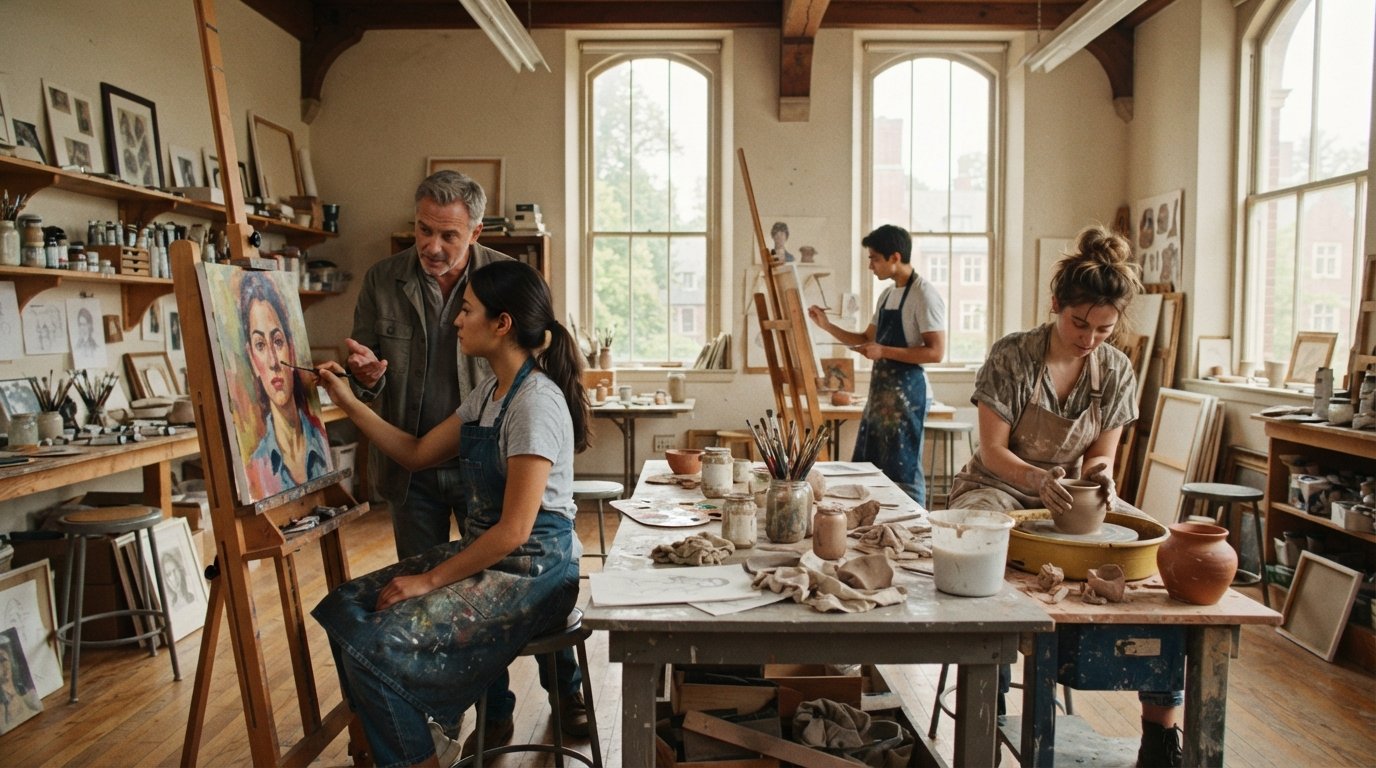
Art is not a spectator sport. It is a practice of making, critiquing, and revising in real time. A Fine/Studio Arts, General Bachelor's degree, usually 4 years In-person at Centre College, centers on the physical studio environment: the smell of oil paint, the hum of a pottery wheel, the immediate feedback of a professor looking over your shoulder. These sensory and social dimensions are difficult to replicate online.
At Centre College, small class sizes mean that studio critiques are not just end-of-term events but weekly conversations. Students learn to articulate their choices, defend their concepts, and incorporate feedback into the next iteration. This iterative process mirrors professional creative work, where collaboration and resilience are as important as technical skill. For adult learners considering a career change, this immersive model offers a structured, supportive transition into the art world.
Moreover, the in-person format provides access to specialized equipment and facilities that are often cost-prohibitive to replicate at home: kilns, printmaking presses, woodshops, digital fabrication labs, and dedicated painting studios. These resources are central to a comprehensive studio education and are a key reason why the Fine/Studio Arts, General Bachelor's degree, usually 4 years In-person at Centre College, remains a residential program.
Program Structure and Curriculum
The Fine/Studio Arts, General Bachelor's degree, usually 4 years In-person at Centre College, is built on a liberal arts foundation. Students typically begin with foundational courses in drawing, design, and art history before selecting a concentration or exploring multiple media. The general track allows flexibility, encouraging students to sample ceramics, sculpture, painting, printmaking, and digital media before declaring a focus.
Beyond the studio, the curriculum includes art history surveys, contemporary theory, and elective courses in the humanities and sciences. This breadth is intentional: artists need context. Understanding historical movements and cultural criticism informs studio practice and prepares students for graduate study or diverse careers in creative industries.
Here is a sample sequence of study for the Fine/Studio Arts, General Bachelor's degree, usually 4 years In-person at Centre College:
- Year 1: Foundation courses in drawing, two-dimensional design, three-dimensional design, and an introductory art history survey. Students also fulfill general education requirements in writing, quantitative reasoning, and foreign language.
- Year 2: Intermediate studio courses in at least two media, plus a second art history survey (modern or non-Western). Students begin building a portfolio and may participate in a group exhibition.
- Year 3: Advanced studio courses in the chosen concentration, a course in contemporary art theory, and electives. Many students pursue internships at galleries or community arts organizations during the summer.
- Year 4: Senior studio seminar, a capstone project, and a solo or group thesis exhibition. Students also complete a written thesis or artist statement and present their work to faculty and peers.
This structure ensures that graduates emerge with a cohesive body of work, critical thinking skills, and the ability to communicate about their practice. The general track is ideal for students who want to explore multiple media or combine art with another field, such as business or education.
Admission and Portfolio Requirements
Admission to the Fine/Studio Arts, General Bachelor's degree, usually 4 years In-person at Centre College, is holistic. While a portfolio is not always mandatory for first-year applicants, it is strongly recommended for students who wish to be considered for talent scholarships or advanced placement in studio courses. The portfolio should demonstrate creativity, technical ability, and a willingness to experiment.
Adult learners and transfer students may have different requirements. Centre College evaluates transcripts, letters of recommendation, and a personal statement alongside the portfolio. Prospective students should contact the admissions office to understand how prior studio coursework or professional experience might count toward the degree.
Financial aid is a critical consideration for any bachelor's degree. According to CollegeAndTuition, a resource focused on higher education costs, families should complete the FAFSA early and explore institutional scholarships, which are often available for art students. Centre College offers merit-based and need-based aid, and students can also apply for external scholarships from arts organizations.
Career Outcomes and Return on Investment
Graduates with a Fine/Studio Arts, General Bachelor's degree, usually 4 years In-person at Centre College, pursue a wide range of paths. Some become professional artists, exhibiting in galleries and selling work. Others enter fields such as graphic design, illustration, art therapy, museum education, or arts administration. The liberal arts training also prepares students for graduate study in fine arts, art history, or education.
According to the Bureau of Labor Statistics, employment of craft and fine artists is projected to grow modestly, with competition for salaried positions remaining strong. However, many artists are self-employed, and earnings vary widely. The return on investment for an art degree depends on the student's goals, network, and willingness to diversify income streams. Centre College's alumni network and career services can help graduates connect with opportunities.
For adult learners comparing online and in-person options, it is worth noting that some business-focused degrees, such as a Business/Commerce General Bachelor's at CSU Pueblo, may offer more flexible online formats. However, the studio arts demand hands-on learning, making the in-person model at Centre College a distinct choice.
Comparing Online and In-Person Art Degrees
Online art degrees exist, but they often emphasize digital media, graphic design, or art history rather than traditional studio practice. A Fine/Studio Arts, General Bachelor's degree, usually 4 years In-person at Centre College, provides access to physical materials and equipment that online programs cannot match. The in-person experience also fosters a community of artists who support and challenge each other, a benefit that extends beyond graduation.
That said, online programs can be a good fit for students who need flexibility due to work or family obligations, or who focus on digital arts. Prospective students should weigh the trade-offs: the immersive studio environment and mentorship of an in-person program versus the convenience and potentially lower cost of online study. Centre College's program is best suited for those who can commit to a residential experience and value the liberal arts context.
When evaluating any program, consider factors such as accreditation, faculty credentials, facilities, internship opportunities, and alumni outcomes. Centre College is regionally accredited, and its art program is staffed by practicing artists and scholars. Visiting campus and meeting faculty can help prospective students determine if the program aligns with their goals.
Financial Planning and Scholarship Strategies
Paying for a private liberal arts education requires planning. The Fine/Studio Arts, General Bachelor's degree, usually 4 years In-person at Centre College, may come with a higher sticker price than public institutions, but financial aid can bring the net cost down. Students should file the FAFSA, apply for institutional aid, and seek external scholarships. Art students can also apply for awards from community arts councils, foundations, and professional organizations.
Here are key steps to finance the degree:
- Complete the FAFSA: This determines eligibility for federal grants, loans, and work-study.
- Apply for institutional scholarships: Centre College offers merit scholarships for artistic talent and academic achievement.
- Seek external scholarships: Organizations like the National Art Education Association and local arts councils offer awards.
- Consider work-study or part-time jobs: Campus jobs in studios or galleries can provide income and experience.
- Plan for materials costs: Studio art courses often require supplies; budget for these expenses each semester.
Adult learners may also qualify for employer tuition assistance or tax credits. It is wise to consult a financial aid advisor to understand all options. For a broader perspective on college costs and aid, resources like CollegeAndTuition provide guides and tools.
Is the In-Person Studio Arts Degree Right for You?
Choosing a Fine/Studio Arts, General Bachelor's degree, usually 4 years In-person at Centre College, is a commitment to a creative life. It suits students who thrive in a hands-on, collaborative environment and who want to develop a deep, versatile skill set. The program's small size and liberal arts emphasis encourage experimentation and critical thinking, preparing graduates for a range of creative careers.
If you are an adult learner considering a return to school, assess your readiness for a residential program and your career goals. Speak with admissions counselors, visit the campus, and talk to current students. The investment of time and money is significant, but the rewards, both personal and professional, can be substantial. For those who dream of working in a studio, exhibiting art, or teaching, this degree offers a strong foundation.
Ultimately, the best program is one that aligns with your aspirations and circumstances. The Fine/Studio Arts, General Bachelor's degree, usually 4 years In-person at Centre College, is a distinctive option for artists who value community, mentorship, and the transformative power of making art in person. CollegeAndTuition