
Surgical Technology Associate's Degree at Drury University
A two-year Surgical Technology Associate's degree at Drury University CCPS combines hands-on training with clinical rotations and a fast path to certification.

By Oliver Brooks
If you have ever watched a surgical team work, you know the operating room runs on precision, preparation, and trust. Behind every successful procedure stands a surgical technologist: the professional who arranges sterile instruments, anticipates the surgeon's needs, and keeps the field organized from the first incision to the final suture. For adults who want to enter this fast-paced healthcare career without spending four years in school, the Surgical Technology/Technologist Associate's degree, usually 2 years In-person at Drury University-College of Continuing Professional Studies, offers one of the most direct routes into the operating room.
Drury University's College of Continuing Professional Studies (CCPS) is designed around working adults and career changers who need a credible, accredited credential on a realistic timeline. The program blends classroom instruction with hands-on clinical experience, and it prepares graduates to sit for the national certification exam that employers look for. This guide explains what the degree covers, what it costs, how admission works, and how to decide whether this in-person path fits your life and your budget.
What a Surgical Technology Associate's Degree Actually Prepares You to Do
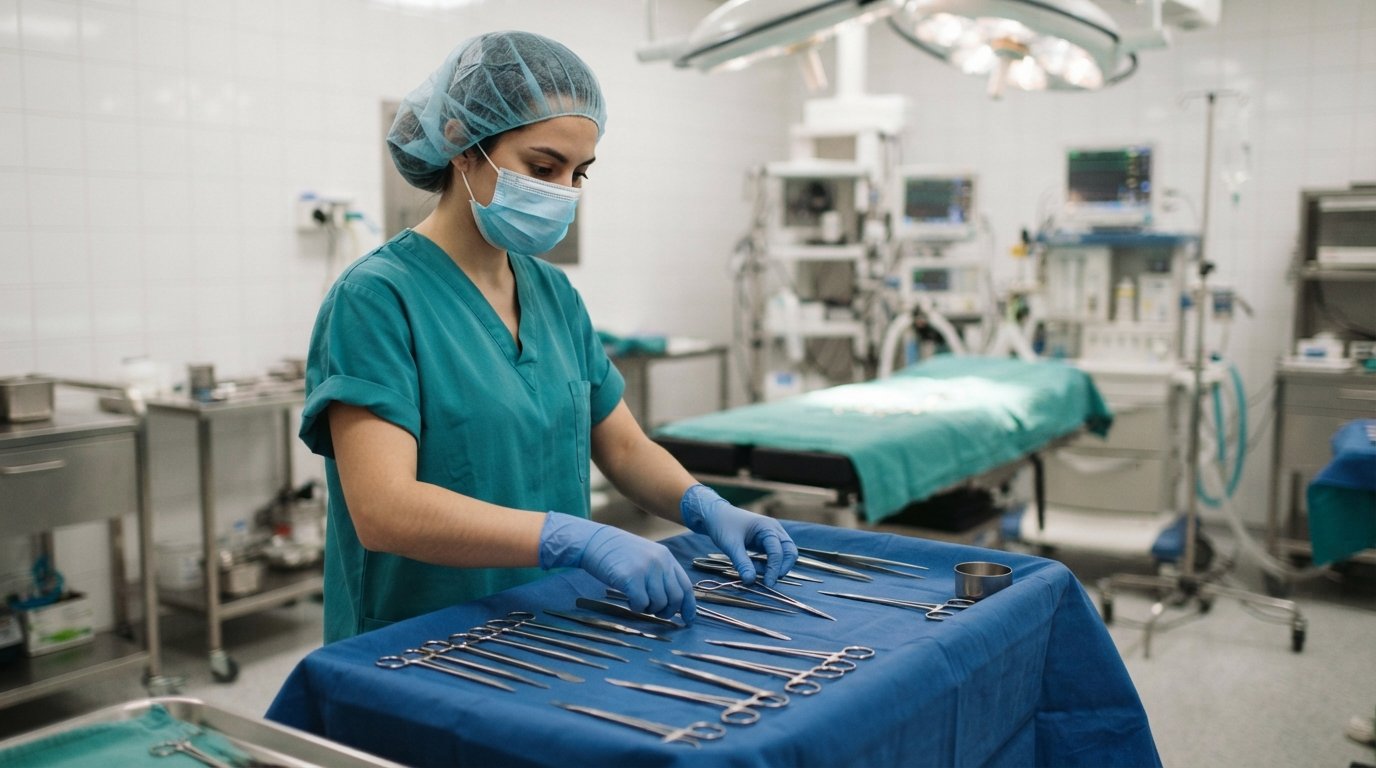
Surgical technologists, sometimes called surgical techs or operating room technicians, are allied health professionals who work under the supervision of surgeons, registered nurses, and other surgical personnel. Before an operation, they prepare the operating room by checking supplies, testing equipment, and arranging sterile instruments in the exact order the surgeon will need them. During surgery, they pass instruments, hold retractors, manage sponges and sutures, and monitor the sterile field. Afterward, they help count instruments and supplies and assist with cleanup and restocking.
What separates a formal degree from on-the-job training is the combination of anatomy, microbiology, pharmacology, and aseptic technique taught in a structured sequence. Students learn the names and functions of hundreds of instruments, the steps of common procedures across specialties such as general surgery, orthopedics, obstetrics, and cardiovascular surgery, and the protocols that prevent surgical site infections. The in-person format matters here: you cannot learn sterile technique from a video. You learn it by practicing gloving, gowning, and instrument handling until it becomes muscle memory.
Drury's program follows this model closely. Coursework typically covers:
- Medical terminology, anatomy, and physiology as they apply to the surgical setting
- Microbiology and infection control, including sterilization and disinfection methods
- Surgical pharmacology and anesthesia basics
- Perioperative case management across surgical specialties
- Professionalism, ethics, and legal responsibilities in the operating room
After classroom and lab work, students move into supervised clinical rotations at partner hospitals and surgery centers. That clinical component is where the degree proves its value. You rotate through different specialties, log cases, and build the reference network that often leads directly to a first job.
Why the Two-Year In-Person Format at Drury University CCPS Stands Out
Many associate degrees advertise flexibility, but surgical technology is one field where hands-on, in-person instruction is non-negotiable. Accreditation standards for surgical technology programs require a minimum number of supervised clinical cases, and certification bodies expect graduates to have practiced in real operating rooms. Drury University-College of Continuing Professional Studies structures its program around that reality rather than working against it.
CCPS itself is built for adult learners. That means evening and daytime course options where possible, advising that understands students juggling jobs and families, and a cohort model that keeps you moving through the program with the same group of peers. The in-person requirement is a feature, not a bug: you build relationships with instructors who have worked in operating rooms, and you practice on the same equipment you will use on the job. Small cohort sizes also mean more hands-on time and more individualized feedback during lab sessions.
The two-year timeline, roughly four semesters plus clinical rotations, also has a financial dimension. Compared with a bachelor's degree, you enter the workforce sooner, start earning a surgical technologist salary sooner, and carry less student debt. For career changers comparing options, that shorter runway can make the difference between a plan that works and one that stalls.
If you are also weighing broader business or management credentials as a backup plan, it helps to understand how shorter programs compare. Our guide on Associate Degree in Management Programs explains how two-year credentials in other fields are structured, which can clarify why a clinical associate degree like surgical technology demands in-person hours that a management degree does not.
Admission Requirements and What to Expect Before You Apply
Admission to a surgical technology program is more involved than general college admission because the field carries patient-safety responsibilities. Programs generally look for a high school diploma or equivalent, a minimum GPA, and completion of prerequisite courses in subjects like anatomy, biology, or medical terminology. Some students complete prerequisites at Drury before formally entering the surgical technology sequence.
You should also expect non-academic requirements that protect both you and future patients:
- A criminal background check and drug screening, since clinical sites require them
- Current immunizations and health clearance, including titers and TB testing
- CPR and Basic Life Support certification before clinical placement
- Physical capability to stand for long periods and lift instrument trays
Because clinical placements are limited and coordinated with hospitals, cohorts often have capped enrollment. That means applying early and completing prerequisites promptly matters. An admissions advisor at CCPS can tell you the current deadline, the exact prerequisite list, and whether any of your prior college credits will transfer. Ask specifically about credit for previous healthcare work or military training, since that can shorten your path.
Cost, Financial Aid, and Return on Investment
Tuition for an associate degree in surgical technology varies by institution, and Drury CCPS publishes per-credit rates that you should confirm directly with the university, since rates change by year. Beyond tuition, budget for lab fees, clinical uniforms, background checks, certification exam fees, and textbooks. These ancillary costs are real but modest compared with the total cost of a four-year degree.
Financial aid options for this program mirror those for other accredited associate degrees:
- Federal Pell Grants and need-based aid, if you qualify through the FAFSA
- Federal student loans, including subsidized options for eligible students
- Employer tuition assistance, common in hospital systems that need surgical staff
- Scholarships from professional associations and local healthcare foundations
- Workforce development grants offered through state agencies for in-demand health careers
Return on investment is where this degree shines. Surgical technology is a high-demand allied health field, and certified technologists typically earn a solid hourly wage with opportunities for shift differentials, call pay, and overtime. Because the credential takes about two years and certification is nationally recognized, graduates often recoup their investment faster than peers who chose longer degree paths. To compare programs, costs, and outcomes across many schools, resources like CollegeDegrees.School provide useful overviews of degree types and career planning that can help you benchmark this program against alternatives.
Certification, Licensure, and Career Outlook
Graduating from an accredited program is the first step. Most employers prefer or require certification, which you earn by passing the Certified Surgical Technologist (CST) exam administered by the National Board of Surgical Technology and Surgical Assisting (NBSTSA). Some states also have licensure or registration requirements, so check the rules in the state where you plan to work.
Job settings for surgical technologists include hospital operating rooms, ambulatory surgery centers, outpatient clinics, and specialty practices such as orthopedics and ophthalmology. Demand remains steady because surgical services are among the least deferrable parts of healthcare: procedures continue regardless of economic conditions. Technologists who gain experience can move into roles such as surgical first assistant, central sterile processing supervisor, or operating room materials manager, and some pursue further education in nursing or healthcare administration.
One practical advantage of the Drury CCPS in-person format is that your clinical rotations double as an extended job interview. Preceptors and OR managers see your work ethic, your sterile technique, and how you handle pressure. Many students receive job offers before graduation, which shortens the gap between earning the degree and earning a paycheck.
Is This Program Right for You?
The Surgical Technology/Technologist Associate's degree, usually 2 years In-person at Drury University-College of Continuing Professional Studies, fits a specific kind of student: someone who wants a hands-on healthcare career, is willing to commit to a structured daytime schedule, and prefers learning by doing rather than by reading alone. It is less suited to students who need fully online coursework or who cannot accommodate clinical hours during business days.
Before committing, visit campus if you can, talk to current students, and shadow a surgical technologist if the opportunity exists. Confirm the program's accreditation status, ask about first-time certification exam pass rates, and get the job placement numbers in writing. Those data points tell you more about a program's quality than any brochure.
Healthcare needs skilled hands in the operating room, and the pathway does not have to be long or expensive. A focused two-year associate degree, completed in person with real clinical experience, can put you in that room faster than you might expect. Start by requesting information from Drury University-College of Continuing Professional Studies, confirm the current prerequisites and deadlines, and map out your financial aid plan. The next surgical team that needs a dependable technologist may be hiring sooner than you think, and this degree is built to get you there.