
Welding Certificate at Delaware County CC: 2026 Guide
The Welding Technology/Welder Certificate at Delaware County Community College prepares you for trade jobs in about a year of hands-on, in-person training.
By James Morgan
A welder's arc can join steel at 5,000 degrees Fahrenheit, but the path to a stable, well-paid trade career often starts with something far cooler: a one-year certificate earned close to home. For students in the Philadelphia suburbs, the Welding Technology/Welder Certificate, 1 year to less than 2 years In-person at Delaware County Community College offers a fast, hands-on route into manufacturing, construction, and fabrication work without a four-year degree. This guide breaks down what the program covers, who it is designed for, what it costs, and how to decide whether it fits your career plan.
Why a Short-Term Welding Certificate Makes Sense Right Now
Skilled trades have quietly become one of the most reliable on-ramps to the middle class. Welders build bridges, pipelines, ships, pressure vessels, and the structural skeletons of commercial buildings. The Bureau of Labor Statistics projects steady demand for welders, cutters, solderers, and brazers over the coming decade, driven by infrastructure repair, energy projects, and manufacturing reshoring. Many of these roles do not require a bachelor's degree, but they do require documented, verifiable training.
That is exactly where a certificate program shines. Unlike a two-year associate degree, a certificate compresses the core technical instruction into a shorter window so you can enter the workforce sooner. The Welding Technology/Welder Certificate, 1 year to less than 2 years In-person at Delaware County Community College is built around this idea: get students on the torch and under the hood quickly, with enough guided practice hours to pass entry-level qualification tests. For adults changing careers or high school graduates who want to avoid debt, the math is compelling.
It is worth comparing formats before you commit. Some learners pair hands-on training with online coursework in related fields, and resources such as this guide to online 4 year degrees in Delaware can help you weigh a certificate against a longer academic route. For most welding jobs, however, in-person instruction is non-negotiable: you cannot learn to read a puddle through a screen.
What the Welding Technology/Welder Certificate Covers
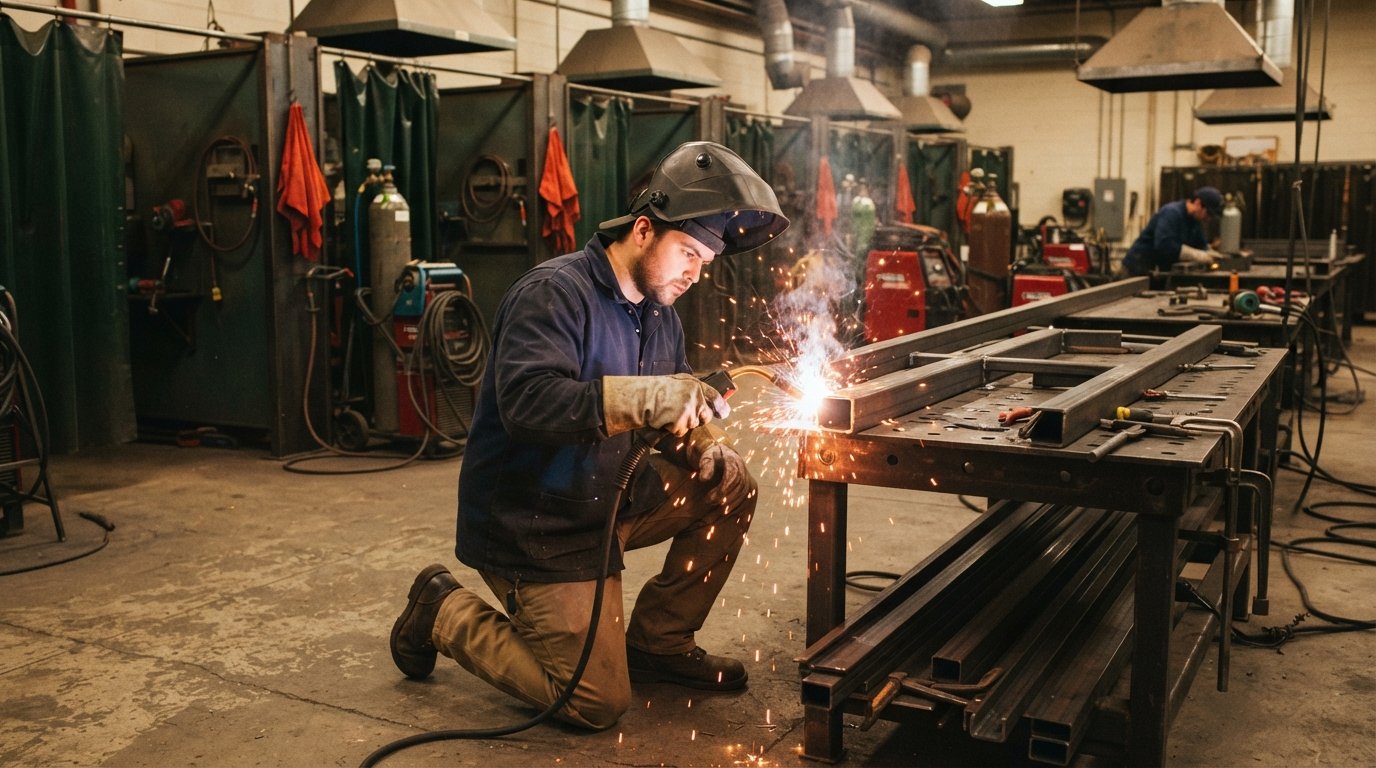
Delaware County Community College designed this certificate as a career-entry credential, not a hobby course. Students spend the bulk of their time in a shop environment, practicing the processes employers actually hire for. Expect a mix of classroom theory (metallurgy, blueprint reading, safety) and long blocks of supervised lab time where you strike arc after arc until your beads are consistent.
Core topics typically include shielded metal arc welding (stick), gas metal arc welding (MIG), flux-cored arc welding, gas tungsten arc welding (TIG), oxy-fuel cutting, and plasma cutting. You will also learn joint types, positions (flat, horizontal, vertical, overhead), weld symbols, and inspection basics. Safety training covers PPE, ventilation, electrical hazards, and hot work permits, which matter enormously on real job sites.
Here is a snapshot of the skills and knowledge areas the program is built to develop:
- Arc welding processes: stick, MIG, flux-cored, and TIG in multiple positions
- Blueprint reading and welding symbol interpretation
- Metal preparation, fit-up, and distortion control
- Cutting methods: oxy-fuel, plasma, and mechanical
- Shop safety, code awareness, and weld quality inspection basics
Because the credential stacks toward the college's associate degree in welding technology, students who finish the certificate can often continue their studies later without starting over. That flexibility matters if you decide to pursue supervisory or inspection roles down the road, where credentials beyond the certificate can raise your ceiling.
Who Thrives in This Program
The strongest candidates tend to share a few traits: comfort working with their hands, patience with repetitive practice, and a genuine respect for safety rules. Welding rewards consistency more than raw talent. Students who show up to every lab session and practice deliberately improve fastest.
Career changers are a major part of the enrollment picture. Former office workers, veterans, and people leaving jobs in retail or food service often find that a one-year certificate gets them into interviews faster than a general studies degree. High school students in dual enrollment programs also use this pathway to test the trade before committing. Meanwhile, working welders who never earned a formal credential sometimes enroll to fill gaps in blueprint reading or certification preparation.
Before enrolling, ask yourself three questions: Can I commit to daytime, in-person lab hours for a year? Am I comfortable in a physically demanding environment with heat, sparks, and heavy materials? Do I want to enter the workforce quickly, or am I aiming for a role that requires an associate or bachelor's degree? If your answers point toward speed and hands-on work, the certificate is likely a strong fit. If you are still exploring broader academic options, a resource like CollegeDegrees.School can help you compare degree pathways and college planning strategies side by side.
Admissions, Scheduling, and Format Details
Community college certificate programs are generally more accessible than four-year degree admissions. At Delaware County Community College, applicants typically need a high school diploma or equivalent, and they may take placement tests in math and reading to ensure they are ready for technical coursework. Some students start with developmental courses first, which can extend the timeline slightly beyond one year.
The format is fully in-person, and that is a feature rather than a limitation. Welding labs require real machines, real metal, and an instructor who can watch your technique and correct it in the moment. Expect a schedule that mixes lecture with extended shop sessions, often during weekdays. Evening options may exist depending on the semester, but prospective students should confirm current offerings with the college, since lab capacity and instructor availability change.
Financial considerations are manageable for most learners. Community college tuition is a fraction of private trade school pricing, and federal financial aid, state grants, and scholarships may apply to certificate programs that qualify. Employers sometimes reimburse tuition for workers in manufacturing or construction, so it is worth asking your current employer before you pay out of pocket. The college's financial aid office can walk you through the FAFSA and payment plan options.
Career Outcomes and Earning Potential
Graduates of welding certificate programs pursue a range of entry-level roles. Common job titles include welder, fabrication welder, structural welder, pipe welder trainee, and maintenance welder. Manufacturing shops, aerospace suppliers, shipyards, construction contractors, and municipal public works departments all hire from this talent pool. Some graduates eventually specialize in welding inspection, robotics operation, or shop supervision, roles that often require additional certifications or an associate degree.
Pay varies widely by industry, location, and certification level. Entry-level welders in the Philadelphia metro area can often start above the regional minimum wage, and experienced welders who hold multiple process certifications or work in specialized sectors like aerospace or pipeline construction can earn substantially more. Overtime, shift differentials, and travel pay in field welding can push annual earnings higher. The key lever is certification: employers pay for documented skill.
Certification exams, such as those offered through the American Welding Society, test your ability to produce sound welds under code requirements. The certificate program's lab hours are designed to prepare you for this kind of testing, though the exams themselves are separate from the credential. Many employers also administer their own weld tests during hiring, so your practice time directly translates into job offers.
How to Get Started and Succeed
If you are ready to move forward, a simple sequence keeps the process manageable. Start by contacting the college's admissions office to confirm current program requirements, start dates, and lab availability. Then complete your application, submit transcripts, and take any required placement assessments. Apply for financial aid early, since processing can take weeks.
Once you are enrolled, treat the program like a job. Arrive early, keep your equipment organized, and ask instructors for feedback on every weld. Practice outside of class when open lab hours are available. Build a small portfolio of photos documenting your best work; it gives you something concrete to show employers. Network with classmates and instructors, because trade jobs often spread through word of mouth.
Finally, think beyond the certificate. The Welding Technology/Welder Certificate, 1 year to less than 2 years In-person at Delaware County Community College can be a launching pad toward an associate degree, specialized certifications, or supervisory training. Whether you stop at the certificate or keep going, the credential signals to employers that you have the discipline and hands-on skill to contribute from day one. For adults who want a practical, affordable path into a durable trade, that signal is worth a year of focused effort.