
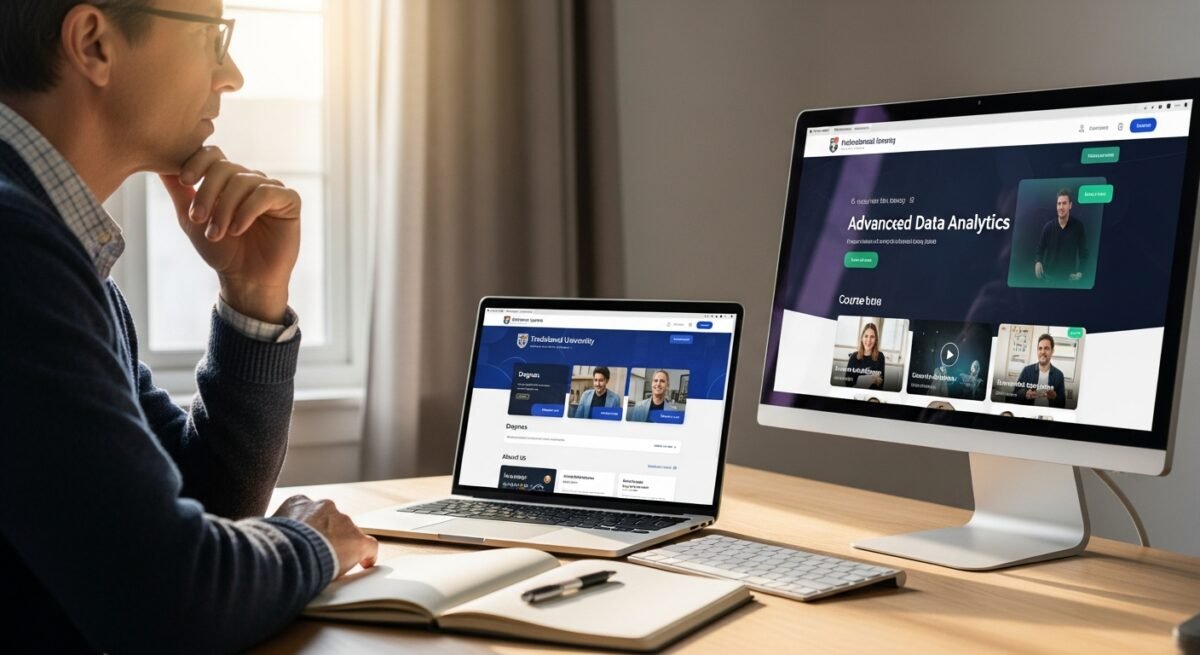
Your Guide to Choosing Online Learning Universities and Platforms
This comprehensive guide helps you navigate accredited online universities and education platforms to find the perfect program for your career goals and learning style.
By writerx Contributor
The landscape of higher education has been fundamentally reshaped by digital technology, offering unprecedented access to degrees, certificates, and skills from anywhere in the world. For prospective students, this abundance of choice is both empowering and overwhelming. Navigating the vast array of online learning universities and platforms requires a clear strategy to align educational goals with the right institution, format, and investment. This guide serves as a comprehensive roadmap, cutting through the noise to help you identify accredited programs, understand different platform models, and make an informed decision that advances your career and personal aspirations.
Understanding the Two Primary Models: Universities vs. Platforms
The first critical distinction in online education is between traditional universities offering online degrees and dedicated online learning platforms. Traditional universities, both non-profit and for-profit, have expanded their reach through online programs. These institutions grant accredited degrees (associate, bachelor’s, master’s, and doctoral) and often mirror their on-campus curricula in a digital format. The primary value proposition is the credential: a degree from an established institution that carries weight in the job market. The experience is structured around semesters, credit hours, and a cohort of students progressing together through a set curriculum.
In contrast, online education platforms like Coursera, edX, and Udacity often partner with universities to offer individual courses, professional certificates, micro-credentials, and even full degree programs. Their model is typically more flexible, with self-paced options, subscription-based access, and a focus on modular, skill-specific learning. The value here often lies in career-specific skill development, professional certification, or sampling a subject before committing to a full degree program. Understanding your primary goal, whether it is a comprehensive degree or targeted skill acquisition, is the first step in choosing the right path.
Evaluating Accreditation and Institutional Legitimacy
Accreditation is the non-negotiable cornerstone of any legitimate online degree program. It is a quality assurance process where an independent agency evaluates a school’s programs, faculty, and student services. Attending an accredited institution is crucial for the transferability of credits, eligibility for federal financial aid, and employer recognition of your degree. Always verify a school’s accreditation status directly through the U.S. Department of Education’s Database of Accredited Postsecondary Institutions and Programs or the Council for Higher Education Accreditation (CHEA) website.
There are two main types of accreditation: regional and national. Regional accreditation is the most prestigious and widely accepted, typically held by non-profit, degree-granting colleges and universities. National accreditation is often associated with for-profit, vocational, or faith-based institutions. While nationally accredited schools are legitimate, credits from them may not transfer to regionally accredited institutions. For most students seeking a bachelor’s or master’s degree, a regionally accredited online learning university is the safest and most versatile choice. Additionally, look for programmatic accreditation for specific fields like business (AACSB), engineering (ABET), or nursing (CCNE), which signals that a program meets industry standards.
Key Factors for Choosing Your Online Program
Beyond accreditation, a thoughtful evaluation of several program characteristics will ensure a good fit for your learning style and life circumstances. A strong online program provides robust student support services, including dedicated academic advising, technical support, career services, and access to online libraries and tutoring. The structure of the program is also vital: synchronous programs require live online attendance at scheduled times, while asynchronous programs allow you to complete coursework on your own schedule, which is ideal for working professionals.
Consider the following elements when comparing programs:
- Faculty Credentials and Interaction: Research who teaches the courses. Are they the same faculty who teach on-campus? What opportunities exist for student-instructor interaction through office hours, discussions, or feedback?
- Technology and Learning Management System (LMS): The platform used (like Canvas, Blackboard, or a custom system) should be intuitive and reliable. Many schools offer demo courses to test the interface.
- Student Engagement and Community: Look for programs that facilitate peer interaction through group projects, discussion forums, and virtual study groups to combat the isolation of online study.
- Cost and Financial Aid Transparency: Understand the total cost, including tuition, fees, and materials. Investigate financial aid options, scholarships for online learners, and payment plans. A valuable resource for comparing costs and understanding financing is digital learning degree options, which can help you plan your educational investment.
- Career Outcomes and Alumni Network: Does the program have a strong career placement record? Does it offer virtual career fairs, resume workshops, and an active online alumni network you can tap into?
The Rise of Hybrid and Specialized Platforms
The market has also seen the growth of hybrid models and niche platforms. Some traditional universities now partner with platform providers like 2U or Coursera to deliver and support their online degrees, blending academic rigor with platform technology. Furthermore, specialized platforms cater to specific industries. For example, platforms like Pluralsight and Codecademy focus on technology and coding skills, while MasterClass offers learning from renowned experts in various fields. These are excellent for continuing education and professional development but are generally not a substitute for an accredited degree when one is required for licensure or advanced career positions.
For those considering graduate-level study, the decision-making process involves additional layers of scrutiny regarding research opportunities, faculty mentorship, and the program’s reputation within your specific industry. Our detailed resource on accredited online graduate courses delves deeper into selecting advanced programs that maximize career ROI and professional network expansion.
Asking the Right Questions Before You Enroll
Proactive research is your most powerful tool. Before submitting an application, contact the admissions or program office of your shortlisted online learning universities and platforms with specific questions. Inquire about graduation rates, student satisfaction surveys, and time-to-degree completion for part-time students. Ask if there are any required on-campus residencies or orientations. Request to speak with a current student or alumnus to get an unfiltered perspective on the program’s strengths and weaknesses. This due diligence will prevent surprises and ensure the program is designed for someone in your situation, whether you are a full-time parent, a deployed service member, or a mid-career professional.
Frequently Asked Questions
Are online degrees respected by employers?
Yes, overwhelmingly so, especially when earned from a properly accredited institution. Employer perception has shifted dramatically, with most now viewing an online degree from a reputable university as equivalent to its on-campus counterpart. The key is the accreditation status of the granting institution.
How much time should I dedicate to an online course each week?
A good rule of thumb is to dedicate 8-12 hours per week for a standard 3-credit course. Self-paced courses on platforms may require less structured time but demand strong self-discipline to complete.
Can I transfer credits from an online platform to a university?
It depends. Many universities have articulation agreements with platforms like edX or Coursera for specific courses and credentials. You must always get pre-approval from the receiving institution’s registrar before taking a course if your goal is credit transfer.
What technology do I need to succeed?
At a minimum, a reliable computer, high-speed internet, and a word processing program are essential. Some programs may require specific software, a webcam, or a microphone. Always check the technical requirements before enrolling.
How do I stay motivated in a self-paced environment?
Create a consistent study schedule, designate a dedicated workspace, set weekly goals, and actively participate in online forums. Connecting with fellow students to form virtual study groups can also provide accountability and support.
Choosing the right educational path is a significant decision with lasting impact. By methodically evaluating your goals, verifying accreditation, scrutinizing program details, and leveraging available resources, you can confidently select an online learning university or platform that provides a rigorous, supportive, and valuable educational experience. The flexibility of online education opens doors; your informed choice ensures you walk through the right one.