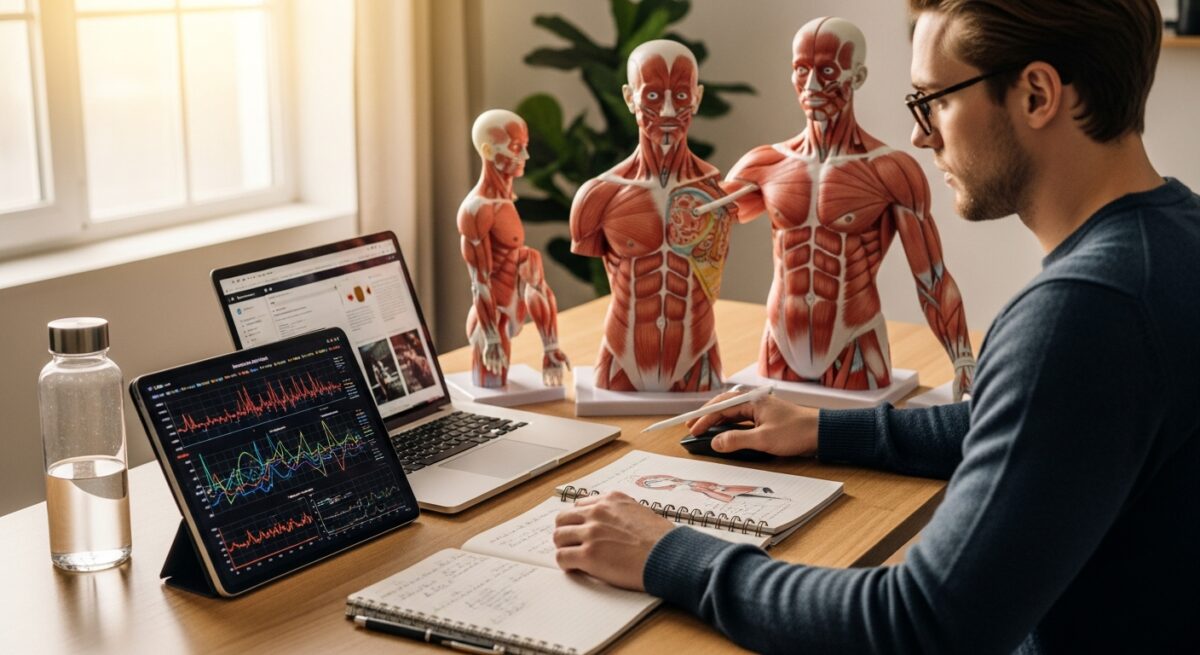
Imagine a career where you apply scientific principles to help people move better, feel stronger, and live healthier lives. The field of exercise science is the foundation for countless rewarding professions, from personal training and athletic coaching to clinical rehabilitation and public health. For working adults and aspiring professionals, an online exercise science degree offers a flexible, accredited pathway to enter this dynamic field. This comprehensive guide will navigate the landscape of online exercise science programs, detailing the curriculum, career outcomes, and critical steps for choosing the right path for your goals. Whether you seek a bachelor’s degree to launch your career or a master’s to specialize, understanding the nuances of distance education in this field is the first rep toward success.
What Is an Exercise Science Degree?
An exercise science degree is an interdisciplinary academic program focused on the physiological, biomechanical, and psychological responses and adaptations to human movement and physical activity. It sits at the intersection of biology, chemistry, physics, and psychology, providing a rigorous scientific foundation. Core coursework typically delves into human anatomy and physiology, exercise physiology, biomechanics, nutrition, motor learning, and fitness assessment. Unlike a general kinesiology degree, which may cover a broader spectrum of human movement studies, exercise science programs often emphasize the applied science behind exercise prescription and performance. This makes them ideal for students targeting careers that require a deep understanding of how the body functions under stress and recovers from activity.
The value of this degree lies in its versatility and application. Students learn not just theory, but how to conduct fitness assessments, analyze movement patterns, design evidence-based training programs, and understand the role of exercise in chronic disease prevention. This knowledge is directly transferable to clinical, corporate, community, and athletic settings. For those considering an online format, modern programs utilize virtual labs, simulation software, and required in-person practicums to ensure hands-on competency. The credibility of your degree hinges on accreditation, which is why prospective students must prioritize programs accredited by bodies like the Commission on Accreditation of Allied Health Education Programs (CAAHEP) or regional accreditors, ensuring the curriculum meets industry standards.
Career Paths with an Exercise Science Degree
Graduates of exercise science programs unlock doors to a diverse array of professions. The degree serves as a foundational credential that can be tailored toward immediate employment or further graduate study. The direct application of knowledge allows graduates to step into roles that improve individual and community health outcomes.
One of the most common entry points is as a certified personal trainer or strength and conditioning coach. In these roles, you design and implement training programs for clients ranging from general populations to elite athletes. The scientific background from your degree provides a significant edge over trainers without formal education, enabling you to create safer, more effective regimens. Another prominent path is in clinical exercise physiology. Here, professionals work in hospital or rehabilitation settings, guiding patients with chronic conditions (like heart disease, diabetes, or pulmonary issues) through prescribed exercise therapy. This role often requires additional certification, such as the Certified Clinical Exercise Physiologist (CEP) credential from the American College of Sports Medicine (ACSM).
For those interested in the business and operational side of fitness, management positions at gyms, corporate wellness centers, or community recreation facilities are excellent options. Furthermore, an exercise science bachelor’s degree is a classic pre-professional track for advanced study. It provides the necessary prerequisites for graduate programs in physical therapy, occupational therapy, chiropractic medicine, and physician assistant studies. The analytical and human physiology focus is ideal preparation for these rigorous clinical paths. When budgeting for your education, thorough research into college cost & financial planning is essential, as graduate health programs represent a significant additional investment.
Choosing the Right Online Exercise Science Program
Selecting an online exercise science degree requires careful evaluation beyond just the course list. The flexibility of online learning is a major advantage, but not all programs are created equal. Your decision should be guided by several key factors that ensure the program’s quality aligns with your career aspirations and learning style.
First and foremost is accreditation. Always verify that the institution holds regional accreditation, a non-negotiable marker of educational quality that affects financial aid transferability and graduate school admission. For exercise science specifically, programmatic accreditation from CAAHEP is a gold standard, signaling that the curriculum meets the rigorous standards set by the profession. Secondly, examine the program’s delivery format. Is it asynchronous (learn on your own schedule) or synchronous (logged in at specific times)? Does it include any required on-campus intensives or labs? Many quality online exercise science degrees require hands-on practicum or internship experiences, which you will complete at an approved site local to you. This blend of online theory and in-person application is crucial for skill development.
Consider the following elements when comparing sports science degree online offerings:
- Faculty Expertise: Research the professors’ backgrounds. Are they active researchers or practitioners in the field?
- Student Support Services: Does the online program offer dedicated academic advising, career counseling, and technical support for distance learners?
- Technology & Resources: What virtual lab platforms, library databases, and learning management systems (like Canvas or Blackboard) are used?
- Career Outcomes: Ask for data on graduation rates, job placement rates, and where alumni are working.
- Cost & Financial Aid: Compare total tuition costs, including fees, and explore scholarship opportunities specifically for online or health sciences students.
Finally, assess how the program’s specializations or elective tracks align with your goals. Some may offer concentrations in strength and conditioning, clinical exercise physiology, health promotion, or coaching. Choosing a program with a tailored pathway can make you more competitive in your niche job market.
The Online Learning Experience and Curriculum
Pursuing a fitness degree program online demands discipline and self-motivation, but the academic experience is designed to be as engaging and comprehensive as its on-campus counterpart. A typical bachelor’s degree curriculum will consist of 120 credit hours, blending general education courses with core exercise science classes and electives. Through a secure online portal, you’ll access lectures, readings, discussion boards, and assignments. Interaction with professors and peers happens via video conferences, email, and collaborative projects, fostering a sense of community despite the physical distance.
The core exercise science curriculum is rigorous. You can expect foundational courses in biology and chemistry before advancing to upper-division subjects. Key courses include Exercise Physiology, where you’ll study the body’s acute and chronic responses to exercise; Biomechanics, applying physics to human movement; Motor Learning and Control; Nutrition for Health and Performance; and Fitness Assessment and Exercise Prescription. The latter is often a capstone course where you synthesize all your knowledge to create comprehensive programs for case study subjects. Science-heavy courses often incorporate digital lab components. For instance, you might use software to analyze EKG readings, simulate metabolic calculations, or evaluate movement through video analysis tools. These virtual experiences are supplemented by the required internship or practicum, providing tangible, resume-building experience.
For those looking at master’s level study, online programs often allow for deeper specialization. A Master of Science in Exercise Science might offer tracks in performance enhancement, rehabilitation science, or wellness coaching. These programs are ideal for professionals seeking advancement, such as a personal trainer aiming to become a master trainer or a coach moving into a director role. The graduate curriculum involves advanced research methods, pathophysiology, and often a thesis or capstone project. The flexibility of an online master’s enables you to apply advanced concepts directly to your current job in real time.
Frequently Asked Questions
Is an online exercise science degree respected by employers? Yes, provided it is from a regionally accredited institution. Employers primarily care about accreditation and your skills. An online degree from a reputable university holds equal weight to a traditional degree, especially when it includes required hands-on internship experience.
Can I become a physical therapist with an online exercise science degree? An online bachelor’s in exercise science is an excellent pre-PT track, as it covers the necessary prerequisites (biology, chemistry, physics, anatomy, physiology). However, you must then complete a Doctor of Physical Therapy (DPT) program, which is typically an on-campus, clinical doctorate. Your online bachelor’s prepares you for admission to these competitive programs.
What certifications should I pursue alongside the degree? While the degree provides the knowledge, certifications demonstrate specific competencies. Popular choices include the Certified Personal Trainer (CPT) from ACSM or NASM, the Certified Strength and Conditioning Specialist (CSCS) from NSCA, or the Clinical Exercise Physiologist (CEP) from ACSM. Many online programs even embed exam preparation into the curriculum.
How long does it take to complete an online bachelor’s degree in exercise science? For full-time students, it typically takes four years. Many online programs offer accelerated formats with multiple start dates per year, allowing motivated students to finish faster. Part-time students may take five to six years. Transfer credits from community college or prior learning assessments can also shorten the timeline.
Are there any in-person requirements for online programs? Most reputable programs require an internship, practicum, or clinical hours that must be completed in person at an approved location near you. Some may also have short on-campus intensives for lab-based courses, though this is becoming less common with advanced virtual lab technology.
Maximizing Your Degree for Career Success
Earning the degree is just the beginning. To truly leverage your online exercise science degree for career advancement, proactive steps during and after your studies are crucial. First, treat your required internship as a prolonged job interview. Seek out sites that align with your dream career, whether it’s a hospital cardiac rehab unit, a university athletic department, or a corporate wellness firm. The connections made during this experience often lead directly to job offers. Second, engage actively with your online cohort and professors. The network you build in a virtual program can be a powerful professional resource, providing referrals and insights into job openings across the country.
Third, pursue relevant certifications immediately after, or even before, graduation. Credentials like the CSCS or CEP are highly valued and can significantly increase your starting salary. Fourth, consider joining professional organizations such as the American College of Sports Medicine (ACSM) or the National Strength and Conditioning Association (NSCA). Membership provides access to cutting-edge research, continuing education, and networking conferences. Finally, if your goal is clinical practice or high-level athletic performance, plan for graduate education early. Maintain a high GPA during your online studies and seek research or special project opportunities with faculty to strengthen your application for competitive master’s or doctoral programs. The field is evolving with technology, so a commitment to lifelong learning, much like the commitment required for a successful online degree, is the true key to a lasting and impactful career in exercise science.
Embarking on an online exercise science degree is a strategic investment in a future at the forefront of health and human performance. By carefully selecting an accredited program, engaging fully with the digital curriculum and practical experiences, and strategically planning your career steps, you can transform your passion for fitness into a respected and rewarding profession. The flexibility of online education makes this transformative path accessible, allowing you to build your future without putting your current life on hold.