
Allan Hancock Home Health Aide Certificate in 12 Weeks
The Home Health Aide/Home Attendant Certificate at Allan Hancock College takes under 12 weeks and prepares you for caregiving jobs fast. Call 8772187081 for guidance.

By Amelia Brown
Finding a fast, affordable path into healthcare can feel overwhelming, especially when you need to start earning quickly. The Home Health Aide/Home Attendant Certificate, less than 12 weeks In-person at Allan Hancock College offers a practical solution for anyone who wants to enter the caregiving field without spending years in school. This short program prepares you for entry-level roles that support elderly, disabled, and recovering patients in their homes, and it can be completed in under three months. For adults weighing a career change or seeking immediate employment, this certificate is one of the quickest routes into a growing sector of the healthcare workforce.
Allan Hancock College, located in Santa Maria, California, is a public community college that has served the Central Coast for decades. Its health occupations programs are designed with workforce needs in mind, and the home health aide pathway reflects that practical focus. Students learn core skills such as personal care, mobility assistance, infection control, and communication with patients and families. The in-person format means you get hands-on practice and direct instructor feedback, which employers value when hiring caregivers.
This article explores what the certificate covers, who it is for, how to enroll, what it costs, and what career outcomes you can expect. It also explains why short-term credentials like this one are gaining attention among adult learners who want to test a healthcare career before committing to a longer degree. If you have been searching for a fast, credible training option, this program deserves a close look.
Why Short-Term Healthcare Certificates Are Gaining Ground
The demand for home-based care has risen steadily as the population ages and more patients prefer to recover at home rather than in institutional settings. According to workforce projections, home health and personal care aides represent one of the fastest-growing occupational groups in the United States. That growth creates steady demand for workers who hold recognized credentials and can begin work quickly. A certificate that takes less than 12 weeks to complete fits neatly into that demand curve.
Short-term certificates also appeal to adult learners who cannot pause their income for a multi-year degree. Many prospective students want to enter healthcare but are unsure whether they will enjoy direct patient care. A brief, in-person program allows them to gain real experience, earn a credential, and decide whether to pursue further education such as a nursing assistant program, medical assistant training, or an allied health degree. The low time commitment reduces the risk of starting a long program that does not fit.
Additionally, employers in home care often prefer candidates who have completed a formal training program rather than those with no background. A certificate signals that you understand safety protocols, patient dignity, and the boundaries of your role. For career changers, it provides a credible entry point and a way to build a work history in healthcare.
- Fast completion: under 12 weeks from start to certificate
- Hands-on training: in-person instruction with practice sessions
- Entry-level eligibility: qualifies you for home health aide and attendant roles
- Affordable tuition: community college rates are lower than private career schools
- Pathway potential: credits may apply toward longer health programs
These advantages do not mean the program is easy. It requires consistent attendance, physical stamina, and a genuine interest in caring for others. But for the right student, it is a smart, efficient way to launch a healthcare career.
What the Home Health Aide/Home Attendant Certificate Covers
The curriculum at Allan Hancock College is built around the competencies that home care employers expect. Students learn how to assist clients with activities of daily living, including bathing, dressing, grooming, and toileting. They also study safe transfer techniques, fall prevention, and the proper use of mobility aids such as walkers and wheelchairs. Infection control and universal precautions are emphasized because home aides often work with vulnerable populations.
Beyond physical care, the program covers communication and observation skills. Aides must be able to report changes in a client's condition to supervisors, nurses, or family members. They also need to understand patient rights, confidentiality, and the ethical boundaries of their role. Nutrition, meal preparation, and basic housekeeping tasks that support a safe home environment are typically included as well.
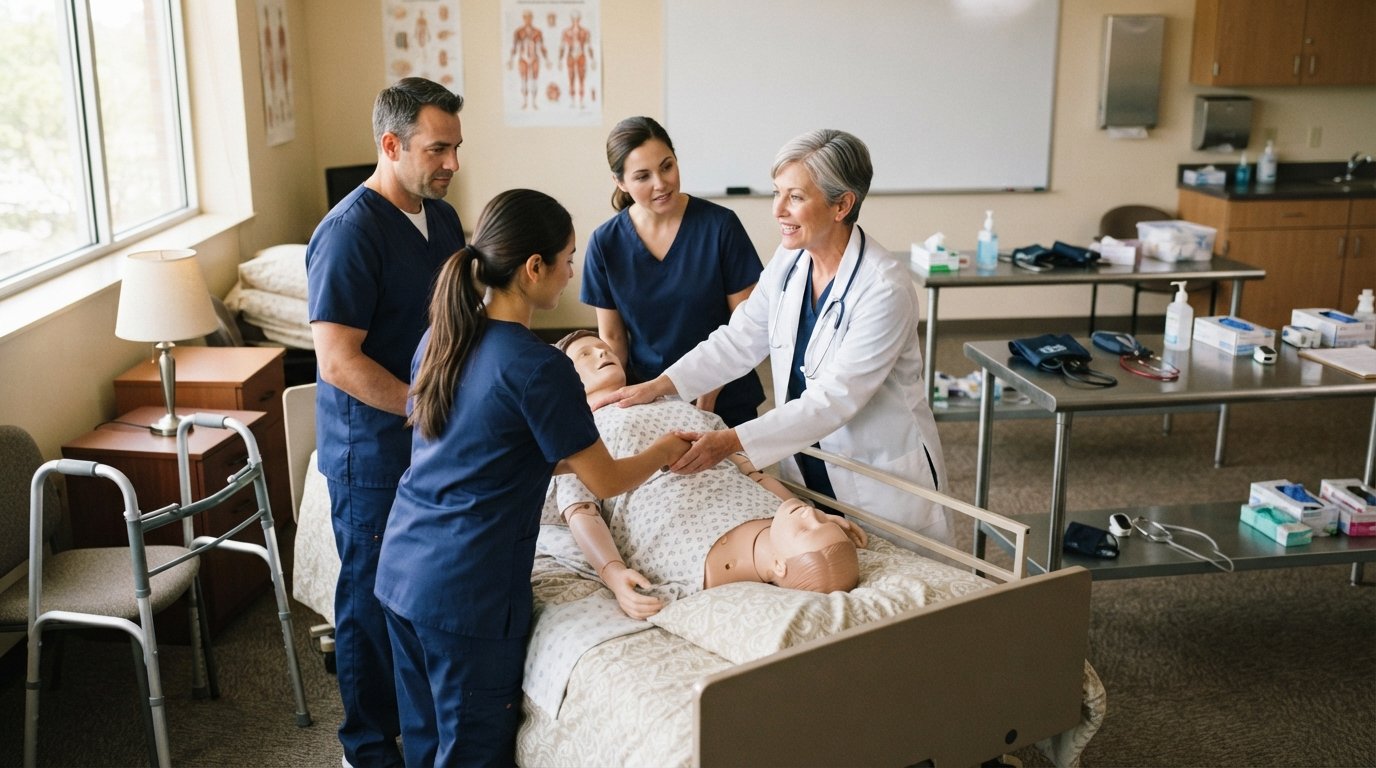
Because the training is in person, students practice skills in a lab or simulated home setting before entering clinical or community placements. This hands-on component is critical. Employers want to know that a new hire can safely help a client out of bed, respond to an emergency, and maintain a calm, professional demeanor. Classroom instruction alone cannot build that confidence; repeated practice does.
Some programs also include a brief overview of documentation and reporting. Home health aides often record the care they provide, and accurate notes help the entire care team coordinate services. Learning to write clear, objective observations is a skill that carries into any healthcare role.
Core Skill Areas You Will Study
While specific course titles may vary, most home health aide certificates cover a common set of domains. Understanding these areas helps you evaluate whether the program matches your goals.
- Personal care and hygiene assistance, including bathing, oral care, and dressing
- Safety and mobility support, such as transfers, positioning, and fall prevention
- Infection control and standard precautions in the home setting
- Nutrition and hydration support, including meal planning and feeding assistance
- Communication, observation, and documentation of client status
Each of these areas connects directly to tasks you will perform on the job. For example, a client recovering from surgery may need help moving from bed to chair, monitoring for signs of infection, and encouragement to eat and drink. A home health aide who has practiced these skills is far better prepared than one who has only read about them.
Admission Requirements and Enrollment Steps
Allan Hancock College serves a broad community, and its health occupation programs generally have open or lightly selective admission. Prospective students typically need to be at least 18 years old, have a high school diploma or equivalent, and complete the college application. Some health programs require a background check, tuberculosis clearance, and current immunizations before clinical placement. These requirements protect both students and the clients they serve.
Because the program is short and in person, seats may fill quickly. Interested students should contact the college's health occupations department or admissions office early to confirm start dates, orientation sessions, and any prerequisite steps. Application periods may be limited, so planning ahead matters.
Financial aid is often available for eligible students through federal and state programs, and community college tuition is generally much lower than private career school pricing. Scholarships and workforce grants may also apply. For a broader look at funding options, see this guide on how to find grants for online health programs and degrees, which explains grant types and application strategies that can reduce out-of-pocket costs even for short certificate programs.
- Complete the college admission application
- Provide proof of high school completion or equivalent
- Submit health clearance documents if required
- Attend an orientation or information session
- Register for classes during the open enrollment window
Once enrolled, students should plan for a consistent weekly schedule. Missing sessions in a compressed program can set you back significantly, so arranging transportation, childcare, and work hours in advance is essential.
Cost, Financial Aid, and Return on Investment
One of the strongest arguments for choosing a community college certificate is cost. Allan Hancock College charges per-unit fees that are far below the national average for private career training. Add books, supplies, and any required uniforms or health clearances, and the total is still modest compared to a semester at a four-year institution. For students who qualify for fee waivers or federal grants, the net cost can be very low or even zero.
Return on investment is measured not only in tuition but in time to employment. A program that takes less than 12 weeks means you can begin earning sooner. Entry-level home health aide wages vary by region and employer, but the role provides steady hours and a foundation for advancement. Many aides later pursue certified nursing assistant training, medical assistant credentials, or allied health degrees, often with employer support.
It also helps to compare this pathway with online alternatives. Some students prefer fully online certificate programs for flexibility, while others need the in-person practice that a hands-on program provides. If you are considering online options for a longer degree later, resources such as CollegeDegrees.School offer guidance on degree types, higher education pathways, and career planning that can help you map a longer-term plan after you complete your aide certificate.
Before enrolling, ask the program coordinator about total costs, including any fees for background checks, uniforms, or certification exams. Knowing the full picture prevents surprises and helps you budget accurately.
Career Outcomes and Advancement Pathways
Graduates of the Home Health Aide/Home Attendant Certificate, less than 12 weeks In-person at Allan Hancock College are prepared for roles in home care agencies, assisted living facilities, and private duty settings. Typical job titles include home health aide, personal care attendant, caregiver, and companion. These roles involve helping clients with daily tasks, monitoring their condition, and providing companionship and emotional support.
The work can be physically and emotionally demanding, but it is also deeply rewarding. Aides often build long-term relationships with clients and families, and they gain frontline experience that is valuable for career growth. Many use the role as a stepping stone to nursing, physical therapy, occupational therapy, or social work.
Advancement usually requires additional training. For example, becoming a certified nursing assistant (CNA) opens hospital and skilled nursing opportunities. A medical assistant credential expands into clinic settings. An associate degree in a health field can lead to supervisory or specialized roles. Each step builds on the foundation established in the aide certificate.
- Home health aide in agency or private duty settings
- Personal care attendant for elderly or disabled clients
- Caregiver in assisted living or memory care communities
- Entry point to CNA, medical assistant, or allied health programs
Employers often provide orientation and continuing education, so new aides are not expected to know everything on day one. What matters most is a solid grounding in safety, ethics, and patient-centered care, which this program delivers.
Is This Program Right for You?
This certificate is a strong fit for people who want to enter healthcare quickly, prefer hands-on learning, and are comfortable providing personal care. It is also a good option for career changers who want to test the field before committing to a longer degree. If you need a fully online format or cannot attend in person, you may want to explore other training options. But if you live near Santa Maria or can commute to Allan Hancock College, the in-person format offers advantages that online programs cannot match.
Prospective students should also consider the physical demands of the job. Home health aides spend much of their day standing, bending, lifting, and assisting clients with movement. Good health and stamina are important. So is patience, empathy, and reliability, since clients depend on consistent care.
Finally, think about your long-term goals. If you see yourself in healthcare for years to come, this certificate is an affordable first step. It gives you a credential, work experience, and a clearer sense of which direction to take next. If you are unsure, the short time commitment makes it a low-risk way to find out.
To get started, contact Allan Hancock College's health occupations department, ask about upcoming start dates, and confirm the admission steps. With a program that takes less than 12 weeks, you could be working in a caregiving role within a few months. For adults seeking a fast, practical path into healthcare, the Home Health Aide/Home Attendant Certificate, less than 12 weeks In-person at Allan Hancock College is a smart and achievable choice.