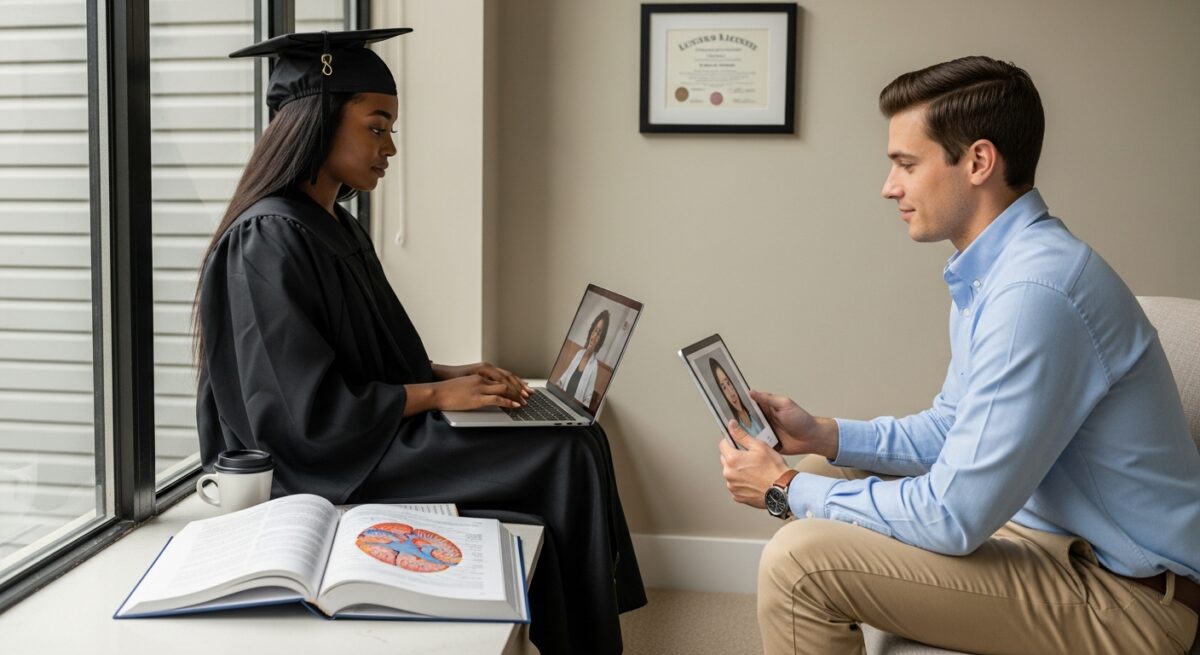
For working professionals and career changers seeking a meaningful path in mental health, finding a flexible yet rigorous education is essential. CACREP accredited online counseling programs offer a direct route to licensure without sacrificing the convenience of remote learning. These programs meet the highest standards set by the Council for Accreditation of Counseling and Related Educational Programs, ensuring graduates are prepared for state licensure exams and professional practice. Whether you are balancing a job, family, or other commitments, an online degree from a CACREP-accredited institution can open doors to a rewarding career as a licensed professional counselor (LPC), marriage and family therapist, or school counselor.
The demand for qualified mental health professionals continues to grow, especially in underserved communities. By choosing a program that holds CACREP accreditation, you are not just earning a degree; you are investing in a credential that is recognized across state lines. This article explores the value of CACREP accredited online counseling programs, how to evaluate them, what to expect in terms of curriculum and clinical requirements, and how you can make an informed decision about your future. We also address common questions about cost, licensure portability, and the difference between accredited and non-accredited options.
What Makes CACREP Accreditation Important for Online Counseling Degrees?
CACREP accreditation is the gold standard for counseling education in the United States. It ensures that a program meets rigorous academic and clinical training standards, covering core areas such as professional counseling orientation, ethical practice, social and cultural diversity, human growth and development, career development, counseling and helping relationships, group counseling, assessment, and research. For online counseling degrees, this accreditation is especially critical because it guarantees that the remote learning experience is equivalent in quality to on-campus programs.
Graduates of CACREP-accredited programs often find it easier to obtain licensure in multiple states because many state licensing boards require graduation from an accredited program. Additionally, some states have reciprocity agreements that recognize CACREP accreditation as meeting educational requirements for licensure. This can save you time, money, and frustration if you plan to move or practice across state lines. Without accreditation, you may face additional coursework, exams, or supervised experience requirements to qualify for licensure in a new state.
Key Benefits of Choosing an Accredited Program
When researching online counseling degrees, you will encounter many options. However, not all programs are created equal. Here are the main advantages of selecting a CACREP-accredited program:
- Licensure portability: Many state licensing boards accept CACREP accreditation as meeting their educational standards, making it easier to transfer your license if you move.
- Quality assurance: The accreditation process requires programs to demonstrate that they meet specific standards in curriculum, faculty qualifications, student support, and clinical training.
- Employer recognition: Hospitals, clinics, schools, and private practices often prefer or require hiring graduates from accredited programs.
- Eligibility for financial aid: Students enrolled in accredited programs are typically eligible for federal financial aid, scholarships, and employer tuition reimbursement.
- Better preparation for licensure exams: The curriculum is designed to align with the content of the National Counselor Examination (NCE) and other state exams, leading to higher pass rates.
These benefits underscore why CACREP accredited online counseling programs are a smart investment for anyone serious about a career in counseling. While non-accredited programs may be cheaper or more flexible, they often lack the rigor and recognition needed for long-term career success.
How to Evaluate CACREP Accredited Online Counseling Programs
With dozens of universities offering online counseling degrees, it can be overwhelming to choose the right one. Start by verifying the program’s accreditation status on the official CACREP website. Some programs claim to be “accredited” but may only have regional accreditation, which is different from programmatic CACREP accreditation. Make sure the specific online program you are considering is listed on the CACREP directory.
Next, consider the program’s structure. Most CACREP-accredited online programs require 60 credit hours for a master’s degree, which includes both coursework and supervised clinical experience. Look for programs that offer synchronous (live) classes, asynchronous (self-paced) modules, or a hybrid model. Clinical practicum and internship requirements are a major part of the curriculum, so ask how the program helps you secure placements in your local community. Some programs have partnerships with clinics, schools, and agencies nationwide, while others require you to find your own site.
Faculty qualifications also matter. CACREP requires that core faculty members have doctoral degrees in counselor education and supervision. Review the faculty biographies on the program’s website to ensure they have experience in your area of interest, such as clinical mental health counseling, school counseling, or marriage and family therapy. Additionally, look for programs that offer specialization tracks, such as trauma counseling, addiction counseling, or career counseling, to align with your career goals.
Finally, consider the total cost and available financial aid. Online programs often have lower tuition than on-campus options, but fees can add up. Compare tuition rates, technology fees, and the cost of required residencies (if any). Some programs require one or two on-campus intensives, which involve travel and lodging expenses. Be sure to factor these into your budget. You can explore resources on how to find accredited online masters programs from top universities to help you compare options effectively.
Curriculum and Clinical Training in Online Counseling Programs
A typical CACREP-accredited online master’s program in clinical mental health counseling includes core courses in counseling theories, ethics, diagnosis and treatment planning, group counseling, and multicultural counseling. You will also take courses in research methods, psychopharmacology, and crisis intervention. Many programs allow you to choose electives in areas like child and adolescent counseling, substance abuse, or grief counseling.
Clinical training is divided into two phases: practicum and internship. During practicum, you complete 100 hours of supervised experience, including at least 40 hours of direct client contact. This is usually done at a local mental health agency, hospital, or school. The internship follows and requires 600 hours of supervised experience, with at least 240 hours of direct client contact. These experiences are designed to help you apply theoretical knowledge in real-world settings under the guidance of a licensed supervisor.
Online programs use a variety of technologies to deliver clinical training. Some use virtual simulation platforms for role-playing and practice sessions. Others require you to record sessions (with client consent) for review by your supervisor. Despite being online, you will still develop essential counseling skills like active listening, empathy, and rapport building through structured practice and feedback.
Many programs also require a brief on-campus residency, typically lasting one to two weeks. These residencies are used for intensive skills training, group work, and networking with faculty and peers. While this adds a travel requirement, it can be a valuable opportunity to build relationships and practice skills in a controlled environment.

Cost, Financial Aid, and Return on Investment
The cost of CACREP accredited online counseling programs varies widely. Public universities often charge lower tuition for in-state students, but many offer reduced rates for online learners regardless of residency. Private universities may have higher tuition but also offer more scholarships and grants. On average, you can expect to pay between $400 and $900 per credit hour for a 60-credit master’s program, bringing total tuition to $24,000 to $54,000.
Financial aid options include federal Direct Unsubsidized and Grad PLUS loans, as well as scholarships from professional organizations like the American Counseling Association (ACA) and state counseling associations. Some employers offer tuition assistance for employees pursuing counseling degrees, especially if you work in human services, education, or healthcare. Be sure to complete the Free Application for Federal Student Aid (FAFSA) to determine your eligibility for federal loans and work-study programs.
The return on investment for a counseling degree is strong, with median salaries for licensed professional counselors ranging from $50,000 to $70,000 per year, depending on setting and location. School counselors, marriage and family therapists, and substance abuse counselors earn similar ranges. While counseling is not a high-paying field compared to some other professions, job satisfaction is high, and the demand for counselors is projected to grow faster than average over the next decade.
For those concerned about affordability, it is worth exploring free resources like college and tuition information to understand the full landscape of costs and funding options before committing to a program.
Frequently Asked Questions
What is the difference between CACREP accreditation and regional accreditation?
Regional accreditation applies to the entire institution, ensuring that the school meets general educational standards. CACREP accreditation is programmatic, meaning it specifically evaluates the counseling program’s curriculum, faculty, and clinical training. Both are important, but CACREP accreditation is essential for licensure in many states.
Can I become a licensed counselor with an online degree?
Yes, as long as the program is CACREP-accredited and you meet your state’s additional requirements for supervised experience and passing the licensure exam. Many state licensing boards accept online degrees from accredited institutions without any distinction from on-campus programs.
How long does it take to complete an online counseling master’s program?
Most full-time students complete the 60-credit program in two to three years. Part-time options are available and may take three to four years. Some accelerated programs allow you to finish in as little as 18 months, but these are intensive and may require full-time commitment.
Do I need to attend any on-campus residencies?
Some programs require one or two short residencies (usually one to two weeks each) for skills training and group work. Others are fully online with no residency requirement. Check the program’s website for specific requirements before applying.
What if I already have a master’s degree in a different field?
You may be able to apply some credits toward a counseling degree, but most programs require you to complete the full 60-credit curriculum. Some universities offer post-master’s certificates or bridge programs for career changers.
Making Your Final Decision
Choosing the right CACREP accredited online counseling program is a personal decision that depends on your career goals, budget, learning style, and geographic location. Start by identifying programs that offer the specialization you want, whether that is clinical mental health counseling, school counseling, or marriage and family therapy. Then, compare their accreditation status, curriculum, clinical placement support, faculty qualifications, and total cost.
Reach out to admissions advisors and ask about graduation rates, licensure exam pass rates, and job placement statistics. These data points can give you a realistic picture of what to expect after graduation. Also, consider talking to current students or alumni through online forums or LinkedIn to get honest feedback about the program’s strengths and weaknesses.
Remember that the time and money you invest in your education will pay dividends in the form of a stable, fulfilling career helping others. By choosing a CACREP-accredited program, you are setting yourself up for success from day one. Take your time, do your research, and trust that the right program will align with your aspirations and lifestyle.