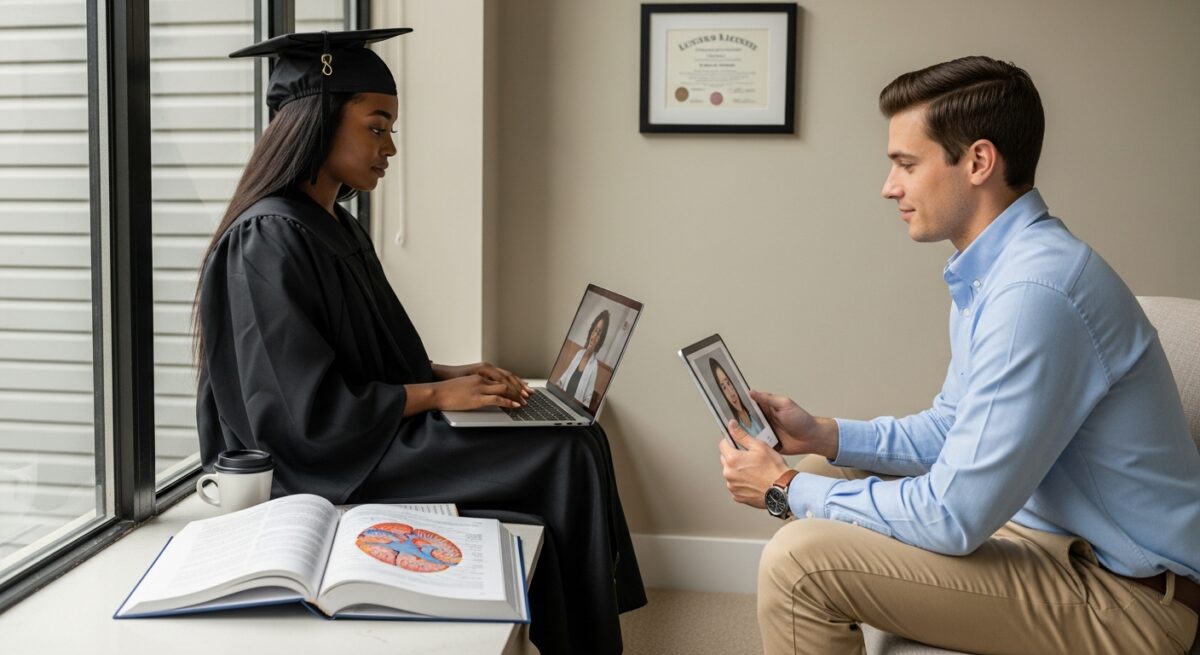
Imagine a career where you help people navigate anxiety, depression, trauma, and life transitions. Clinical psychology offers that path, and the demand for licensed professionals continues to grow. For working adults and career changers, the traditional on-campus route can feel impossible. That is where online clinical psychology masters programs step in. These programs allow you to earn a respected graduate degree while keeping your current job and family commitments. But how do you choose the right one? This guide walks you through accreditation, curriculum, licensure pathways, and what to look for in a quality online program.
What Are Online Clinical Psychology Masters Programs?
Online clinical psychology masters programs are graduate-level degrees delivered primarily through digital platforms. They cover the same rigorous material as on-campus programs: assessment, diagnosis, therapeutic techniques, ethics, and research methods. The key difference is flexibility. You watch lectures, participate in discussions, and complete assignments on your schedule. Many programs also require in-person practicum or internship hours, which you can often complete in your local community. This hybrid model makes a clinical psychology master’s online accessible to students who cannot relocate or quit their jobs.
These programs typically lead to a Master of Arts (MA) or Master of Science (MS) in Clinical Psychology. Some are designed to prepare you for doctoral study, while others focus on direct practice as a licensed professional counselor (LPC) or licensed marriage and family therapist (LMFT). It is crucial to identify your career goal early because the program structure and accreditation requirements differ significantly.
Accreditation: The Non-Negotiable Factor
Accreditation is the single most important factor when evaluating online clinical psychology masters programs. Without proper accreditation, your degree may not qualify you for licensure, and credits may not transfer to other institutions. There are two main types of accreditation to consider:
- Regional accreditation: This is the gold standard for all legitimate universities. It ensures the institution meets high academic standards. Most reputable online programs are regionally accredited.
- Programmatic accreditation: For clinical psychology, the key programmatic accreditor is the American Psychological Association (APA). However, APA accreditation is rare at the master’s level. Instead, look for programs accredited by the Masters in Psychology and Counseling Accreditation Council (MPCAC) or the Council for Accreditation of Counseling and Related Educational Programs (CACREP). CACREP is especially important if you plan to pursue LPC or LMFT licensure.
If a program claims to be “nationally accredited” but lacks regional accreditation, proceed with extreme caution. Many employers and licensing boards do not recognize national accreditation for clinical psychology. Always verify accreditation status on the accrediting body’s official website, not just the school’s marketing materials. For more context on evaluating online degree options, review our guide on what master’s programs are online at Valdosta State University and how they compare to other institutions.
Curriculum and Specializations
A quality clinical psychology master’s online program covers core areas including psychopathology, cognitive-behavioral therapy, human development, multicultural counseling, and psychological assessment. You will also take courses in ethics and legal issues, research methods, and statistics. Many programs offer specializations such as child and adolescent psychology, forensic psychology, health psychology, or substance abuse counseling.
Look for programs that integrate practical training through virtual labs, role-play exercises, and supervised clinical placements. The best programs use simulation software where you practice diagnostic interviews with virtual patients. They also have strong partnerships with local clinics, hospitals, and community mental health centers for your in-person practicum. Ask about the ratio of synchronous (live) classes to asynchronous (self-paced) work. Some students thrive with mostly asynchronous content, while others need the structure of weekly live sessions.
Licensure and Career Pathways
Understanding licensure requirements is critical before enrolling. In the United States, each state sets its own rules for clinical psychology practice. Most states require a master’s degree from a regionally accredited program, a certain number of supervised clinical hours (often 3,000 to 4,000), and passing a licensing exam such as the National Counselor Examination (NCE) or the Examination for Professional Practice in Psychology (EPPP). Some states also require the program to be CACREP or MPCAC accredited.
If you plan to become a licensed psychologist, you will eventually need a doctoral degree (PhD or PsyD). However, a master’s degree can lead to licensure as a professional counselor, marriage and family therapist, or psychological associate, depending on your state. Career options include private practice, community mental health, hospitals, schools, corporate wellness programs, and research positions. The median salary for clinical counselors varies by state and setting, but the Bureau of Labor Statistics projects above-average growth in this field.
Cost and Financial Aid
Tuition for online clinical psychology masters programs ranges widely. Public universities may charge $300 to $600 per credit hour for in-state students, while private nonprofit schools can cost $700 to $1,200 per credit hour. Total program costs typically fall between $25,000 and $70,000. Be sure to factor in technology fees, textbooks, and travel for any required residencies.

Financial aid options include federal student loans (FAFSA), grants, scholarships, and employer tuition reimbursement. Some schools offer military or first-responder discounts. Because DegreesOnline.Education connects students with featured schools, you can use their matching tool to find programs that fit your budget and compare financial aid packages. Always ask the admissions office about scholarships specifically for online or graduate students.
Technology and Support Services
When researching programs, investigate the learning management system (LMS). Common platforms include Canvas, Blackboard, and Moodle. The LMS should be intuitive and mobile-friendly. Many programs offer 24/7 tech support, online tutoring, and virtual library access. Some also provide career counseling and job placement assistance for graduates.
You should also consider the cohort model. Some online clinical psychology masters programs admit students in cohorts that progress through the curriculum together. This builds community and networking opportunities. Other programs allow you to move at your own pace. Think about which structure fits your learning style. If you value peer interaction and accountability, a cohort model may be better. If you need maximum flexibility, a self-paced program might work.
Frequently Asked Questions
Can I become a licensed psychologist with an online master’s degree?
No. To become a licensed psychologist, you need a doctoral degree (PhD or PsyD). However, an online master’s degree can qualify you for licensure as a professional counselor, marriage and family therapist, or psychological associate, depending on your state’s requirements.
How long does it take to complete an online clinical psychology master’s program?
Most programs require two to three years of full-time study. Part-time options can take three to five years. Some accelerated programs allow completion in as little as 18 months if you attend year-round.
Are online clinical psychology masters programs respected by employers?
Yes, as long as the program is regionally accredited and, where applicable, holds programmatic accreditation (CACREP or MPCAC). Employers and licensing boards treat regionally accredited online degrees the same as on-campus degrees.
Do I need to complete an in-person internship?
Yes. Almost all clinical psychology master’s online programs require supervised clinical hours in a real-world setting. You can typically arrange these hours at a site near your home, with approval from the program.
What is the difference between an MA and an MS in Clinical Psychology?
The difference is often subtle. An MA (Master of Arts) may emphasize theoretical and humanistic approaches, while an MS (Master of Science) may focus more on research and evidence-based methods. However, the actual curriculum varies by school. Check the specific course list for the program you are considering.
Choosing the right online clinical psychology masters program requires careful research. Focus on accreditation, licensure alignment, curriculum depth, and cost. If you are ready to explore options, use resources like DegreesOnline.Education to compare accredited programs, read reviews, and get matched with schools that fit your goals. The field of clinical psychology needs dedicated professionals, and an online degree can be your springboard into a rewarding career. Start your search today and take the first step toward making a difference in people’s lives. For additional guidance on degree pathways, you can also explore resources at CollegeDegree.school for broader educational planning.