
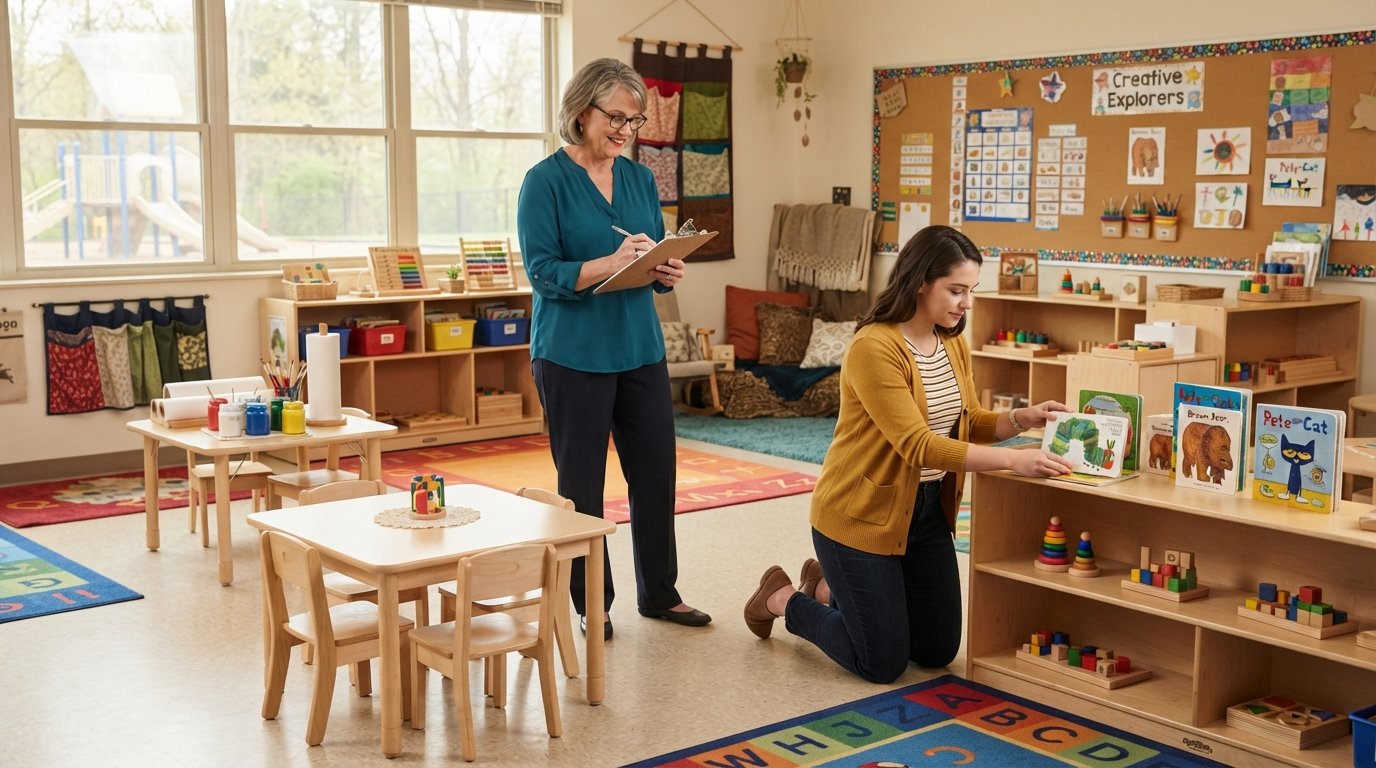
Child Care Certificate at Clovis College: 12 Weeks to 1 Year
Start a child care career fast with the Child Care Provider/Assistant Certificate at Clovis Community College, an in-person program you can finish in 12 weeks to under a year.

Finding a fast, affordable path into early childhood education can feel like navigating a maze of prerequisites and program lengths. For adults who want to work with young children without committing to a multi-year degree, the Child Care Provider/Assistant Certificate, 12 weeks to less than 1 year In-person at Clovis Community College, offers a focused, hands-on route to entry-level employment in child care centers, preschools, and family home programs. This short-term certificate is designed for people who need practical skills quickly, whether they are career changers, recent high school graduates, or working parents looking to step into a rewarding field.
Unlike online-only programs that can leave students without supervised classroom experience, this in-person certificate at Clovis Community College places learners directly in the environment where young children learn and grow. The compressed timeline, ranging from 12 weeks to under a year depending on course load, means you can move from the application stage to a job interview in a single semester or two. In this guide, you will learn what the certificate covers, who it is for, how to enroll, what it costs, and how it fits into the broader landscape of early childhood education careers.
What the Child Care Provider/Assistant Certificate Covers
The certificate is built around the core competencies that licensing agencies and employers expect from entry-level child care professionals. Coursework typically blends child development theory with practical, supervised experience in early learning settings. You will study how children grow physically, cognitively, socially, and emotionally from infancy through early elementary years, and you will learn how to translate that knowledge into daily classroom routines. Health and safety training is a central component, covering topics such as pediatric first aid, CPR, safe sleep practices, food handling, and recognizing signs of abuse or neglect.
In addition to child development and safety, the program emphasizes curriculum planning and guidance strategies. Students learn to design age-appropriate activities that support language development, early literacy, math readiness, and creative expression. Classroom management is addressed through positive guidance techniques that respect children's developmental stages. Family and community engagement is another key theme, because child care providers serve as partners to parents and often connect families with local resources. The in-person format allows instructors to model these practices and give students immediate feedback during hands-on activities and observations.
Because the certificate can be completed in as little as 12 weeks, the curriculum is tightly sequenced. Students should expect a full schedule of classes, labs, and supervised field experiences during that compressed timeframe. Those who choose a longer plan, up to just under one year, can spread courses across two or three terms and balance coursework with employment or family responsibilities. Either way, the goal is the same: to prepare graduates for immediate entry into the child care workforce with a credential that employers recognize.
Who This Short-Term Certificate Is For
This program is particularly well suited to adults who want to start working with children quickly but are not ready to commit to an associate or bachelor's degree. Many students enter with no prior formal training in early childhood education and use the certificate as a stepping stone. Others are already working in child care settings, such as family home providers or assistant teachers, and need a credential to meet state licensing requirements or qualify for a raise. The in-person format at Clovis Community College is also attractive to students who learn best through direct interaction with instructors and peers rather than through asynchronous online modules.
Career changers often choose this path because it provides a clear, structured introduction to the field without a long financial commitment. If you are leaving a retail or office job and want to transition into work that feels meaningful, the certificate gives you a realistic preview of daily child care responsibilities. Parents returning to the workforce after raising their own children frequently find that their practical experience combined with this credential makes them competitive candidates for assistant teacher and aide positions. High school students in dual enrollment programs may also be able to complete part of the certificate before graduation, depending on local agreements.
It is important to note that the certificate prepares you for entry-level roles, not for lead teaching or administrative positions that may require an associate degree or state teaching license. Students who later decide to pursue a more advanced credential can often apply certificate coursework toward an associate degree in early childhood education. The in-person experience at Clovis Community College also provides valuable references and mentorship that can support further education and career advancement.
Admissions, Enrollment, and Practical Considerations
Applying to a community college certificate program is generally straightforward, but there are several steps that prospective students should plan for. Because the program is in-person and cohort-based, seats may be limited, so early application is recommended. The process typically involves applying to the college, submitting official transcripts or proof of high school completion, completing any placement requirements, and meeting with an academic advisor to map out the course sequence. Some programs also require a background check or health clearance before students begin field placements, since they will be working with vulnerable populations.
Here is a practical checklist to keep the enrollment process on track:
- Apply to Clovis Community College and obtain a student ID.
- Submit transcripts and complete any required placement assessments.
- Meet with an early childhood education advisor to confirm the certificate plan and course availability.
- Complete background check, immunizations, and any health and safety requirements for field placement.
- Register for courses as soon as the registration window opens, since in-person sections can fill quickly.
Financial considerations are also important. Community college certificate programs are typically far less expensive than degree programs, and students may qualify for federal financial aid, state grants, or workforce development funding. Some child care employers offer tuition assistance or reimbursement for employees who pursue credentials. Prospective students should check with the college's financial aid office and local workforce agencies to identify all available funding sources before paying out of pocket. The total cost will depend on residency status, course fees, and whether students need to purchase materials such as textbooks or background check services.
Career Outcomes and Job Outlook for Certificate Holders
Graduates of short-term child care certificates typically pursue roles such as child care assistant, preschool aide, family home provider, before- and after-school program staff, and instructional assistant in early elementary settings. These positions are available in private child care centers, Head Start programs, faith-based preschools, employer-sponsored child care facilities, and community organizations. The demand for qualified child care providers remains steady because working families need reliable care, and many states have increased training requirements for staff, which raises the value of a formal certificate.
Entry-level wages vary by region and setting, but certificate holders often see a return on their investment quickly because they can begin earning while their peers are still completing longer degree programs. Some employers offer benefits such as paid professional development, child care discounts for employees' own children, and advancement pathways for staff who pursue additional credentials. The certificate can also serve as a foundation for specialized roles in early intervention, special education support, or program administration after further education and experience.
For readers who are considering a broader range of patient-facing and clinical support roles, our guide to a Medical/Clinical Assistant Certificate in 12 weeks to under 1 year explains how short-term health care credentials compare in format, cost, and career outcomes. The comparison can be useful if you are weighing child care against other fast-entry careers in health care and human services.
How the In-Person Format at Clovis Community College Benefits Learners
In-person instruction offers distinct advantages for students entering child care work. Young children communicate through behavior, tone, and nonverbal cues, and learning to read those signals requires real-time practice. In a classroom lab or field placement, instructors can observe students interacting with children and provide immediate coaching on guidance techniques, activity transitions, and safety protocols. Students also practice professional communication with parents and colleagues through role-play and supervised interactions, which builds confidence before entering the workforce.
The in-person format also creates a cohort experience. Students in the certificate program progress through courses together, forming study groups and professional networks that often continue after graduation. Local employers may visit classes, and instructors with direct field experience can connect students with hiring managers. For students who need structure and accountability, the fixed schedule of in-person classes can be easier to maintain than self-paced online coursework. The 12-week to under-one-year timeline keeps momentum high and reduces the risk of losing focus over a longer program.
Comparing the Certificate to Longer Early Childhood Education Pathways
The certificate is the shortest route into the field, but it is not the only option. An associate degree in early childhood education typically takes two years and qualifies graduates for lead teacher roles, higher pay, and in some states, teacher licensing in pre-K settings. A bachelor's degree opens doors to program administration, early intervention, and public school teaching with additional certification. Students should choose the path that matches their immediate goals and their capacity to invest time and money.
One smart strategy is to start with the certificate and begin working, then continue toward an associate degree part-time while employed. Many community colleges design certificate courses to stack into degree programs, so the credits you earn in the short-term certificate count toward the longer credential. This approach lets you earn income and gain experience while continuing your education, which can make the associate degree more affordable and immediately relevant. The in-person certificate at Clovis Community College can be the first step in a longer career ladder rather than a final destination.
For students who are comparing costs and financial aid across programs, resources such as CollegeAndTuition provide guides to college planning, scholarships, and tuition comparison that can help families make informed decisions about short-term certificates and degree pathways.
Preparing for Success in the Program and Beyond
Students who succeed in accelerated certificate programs tend to treat them like a job from day one. Attendance matters because each class session builds on the previous one, and field placements require reliability and professionalism. Reading assignments and observations should be completed on schedule, and students should ask instructors for feedback early rather than waiting until the end of the term. Building positive relationships with classmates creates a support system for studying and job leads.
It also helps to think ahead about employment before the certificate is complete. Students can update their resumes with coursework and field experience as they go, request informational interviews with local child care directors, and ask instructors for references. Many programs include job placement assistance or partnerships with local employers, so students should take advantage of career services, job fairs, and alumni networks. A polished resume, a clear statement of why you want to work with young children, and strong references from field supervisors can make the difference in a competitive hiring process.
Finally, students should plan for ongoing professional development. Child care regulations and best practices evolve, and many states require continuing education hours each year. The certificate is a beginning, not an end. Graduates who continue learning, pursue additional credentials, and build a reputation for reliability and warmth with children and families will find more opportunities for advancement and higher pay over time.
The Child Care Provider/Assistant Certificate, 12 weeks to less than 1 year In-person at Clovis Community College, is a practical, efficient entry point for adults who want to make a difference in the lives of young children. By combining foundational coursework, hands-on field experience, and a compressed timeline, the program helps students move quickly into employment while building a platform for future growth in early childhood education.