
CNA Certificate in Under 12 Weeks at East Central College
Start a healthcare career fast with East Central College's in-person CNA certificate. Complete training in under 12 weeks and step into patient care.

By Amelia Brown
Finding a fast, affordable path into healthcare can feel like searching for a needle in a haystack. If you want to start working with patients quickly, the Nursing Assistant/Aide and Patient Care Assistant/Aide Certificate, less than 12 weeks In-person at East Central College, deserves a serious look. This short-term program is designed to get you job-ready in months, not years, and it is offered entirely face-to-face, which means you build hands-on skills under the direct supervision of instructors. For career changers, adult learners, and anyone eager to enter the healthcare workforce without a long detour, this certificate can be a practical first step.
Why a Short-Term, In-Person CNA Certificate Makes Sense
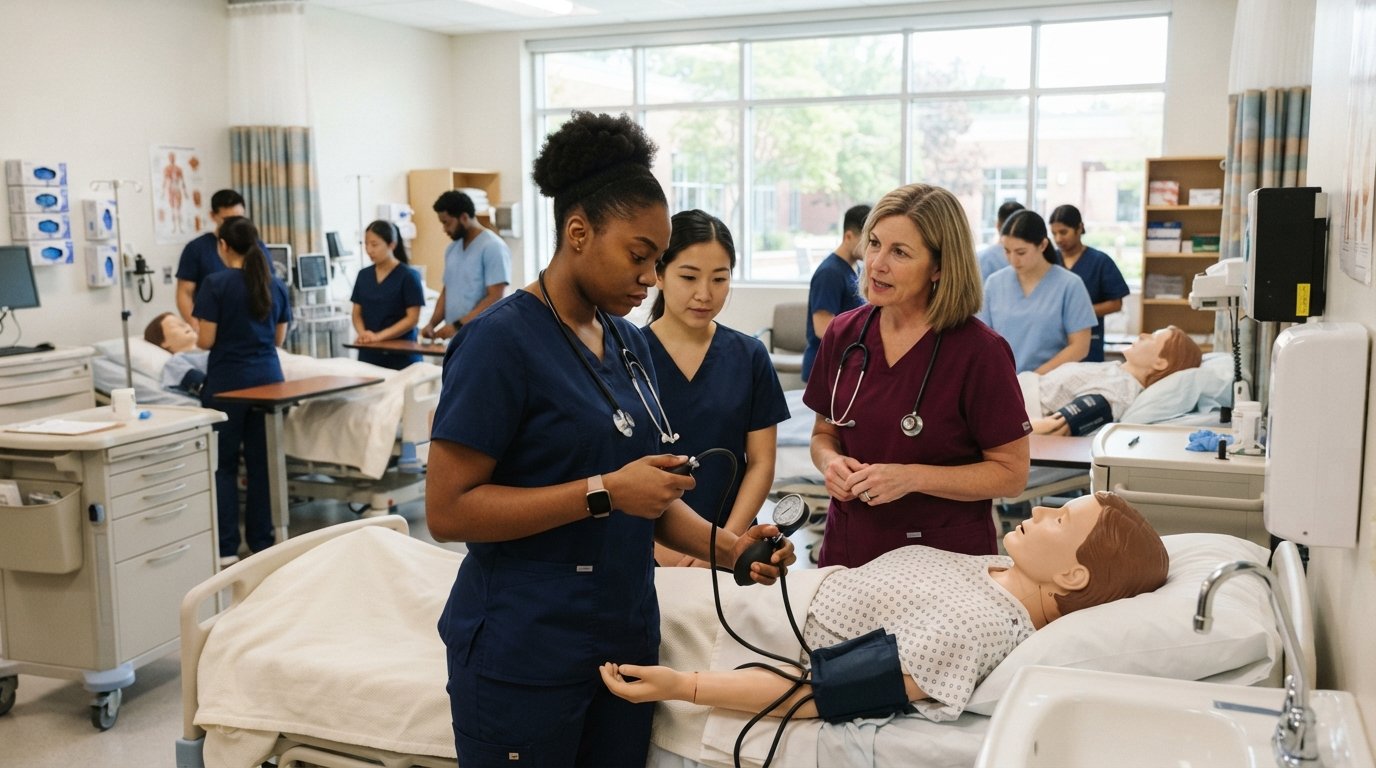
Healthcare employers need reliable, trained frontline staff, and nursing assistants are often the first point of contact for patients. A certificate that takes less than 12 weeks means you can complete your training within a single semester and start applying for entry-level roles almost immediately. The in-person format is a major advantage: you practice vital skills like taking vital signs, assisting with mobility, and communicating with patients in a real lab or clinical setting. That hands-on experience is exactly what hiring managers want to see.
East Central College offers this program as a focused credential, not a sprawling degree. That focus keeps tuition costs lower and lets you concentrate on the core competencies required for certification. Many students pair this certificate with later studies, but it also stands alone as a direct route to employment. If you are exploring whether a short certificate fits your budget and schedule, resources like CollegeAndTuition can help you compare costs and financial aid options across programs.
The in-person requirement also builds confidence. You will work with mannequins, simulation equipment, and eventually real patients under supervision. For many adult learners, that structured, face-to-face environment is more supportive than a fully online course, especially when learning physical tasks. You get immediate feedback, you can ask questions in real time, and you become part of a cohort that moves through the material together.
What the Nursing Assistant/Aide and Patient Care Assistant/Aide Certificate Covers
This certificate blends classroom instruction with practical training. You will study the fundamentals of patient care, infection control, safety, and communication. Expect to learn how to bathe and dress patients, help them eat, take vital signs, and document care accurately. The patient care assistant portion broadens your skill set, preparing you for roles that may include more direct support in hospitals, clinics, or long-term care facilities.
The curriculum is typically organized around core modules that build on each other. A typical sequence might include:
- Introduction to healthcare and the role of the nursing assistant
- Basic nursing skills, including hygiene, mobility, and nutrition
- Patient safety, infection prevention, and emergency procedures
- Communication and interpersonal skills with patients and families
- Clinical practicum or supervised hands-on experience
Each of these areas is essential for day-to-day work. The clinical component, in particular, gives you a taste of real-world settings and helps you decide whether long-term care, acute care, or home health is the right fit. Because the program is in-person, you can expect regular lab sessions where you practice on equipment and with classmates before entering a clinical site.
Admission Requirements and How to Enroll
Admission to this certificate at East Central College is generally straightforward, but there are steps you should plan for. Most community college healthcare programs require a high school diploma or equivalent, a background check, and possibly immunizations or health screenings. You may also need to attend an information session or meet with an advisor before registering. Because the program is short, cohorts fill quickly, so early application is wise.Here is a simple roadmap to help you move from interest to enrollment:
- Visit the East Central College website or contact the admissions office to confirm current prerequisites and start dates.
- Complete the college application and submit any required transcripts or test scores.
- Schedule a meeting with a program advisor to review the schedule, costs, and clinical requirements.
- Complete background checks and health documentation as directed.
- Register for classes and secure your spot in the upcoming cohort.
Keep in mind that requirements can change, so always verify details with the college. The advisor can also explain whether any courses can be applied toward a longer degree later, which is useful if you decide to continue your education. For broader guidance on advancing from a certificate to an associate or bachelor's degree in nursing, see our guide on online MSN FNP programs and nursing career paths.
Cost, Financial Aid, and Return on Investment
Tuition for a short certificate is typically much lower than for a full degree, and East Central College may offer payment plans or financial aid for eligible students. You should ask about additional costs such as uniforms, background checks, CPR certification, and exam fees. Even with these extras, the total investment is modest compared to the earning potential of a nursing assistant role.
Nursing assistants earn an hourly wage that varies by region and setting, but the demand for trained workers remains strong. Many employers offer flexible schedules, and some provide tuition reimbursement if you later pursue further education. The return on investment for this certificate can be quick: you could recoup your training costs within a few months of full-time work. To explore financial aid options and compare program costs, use tools and guides like those at CollegeAndTuition.
Career Outlook and Next Steps After Completion
After completing the certificate, you will be prepared to sit for your state's nursing assistant certification exam, which is often required for employment. Passing the exam allows you to work as a certified nursing assistant (CNA) or patient care assistant in a variety of settings: nursing homes, hospitals, assisted living facilities, and home health agencies. The demand for these roles is steady, and the experience you gain can serve as a stepping stone to other healthcare careers.
Many CNAs eventually pursue licensed practical nurse (LPN) or registered nurse (RN) credentials. The patient care skills you learn in this program transfer directly to those paths, and some colleges offer bridge programs that build on your certificate. If you are thinking long-term, this certificate is a low-risk way to test your interest in healthcare while earning a paycheck.
In summary, the Nursing Assistant/Aide and Patient Care Assistant/Aide Certificate, less than 12 weeks In-person at East Central College, is a practical, fast, and affordable entry point into the healthcare field. It combines hands-on training with a short timeline, making it ideal for adults who need to start working soon. Check with the college for current start dates and requirements, and take the first step toward a rewarding career in patient care.