
EMT Paramedic Certificate: 12-Week CWI Workforce Path
Earn your EMT Paramedic Certificate at College of Western Idaho-Workforce in 12 weeks to under a year. In-person training for a fast healthcare career start.

By Wendy Young
When a cardiac arrest happens in a grocery store aisle or a car crash blocks a highway, the first trained professional on scene often holds an Emergency Medical Technology/Technician (EMT Paramedic) Certificate. At College of Western Idaho-Workforce, you can earn that credential in as little as 12 weeks to less than one year through an in-person program built around real-world response skills. For adults who want to enter healthcare quickly, this certificate offers a direct route to employment without committing to a multiyear degree. The program's compressed timeline, hands-on format, and workforce focus make it a practical starting point for a career in emergency medical services.
This article explains what the certificate covers, how the schedule works, who should consider it, and how to plan the financial and career steps that follow. You will see how the CWI Workforce option compares to traditional degree paths and why short-term credentials are gaining traction among career changers and working professionals. Whether you are leaving a retail job or building on prior healthcare experience, understanding the structure and expectations of this program helps you decide if it fits your goals.
What the EMT Paramedic Certificate Covers
Emergency medical technicians and paramedics are not interchangeable titles, but many workforce certificate programs use the combined phrasing to describe a ladder of emergency care training. At the entry level, EMTs learn to assess patients, manage airways, control bleeding, perform CPR, and assist with medications under medical direction. Paramedic training goes further into advanced life support, including IV therapy, cardiac monitoring, and drug administration. The CWI Workforce certificate is designed to move learners from foundational emergency care toward more advanced competencies within a compressed timeframe.
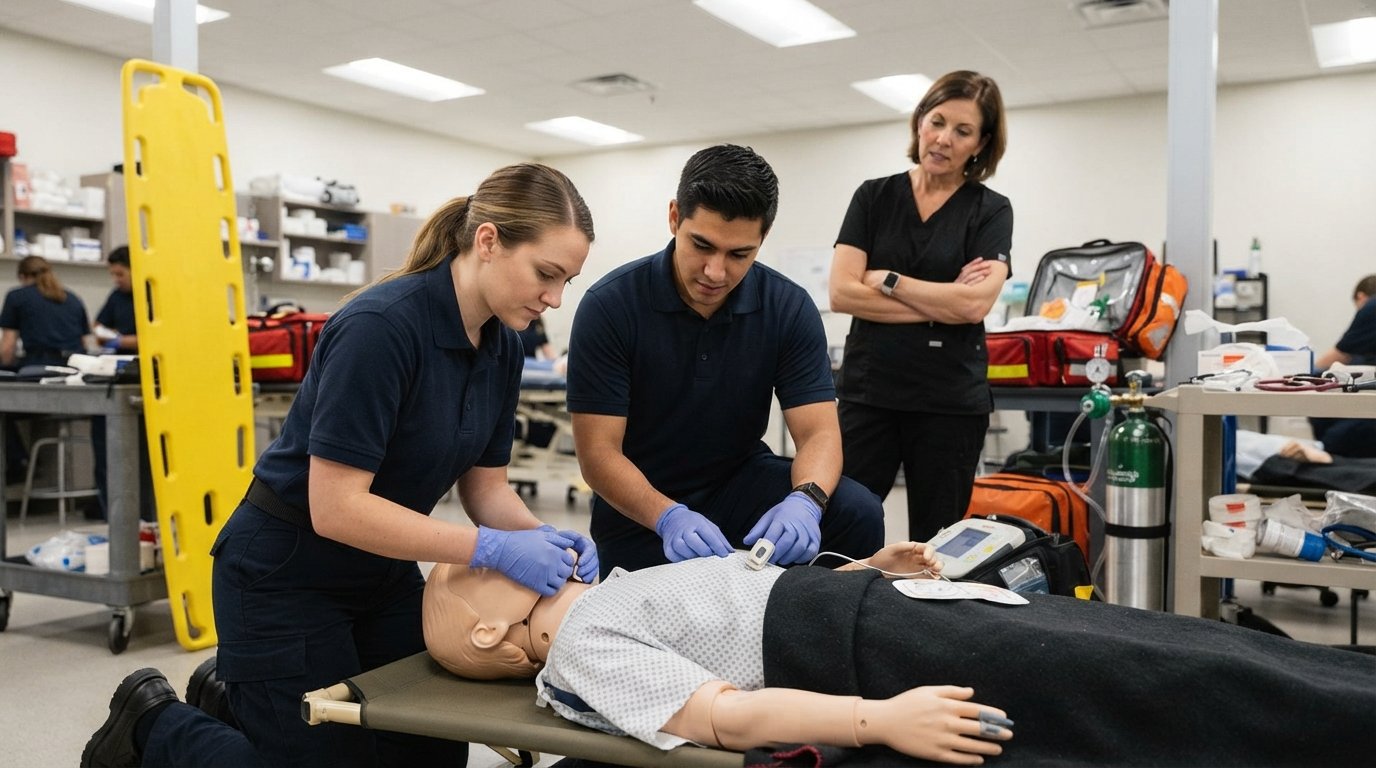
Coursework typically blends classroom instruction with practical skills labs and clinical or field experience. Students practice on manikins, simulate trauma scenarios, and learn to communicate with dispatch, firefighters, and hospital staff. Because the format is in-person, learners get immediate feedback from instructors who have worked in the field. That hands-on repetition is critical, since emergency response depends on muscle memory and calm decision-making under pressure.
Key topic areas in a program of this length usually include:
- Patient assessment and vital signs across age groups
- Airway management and oxygen therapy
- Cardiopulmonary resuscitation and defibrillation
- Trauma care, splinting, and hemorrhage control
- Medical emergencies such as cardiac, respiratory, and diabetic events
- Ambulance operations and documentation
Because the certificate is delivered in person at a workforce training site, students also gain familiarity with equipment they will use on the job, from stretchers and backboards to cardiac monitors. This practical exposure can shorten the adjustment period after hiring. Employers often value candidates who have already practiced these skills in a supervised setting rather than only through online modules.
Why the 12-Week to Under-One-Year Timeline Matters
Time is one of the biggest barriers for adults considering healthcare training. A full associate degree can take two years, and university-based paramedic programs often require prerequisite courses before admission. The Emergency Medical Technology/Technician (EMT Paramedic) Certificate, 12 weeks to less than 1 year In-person at College of Western Idaho-Workforce is structured to reduce that wait. By compressing instruction and focusing only on essential skills, the program lets learners enter the workforce or continue advanced training sooner.
A shorter timeline also affects cost. Less time in school often means fewer tuition payments, lower transportation expenses, and less lost income from part-time or full-time work. For career changers, that tradeoff can be decisive. Instead of spending years in a classroom before earning a paycheck, certificate holders can apply for entry-level EMS roles while deciding whether to pursue paramedic certification or a related healthcare degree later.
However, compressed programs demand focus. Students should expect intensive days, evening or weekend labs, and a rigorous pace. Missing a few sessions can set a learner back because skills build on one another. The payoff is a faster transition into a field that has consistent demand in hospitals, fire departments, private ambulance services, and event medical teams. Before enrolling, review the attendance policy and confirm you can commit to the schedule for the full duration.
Admission Steps and What to Prepare
Workforce certificate programs usually have a straightforward admissions process, but they still require planning. Prospective students should start by checking the College of Western Idaho-Workforce website for current start dates, orientation sessions, and any required placement tests. Because the program is in-person, location and commute logistics matter as much as tuition. Confirm the campus or training center address and whether parking or public transportation is available.
Most programs of this type expect applicants to meet basic health and safety requirements before patient contact. These often include immunizations, a background check, and drug screening. Some employers and clinical sites also require proof of health insurance or CPR certification before placement. Gathering these documents early prevents delays once the cohort begins.
The application checklist typically includes:
- Complete the workforce program application and pay any fee.
- Submit proof of high school diploma or equivalent.
- Take any required placement or skills assessment.
- Provide immunization records and consent to a background check.
- Attend a mandatory orientation or information session.
After acceptance, students should budget for uniforms, stethoscopes, background checks, and exam fees in addition to tuition. Some programs bundle these costs, while others list them separately. Ask for a total cost estimate in writing so there are no surprises. Financial aid may be available through workforce grants, scholarships, or employer sponsorship, so ask about options before assuming the certificate is out of reach.
Skills You Build and How They Are Taught
Emergency medical training is competency-based, meaning students advance by demonstrating skills rather than just passing written tests. At CWI Workforce, in-person instruction allows instructors to observe technique, correct errors immediately, and simulate realistic stress. Students might rotate through stations for bleeding control, airway suction, and cardiac monitoring, then combine those skills in a full scenario with a mock patient.
Communication is another core competency. EMTs and paramedics must give clear handoff reports to emergency room nurses, calm anxious patients, and coordinate with law enforcement at accident scenes. Classroom role-play and field exercises help learners practice these conversations before they matter in real life. Documentation training is equally important, since insurance billing and continuity of care depend on accurate patient care reports.
Graduates should be able to:
- Perform a systematic patient assessment under time pressure
- Recognize and respond to life-threatening conditions
- Operate emergency equipment safely and correctly
- Communicate effectively with patients, families, and care teams
- Document interventions accurately and professionally
These skills transfer beyond ambulance work. EMTs often move into emergency department technician roles, urgent care clinics, and occupational health settings. Some use the certificate as a stepping stone to nursing, respiratory therapy, or physician assistant programs. The hands-on patient contact gained during training strengthens applications for those advanced pathways and provides stories for interviews.
Costs, Financial Aid, and Return on Investment
Workforce certificates are generally less expensive than degree programs, but costs vary by location and cohort. Tuition for a short EMT or paramedic certificate may range from a few thousand dollars to more, depending on whether clinical placements and equipment are included. Students should also factor in exam fees for national or state certification, which are separate from tuition. Comparing the total cost against expected entry-level wages helps learners judge the return on investment.
Financial support can come from several sources. Workforce development grants, state retraining funds, and community college scholarships often target short-term credentials in high-demand fields. Employers such as ambulance services may offer tuition reimbursement or sign-on bonuses for certified candidates. Veterans and eligible family members can use GI Bill benefits at approved programs. For a broader look at funding options, see this guide to scholarships for online technical programs and certificates, which outlines search strategies that also apply to in-person workforce training.
Return on investment also includes nonfinancial factors. A certificate can lead to stable employment, shift flexibility, and a sense of purpose. Many EMTs work 24-hour shifts or rotating schedules, which some people find appealing and others find draining. Talking with current EMTs about pay, stress, and career mobility helps prospective students make an informed decision. Requesting informational interviews or job shadowing hours is a low-cost way to test the fit before enrolling.
Certification, Licensing, and Career Paths After Graduation
Completing a certificate does not automatically grant permission to practice. Graduates must pass a certification exam and apply for state licensure or registration, which typically includes a background check and fees. The National Registry of Emergency Medical Technicians offers exams used in many states, though requirements vary. Students should confirm the CWI Workforce program prepares them for the specific credential they need in Idaho and any state where they plan to work.
After certification, entry-level roles may include EMT for a private ambulance company, emergency department technician, or event medical staff. With experience and additional training, paramedics can work in fire-based EMS, critical care transport, or supervisory roles. Some pursue instructor certifications or move into public health and emergency management. Each step usually requires continuing education to maintain licensure, so graduates should plan for refresher courses and recertification cycles.
Career exploration should begin before the program ends. Instructors, clinical preceptors, and classmates are valuable networking contacts. Attending local EMS association meetings or following hiring announcements from area ambulance services can reveal openings early. For those considering further education, an associate or bachelor's degree in emergency medical services or a related healthcare field can open doors to management, education, or advanced clinical roles. To compare accredited degree options and connect with schools that fit your goals, you can explore CollegeDegree.Education, a matching service for accredited colleges and programs.
Is This In-Person Workforce Certificate Right for You?
The in-person format of the Emergency Medical Technology/Technician (EMT Paramedic) Certificate at College of Western Idaho-Workforce suits learners who thrive with direct supervision and hands-on practice. If you prefer to ask questions in real time, practice skills on actual equipment, and build a local professional network, this delivery model has clear advantages. It also provides structure that can help students stay accountable in a fast-paced program.
On the other hand, the schedule may be difficult for people with inflexible jobs or caregiving responsibilities. Prospective students should review class times, commute distance, and clinical hour requirements before applying. Talking with an advisor about accommodations and support services can clarify whether the program is feasible. Because the certificate is short, a temporary schedule adjustment may be worth the long-term gain.
Before committing, consider these questions:
- Can I attend all scheduled labs and clinical sessions?
- Do I have a plan to cover tuition, fees, and equipment costs?
- Am I comfortable with blood, trauma, and high-stress situations?
- Have I spoken with working EMTs about the day-to-day reality?
- Will this credential help me reach my short-term and long-term goals?
Answering honestly helps separate enthusiasm from readiness. Emergency medical work is rewarding but demanding, and the best candidates are those who understand both sides. A short certificate program can launch a career, but it works best when learners enter with clear expectations and a support plan.
For adults seeking a fast, practical entry into healthcare, the Emergency Medical Technology/Technician (EMT Paramedic) Certificate, 12 weeks to less than 1 year In-person at College of Western Idaho-Workforce offers a focused pathway. It combines compressed timelines, hands-on training, and workforce alignment in a format that prepares students for certification exams and entry-level roles. By planning finances, confirming schedule availability, and exploring career options early, prospective students can turn a short program into a lasting career foundation. Take the next step by reviewing current CWI Workforce start dates and financial aid options, then connect with advisors to confirm the program matches your goals.