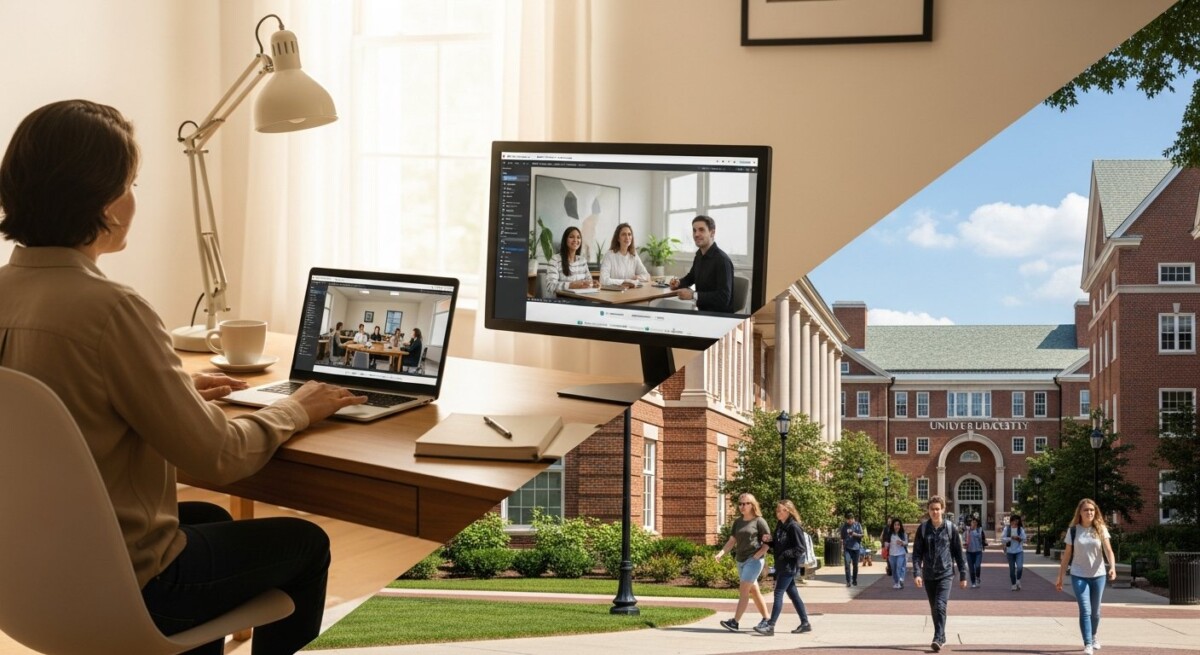
Deciding between an online degree and a traditional campus program can feel like standing at a fork in the road with no map. Each path promises career advancement, but the right choice depends on your lifestyle, learning preferences, and professional goals. For adult learners, career changers, and working professionals, this decision carries extra weight. You need a program that fits your schedule, respects your budget, and delivers real value in the job market. This article breaks down the key differences between online and campus programs, helping you determine which format aligns best with your career ambitions.
Understanding the Core Differences Between Online and Campus Programs
Online programs deliver coursework through digital platforms, allowing you to study from anywhere with an internet connection. Campus programs require physical attendance at a specific location, with classes held in person on a set schedule. The fundamental difference is flexibility versus structure. Online learning offers asynchronous options (watch lectures and complete assignments on your own time) or synchronous options (live classes at scheduled times). Campus programs provide face-to-face interaction, immediate feedback from instructors, and a traditional academic environment.
Both formats have evolved significantly in recent years. Online programs now feature interactive simulations, virtual labs, and discussion forums that mimic classroom dynamics. Campus programs increasingly incorporate digital tools and blended learning models. The quality of education depends more on the institution and program design than the delivery method. Accreditation remains the gold standard for both formats. When researching options, always verify that the program holds regional or national accreditation, as this affects financial aid eligibility and employer recognition.
How Learning Style and Discipline Affect Your Success
Your personal learning style plays a major role in determining which format works best. Online programs require strong self-discipline and time management skills. You must motivate yourself to watch lectures, complete assignments, and participate in discussions without the external structure of a physical classroom. If you thrive on independence and can create your own study schedule, online learning can be highly effective.
Campus programs suit learners who benefit from routine and direct accountability. The fixed schedule of classes, the physical presence of instructors, and the social environment of campus life can keep you engaged and on track. If you learn best through group discussions, hands-on activities, or asking questions in real time, a campus program may feel more natural.
Consider your work and family obligations as well. A working parent with irregular hours may find online programs the only viable option. A recent high school graduate without major commitments might prefer the immersive campus experience. Be honest with yourself about your ability to stay motivated without external structure. Many students overestimate their self-discipline when choosing online programs, leading to lower completion rates.
Career Impact: Employer Perceptions and Networking Opportunities
Employer perceptions of online degrees have shifted dramatically over the past decade. Major companies now hire graduates from respected online programs, especially from accredited universities with strong brand recognition. Fields like technology, business, and healthcare have embraced online credentials. However, some industries such as law, medicine, and academia still place higher value on traditional campus programs due to hands-on training requirements and professional networking norms.
Networking opportunities differ significantly between the two formats. Campus programs offer spontaneous connections: conversations after class, study groups in the library, and career fairs in the student center. These interactions can lead to internships, job referrals, and long-term professional relationships. Online programs rely on intentional networking through discussion boards, virtual meetups, and LinkedIn groups. While online networking requires more effort, it can connect you with peers from diverse geographic locations and industries, expanding your professional reach.
For career changers, the format matters less than the program’s reputation and curriculum. A degree from a well-regarded online program can open doors just as effectively as a campus degree, especially if you build a strong portfolio and network actively. For those seeking promotions within their current organization, an online degree often proves more practical because you can continue working while studying.
In our guide on Bachelor of Data Science Online: Launch Your Tech Career, we explain how to evaluate program quality and align your degree choice with industry demands.
Cost Comparison: Tuition, Fees, and Hidden Expenses
Tuition for online programs is often lower than campus programs, but the difference varies by institution. Public universities may charge the same tuition for both formats, while private online schools sometimes offer reduced rates because they avoid costs associated with physical facilities. However, online students must consider technology fees, software subscriptions, and reliable internet access. Some online programs also require in-person residencies or proctored exams, which add travel costs.
Campus programs include expenses that online students avoid: housing, meal plans, parking permits, transportation, and activity fees. These costs can add thousands of dollars per year. For example, living on campus at a public university might cost $12,000 to $15,000 annually beyond tuition. Online students save on these expenses but may miss out on campus resources like libraries, gyms, and career centers.
Financial aid opportunities exist for both formats. Federal student loans, grants, and scholarships apply to accredited programs regardless of delivery method. Many employers offer tuition reimbursement for job-related degrees, and online programs often qualify because of their flexibility. When comparing costs, calculate the total cost of attendance including all direct and indirect expenses. Also consider the opportunity cost of lost income. Campus programs may require reduced work hours or leaving a job entirely, while online programs allow you to maintain full-time employment.
For a deeper dive into funding your education, explore resources like College and Tuition, which provides guidance on scholarships, federal aid, and employer benefits to make your degree more affordable.
Flexibility and Time Commitment: What to Expect
Online programs offer unmatched flexibility for students balancing work, family, and education. You can study early mornings, late nights, or weekends. Many online programs allow you to accelerate your pace or extend your timeline based on your schedule. This flexibility makes online learning ideal for working professionals who cannot commit to fixed class times.
Campus programs require a more rigid schedule. Classes meet at specific times, often during business hours. You must factor in commute time, parking, and waiting between classes. A typical campus course might require 15 hours per week including class time, travel, and study. This structure can be challenging for full-time employees or parents.
However, flexibility has a downside. Online students often report feeling isolated or disconnected from peers and instructors. The lack of physical presence can reduce accountability and make it harder to ask questions or seek help. Campus programs provide built-in support systems through office hours, tutoring centers, and peer study groups. Consider how much structure you need to stay motivated and whether you have the discipline to succeed with minimal external oversight.
Technology Requirements and Digital Literacy
Online programs demand reliable technology and basic digital literacy. You need a computer that meets the program’s specifications, a stable internet connection, and familiarity with learning management systems like Canvas or Blackboard. Some programs require webcams for live classes or proctored exams. Troubleshooting technical issues is part of the online learning experience. If you are not comfortable with technology, campus programs may reduce frustration.
Campus programs typically require less technology investment. You use computers in labs or libraries, and instructors handle most technical aspects. However, even campus programs now use digital tools for assignments, communication, and research. Basic computer skills are essential regardless of format.
Social Experience and Campus Life
The social aspect of education differs dramatically between online and campus programs. Campus life offers extracurricular activities, clubs, sports, and spontaneous social interactions. These experiences contribute to personal growth, build friendships, and create a sense of community. For traditional-aged students, campus life can be a transformative part of the college experience.
Online programs lack this physical community, but many have built virtual alternatives. Discussion forums, group projects, and social media groups help students connect. Some online programs host optional in-person events or regional meetups. However, the social experience remains primarily digital. For adult learners focused on career advancement, the lack of campus life may be a welcome trade-off for flexibility and lower costs.
Accreditation and Transferability of Credits
Accreditation is critical for both online and campus programs. Regionally accredited institutions are recognized by employers and other schools for credit transfer. Nationally accredited programs often focus on career-oriented fields but may have limited transferability. Always confirm accreditation before enrolling. Online programs from unaccredited schools can harm your career prospects and waste your investment.
Transferring credits between institutions can be more complicated with online programs, especially if they use non-standard formats or quarter systems. Campus programs at traditional universities generally have established transfer agreements. If you plan to pursue further education after your degree, consider how credits will transfer. Some online programs have partnerships with local colleges to facilitate transfer.
Frequently Asked Questions
1. Are online degrees respected by employers? Yes, when they come from accredited institutions. Employers care more about the school’s reputation and accreditation than the delivery method. Graduates from respected online programs compete effectively for jobs.
2. Can I switch from an online program to a campus program? It depends on the institution. Some universities allow students to switch formats within the same program. Others require reapplication or have different admission requirements. Check with the school before enrolling.
3. Which format is cheaper overall? Online programs often have lower tuition and no housing costs, but you must factor in technology fees and internet costs. Campus programs have higher total costs due to room, board, and transportation. Calculate the total cost of attendance for each option.
4. Do online programs offer the same quality of instruction? Quality depends on the institution and program design. Accredited online programs follow rigorous standards. Many use the same faculty who teach on campus. Read reviews and talk to alumni to assess quality.
5. How do I know if I am self-disciplined enough for online learning? Reflect on your past experiences with self-directed tasks. If you can complete projects on time without reminders and manage your schedule effectively, online learning may work well. If you need external deadlines and accountability, consider a campus program or hybrid format.
6. Can I work full-time while pursuing an online degree? Yes, that is a primary advantage of online programs. Many students work full-time and complete coursework evenings and weekends. Choose a program with asynchronous options to maximize flexibility.
Choosing between online and campus programs is a personal decision with no universal right answer. The best choice aligns with your career goals, learning style, financial situation, and life responsibilities. Online programs offer flexibility and lower costs, making them ideal for working professionals and those with family obligations. Campus programs provide structure, networking, and a traditional educational experience that benefits students who thrive on routine and face-to-face interaction.
As you evaluate options, focus on accredited institutions with strong reputations in your field. Research program outcomes such as graduation rates, job placement statistics, and alumni success. Talk to current students and graduates to understand the real experience. Ultimately, the degree that works best is the one you complete. Choose a format that sets you up for success and supports your long-term career aspirations.