
Practical Nurse Certificate at Elgin CC: 12-Week Path
The Licensed Practical/Vocational Nurse Training Certificate, 12 weeks to less than 1 year In-person at Elgin Comm College District #509 offers a fast path to LPN licensure and quick entry into patient care.

If you are exploring a fast track into healthcare, the Licensed Practical/Vocational Nurse Training Certificate, 12 weeks to less than 1 year In-person at Elgin Comm College District #509 offers one of the quickest routes to a credentialed nursing role in Illinois. Unlike associate or bachelor's degree programs that can take two to four years, this certificate is designed to get you into the workforce in under twelve months. For adult learners, career changers, and working professionals who need a practical, affordable, and regionally accessible path, Elgin Community College's program warrants a close look. This guide breaks down the program structure, admission steps, costs, career outcomes, and how to decide whether this in-person certificate aligns with your goals.
What the Licensed Practical/Vocational Nurse Training Certificate Covers
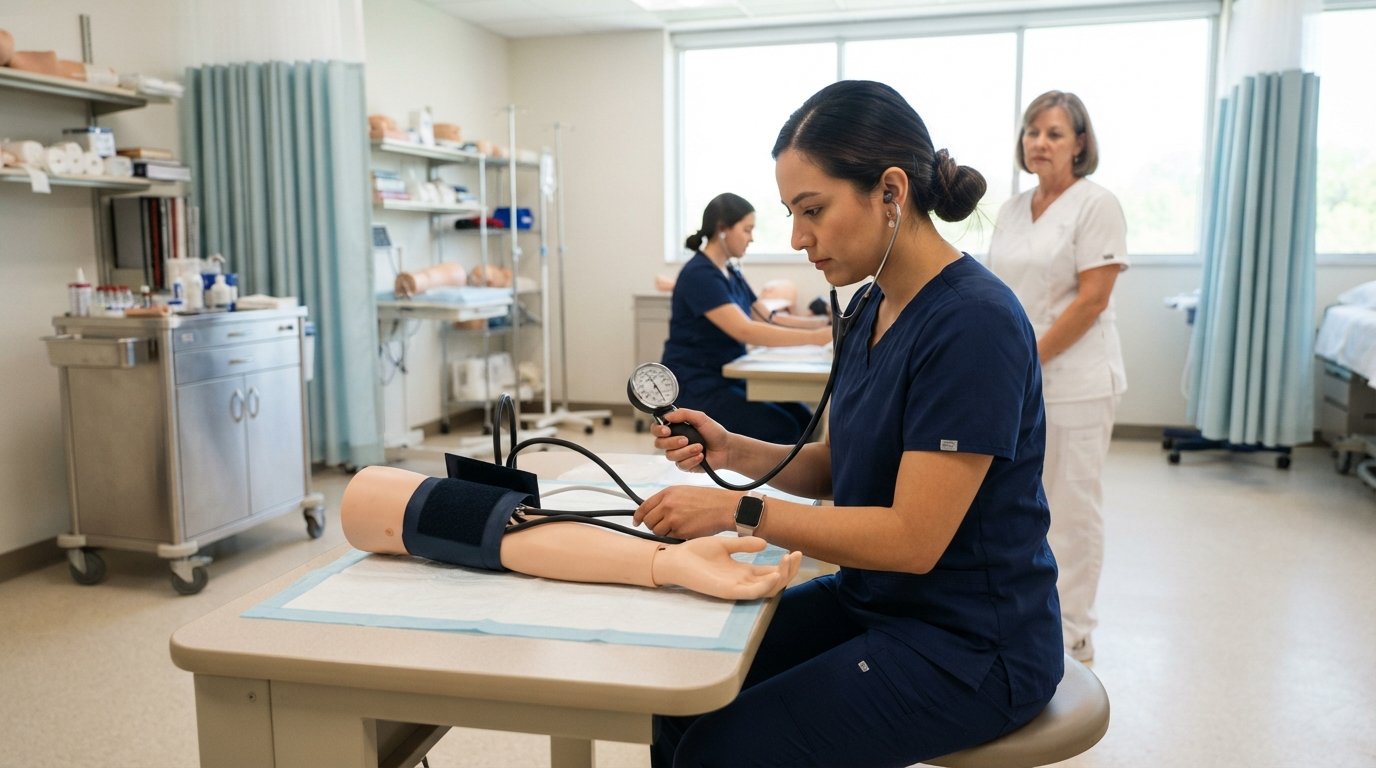
The Licensed Practical/Vocational Nurse Training Certificate, 12 weeks to less than 1 year In-person at Elgin Comm College District #509 is a clock-hour certificate program that prepares students for entry-level practical nursing roles. In Illinois, graduates typically sit for the NCLEX-PN exam to become Licensed Practical Nurses (LPNs). The curriculum blends classroom instruction with supervised clinical experiences in hospitals, long-term care facilities, and community settings. Because the program is delivered in person, students gain hands-on exposure to patient care, medication administration, wound care, and vital sign monitoring under the direct supervision of licensed instructors.
Coursework generally includes anatomy and physiology, fundamentals of nursing, pharmacology, nutrition, maternal and pediatric nursing, and mental health concepts. The compressed timeline means you should expect an intensive schedule: full days of lectures, labs, and clinical rotations. This format suits disciplined learners who can commit to a near full-time pace for several months rather than spreading prerequisites over multiple semesters. The certificate is not a degree, but it is a credential that qualifies you for licensure and immediate employment in many healthcare settings.
One important distinction: practical nursing programs differ from registered nursing (RN) programs. LPNs work under the supervision of RNs and physicians, and their scope of practice varies by state. If your long-term goal is an RN license, you may later pursue an LPN-to-RN bridge program. But for students who want to enter patient care quickly, the certificate provides a direct pathway with far less time and tuition than a traditional nursing degree.
Why Choose Elgin Community College for Practical Nurse Training
Elgin Community College, part of Illinois Community College District #509, serves students across Kane, Cook, DuPage, and DeKalb counties. Its practical nursing program is approved by the Illinois Board of Nursing and accredited by relevant nursing education bodies, which matters for licensure eligibility and employer recognition. Attending an in-person program at a local community college offers distinct advantages: proximity to clinical partners, access to campus labs and simulation equipment, and instructors who often maintain active clinical practice in the region.
Community college tuition is typically far lower than private nursing school costs. For Illinois residents, in-district rates at Elgin can substantially reduce the total cost of the certificate. Students should confirm current tuition tiers because fees vary by residency status and program-specific lab costs. Financial aid, including federal Pell Grants, state MAP grants, and institutional scholarships, may be available for eligible students. The college's financial aid office can help you complete the FAFSA and identify aid options before you enroll.
Another advantage is the local employer network. Hospitals, skilled nursing facilities, and home health agencies in the Elgin area frequently recruit from community college practical nursing cohorts. Clinical placements often serve as informal job interviews, and program completion rates and NCLEX-PN pass rates are useful indicators of program quality. Prospective students should request these statistics directly from the program and compare them against state averages. For broader context on evaluating in-person versus online options, our guide on the Black Hawk College design certificate in-person guide illustrates how regional programs structure hands-on training.
Admission Requirements and Steps to Enroll
Admission to the Licensed Practical/Vocational Nurse Training Certificate, 12 weeks to less than 1 year In-person at Elgin Comm College District #509 is competitive, and the process involves several sequential steps. Because the program is short and cohort-based, seats fill quickly. You should plan to complete prerequisites and testing well before the application window opens. Typical requirements include a high school diploma or GED, completion of prerequisite courses such as biology and math with minimum grades, a standardized admission test (often the TEAS or HESI A2), and a criminal background check. Some programs also require CPR certification and health immunizations before clinical rotations begin.
Here is a practical sequence to follow when applying:
- Attend an information session or meet with an academic advisor to confirm current prerequisites and deadlines.
- Complete required prerequisite courses and maintain the minimum GPA specified by the program.
- Register for and take the admission exam, then submit official transcripts and test scores by the deadline.
- Complete background checks, drug screening, and health documentation once conditionally admitted.
- Finalize financial aid, payment plans, and clinical compliance requirements before orientation.
After submitting your application, expect a selection process that may include a points-based ranking system weighing grades, test scores, and prior healthcare experience. Some community colleges use waitlists, while others admit by competitive score. Confirm which model Elgin uses so you can set realistic expectations. If you are not admitted on the first attempt, ask about reapplication policies and ways to strengthen your candidacy, such as retaking prerequisites or gaining certified nursing assistant (CNA) experience.
Costs, Financial Aid, and Return on Investment
Tuition for the certificate is generally billed per credit hour plus program and lab fees. Because the program runs under a year, total costs are far lower than degree programs, but you should budget for textbooks, uniforms, stethoscope and supplies, background checks, exam fees, and licensure application costs. Students should request a full cost breakdown from the college, including any clinical compliance fees that are easy to overlook.
Financial aid options to explore include federal grants and loans, state grants for Illinois residents, institutional scholarships, and employer tuition assistance if you already work in healthcare. Workforce development grants may also apply for eligible adult learners. The return on investment for an LPN certificate is often favorable because you can begin earning relatively quickly. Salary varies by setting and region; LPNs in Illinois generally earn competitive hourly wages, and demand for practical nurses remains steady in long-term care, clinics, and home health. However, you should verify current local wage data and job placement rates rather than relying on national averages.
To compare your options and connect with accredited schools that fit your budget and schedule, you can use CollegeDegree.Education as an educational matching service. It helps prospective students discover programs, request information, and evaluate financial aid pathways without obligation. Combining that research with a direct conversation with Elgin's financial aid office gives you the clearest picture of out-of-pocket costs.
Career Outcomes and Licensure for LPNs
Graduates of the Licensed Practical/Vocational Nurse Training Certificate, 12 weeks to less than 1 year In-person at Elgin Comm College District #509 are prepared to take the NCLEX-PN and apply for licensure through the Illinois Department of Financial and Professional Regulation. Passing the exam and meeting state requirements allows you to practice as an LPN. Employment settings include nursing homes, assisted living facilities, hospitals, physician offices, outpatient clinics, and home health agencies. Typical responsibilities include monitoring patients, administering medications, dressing wounds, collecting samples, and reporting changes to RNs and physicians.
Career advancement pathways exist beyond entry-level roles. With experience, LPNs can move into charge nurse positions in long-term care, specialize in areas such as geriatrics or dialysis, or pursue further education through LPN-to-RN programs. Some employers offer tuition reimbursement for bridge programs, which makes the certificate a stepping stone rather than a terminal credential. If you are weighing whether to start with a certificate or go directly for a degree, consider your timeline, financial situation, and willingness to study while working.
Job outlook for practical nurses is generally positive due to aging populations and ongoing demand in long-term care. However, hiring conditions vary by region, and you should research local employers before enrolling. Informational interviews with LPNs in your area and conversations with the college's career services office can clarify what to expect in the Elgin job market.
Is This In-Person Certificate Right for You?
The Licensed Practical/Vocational Nurse Training Certificate, 12 weeks to less than 1 year In-person at Elgin Comm College District #509 is best suited to students who can commit to an intensive schedule, prefer hands-on learning, and want to enter healthcare quickly. It is less suitable for students who need fully online flexibility or who plan to pursue graduate-level nursing roles without additional education. If you are a working adult, review the class and clinical hours carefully before enrolling, because attendance policies in nursing programs are typically strict.
Before applying, ask the program these questions:
- What are the current NCLEX-PN pass rates and job placement rates for graduates?
- How are clinical placements assigned, and do they require travel outside Elgin?
- What is the total cost of attendance, including fees, supplies, and licensure expenses?
- What financial aid and payment plan options are available for certificate students?
Answering these questions helps you compare the certificate against other local programs and against online alternatives for related healthcare credentials. Keep in mind that hands-on clinical training is difficult to replicate online, which is why in-person programs remain the standard for practical nursing. If you later decide to pursue an associate or bachelor's degree, the credits and experience you gain can support a smoother transition into an LPN-to-RN pathway.
Taking the first step means gathering facts from the college, speaking with advisors, and mapping your finances before the application window closes. With careful planning, this short certificate can open a direct route into patient care and provide a foundation for long-term healthcare career growth.