
Surgical Technology Associate's Degree in North Hollywood
Explore the Surgical Technology/Technologist Associate's degree, usually 2 years In-person at Concorde Career College-North Hollywood, and what it takes to start a surgical tech career.

By Elena Owens
Choosing a career in surgical technology means stepping into a role that sits at the heart of patient care, often before, during, and after life-changing operations. For many adult learners and career changers, the fastest and most practical route into this field is a two-year associate's degree. At Concorde Career College-North Hollywood, the Surgical Technology/Technologist Associate's degree is designed as an in-person, roughly two-year program that blends classroom instruction with hands-on clinical experience. This guide breaks down what the program covers, who it is for, how to weigh costs and outcomes, and how to decide whether this specific campus and format align with your goals.
What the Surgical Technology/Technologist Associate's Degree Covers
The Surgical Technology/Technologist Associate's degree, usually 2 years In-person at Concorde Career College-North Hollywood, is structured to prepare students for entry-level roles as surgical technologists, sometimes called scrub techs or operating room technicians. Coursework typically combines anatomy and physiology, microbiology, pharmacology, and surgical procedures with hands-on practice in simulated labs. Because the program is in-person, students get direct access to instructors, equipment, and clinical sites, which matters in a field where sterile technique and physical dexterity cannot be learned from a textbook alone.
Students should expect a mix of general education courses and core surgical technology classes. General education requirements often include communication, psychology, and math, which help build the critical thinking and patient-interaction skills needed in operating rooms. The core curriculum usually dives into surgical asepsis, instrumentation, wound care, and the specific roles of the scrub technologist and circulating technologist. Clinical rotations, often completed at local hospitals or surgery centers, give students supervised experience in real operating environments before graduation.
Because the program is offered in person, scheduling tends to be more structured than fully online alternatives. That structure can be a benefit for students who thrive with accountability and face-to-face feedback, but it also means planning around commuting, lab hours, and clinical shifts. Prospective students should confirm current course sequences and credit requirements directly with the campus, since program details can change and vary by cohort.
Why the In-Person Format at Concorde North Hollywood Matters
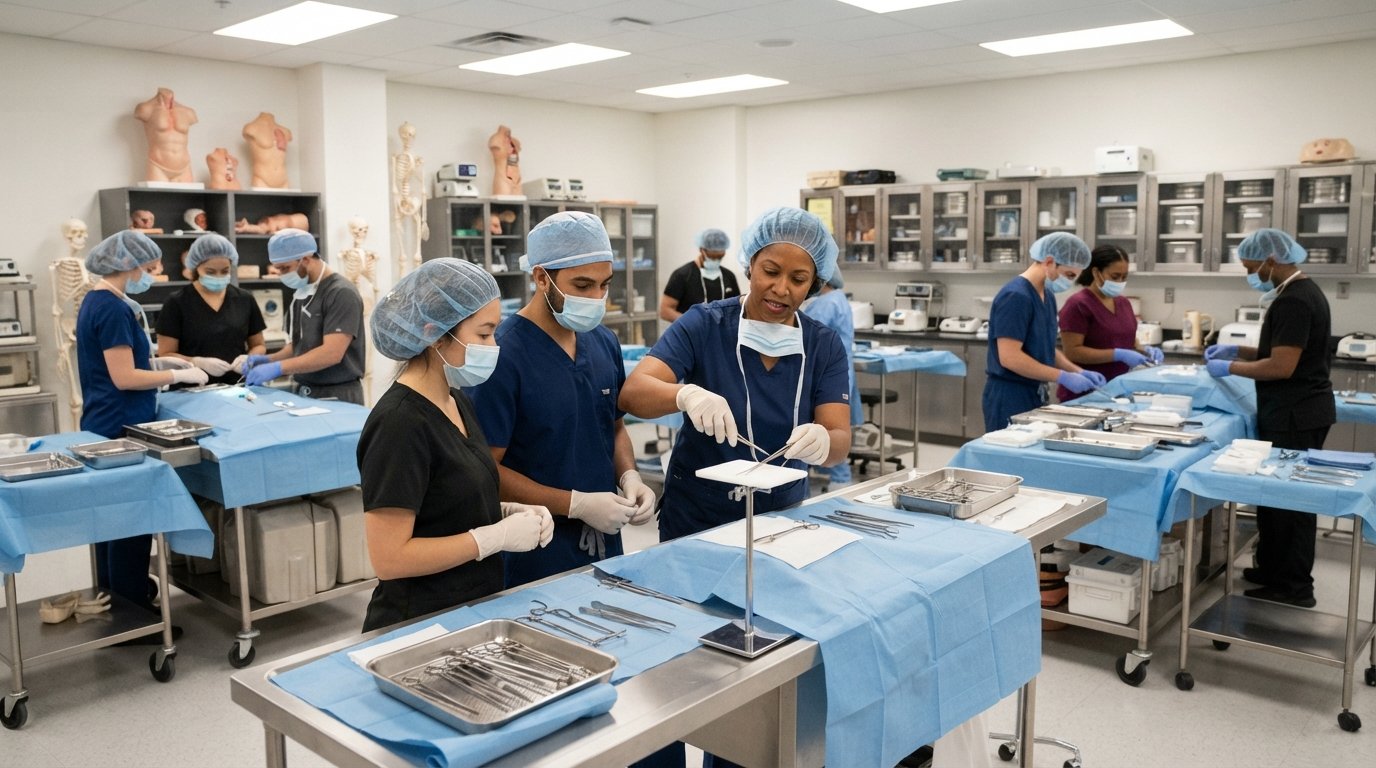
Surgical technology is a hands-on profession, and the in-person format is not just a delivery preference; it is a practical necessity. Students practice passing instruments, setting up sterile fields, and anticipating a surgeon's needs in real time. Concorde Career College-North Hollywood emphasizes lab-based learning and clinical placements that mirror the pace and pressure of actual operating rooms. For career changers coming from unrelated fields, this immersive approach can shorten the learning curve and build confidence before the first job interview.
The North Hollywood location also places students in a region with a dense healthcare ecosystem. Los Angeles County has a wide range of hospitals, outpatient surgery centers, and specialty clinics, which can translate into diverse clinical rotation experiences and potential networking opportunities. Students who plan to work locally after graduation may find that completing clinical hours in the area helps them build professional relationships that support job placement.
That said, in-person study requires logistical planning. Students should map out transportation, childcare, and work schedules before enrolling. Many programs offer day or evening cohorts, but clinical rotations can occur at varying times, including early mornings. Being realistic about these demands is essential for success in a program that moves quickly over roughly two years.
Admissions, Accreditation, and Certification Pathways
Admission requirements for the Surgical Technology/Technologist Associate's degree, usually 2 years In-person at Concorde Career College-North Hollywood, typically include a high school diploma or equivalent, an admissions interview, and sometimes entrance assessments. Prospective students should ask about prerequisites in math and science, as well as any health screening, immunization, or background check requirements tied to clinical placements. Because clinical sites set their own rules, meeting these requirements early can prevent delays.
Accreditation is another critical factor. Students should verify the program's current accreditation status and whether graduates are eligible to sit for national certification exams, such as the Certified Surgical Technologist (CST) credential offered by organizations like the National Board of Surgical Technology and Surgical Assisting (NBSTSA). Certification is often preferred or required by employers, and it can influence earning potential. Confirm these details directly with the campus and the certifying body, since eligibility rules and program statuses can change.
Financial aid is also part of the planning process. Students should complete the Free Application for Federal Student Aid (FAFSA) and discuss payment options, scholarships, and loan eligibility with the financial aid office. For a broader look at how to compare college costs and funding strategies, resources like CollegeAndTuition offer guides on financial aid, scholarships, and college planning that can help families make informed decisions.
If you are comparing this program to other allied health pathways, it helps to understand how similar associate's degrees are structured elsewhere. Our overview of the Surgical Technology Associate's Degree at Central Penn provides a useful point of comparison for curriculum, format, and career outcomes.
Career Outcomes and Salary Expectations
Graduates of surgical technology programs typically pursue roles in hospital operating rooms, outpatient surgery centers, and physician offices. The work involves preparing instruments, maintaining sterile fields, assisting surgeons and nurses, and helping ensure patient safety throughout procedures. It is a demanding but rewarding role that suits people who are detail-oriented, calm under pressure, and comfortable working as part of a tight-knit team.
Salary expectations vary by region, experience, and certification status. According to broad labor market data, surgical technologists earn a median annual wage in the mid-$50,000s, with higher earnings possible in specialized settings or with additional certifications. In California, wages tend to run above the national average, though the cost of living is also higher. Students should research local job postings and speak with the campus career services team about placement rates and employer partnerships.
Career advancement can take several forms. Experienced technologists may move into specialized areas such as cardiac, orthopedic, or transplant surgery, or pursue supervisory and teaching roles. Some professionals use the associate's degree as a stepping stone toward further education in healthcare administration or nursing, though additional credentials would be required for those paths. The key is to treat the associate's degree as a foundation and to keep building skills and certifications over time.
How to Decide If This Program Fits Your Goals
Deciding on a surgical technology program is a personal decision that should weigh format, cost, location, and career support. The Surgical Technology/Technologist Associate's degree, usually 2 years In-person at Concorde Career College-North Hollywood, may be a strong fit for students who want structured, hands-on training in a healthcare hub and who plan to work in the Los Angeles area. It may be less suitable for students who need fully online flexibility or who cannot commit to daytime labs and clinical rotations.
Prospective students should take a few concrete steps before enrolling:
- Visit the campus and tour the labs to see the equipment and learning environment firsthand.
- Ask about current accreditation, certification exam pass rates, and job placement rates for recent cohorts.
- Request a full cost breakdown, including tuition, fees, books, uniforms, and any clinical-related expenses.
- Speak with financial aid advisors about FAFSA, scholarships, and loan options.
- Talk to current students or alumni about workload, scheduling, and clinical experiences.
These conversations can reveal details that brochures leave out, such as how clinical placements are assigned or how much time students spend commuting. They also help you assess whether the program's culture and expectations match your learning style and personal commitments.
It is also wise to compare this program with other options in the region and online. Some students prefer a community college pathway for lower tuition, while others value the focused, career-oriented structure of a private career college. Neither path is inherently better; the right choice depends on your budget, timeline, and learning preferences. Be sure to verify transferability of credits if you plan to pursue further education later.
Final Thoughts on Planning Your Surgical Technology Career
A career in surgical technology offers a meaningful way to contribute to patient care without the longer timeline of medical school or nursing programs. The Surgical Technology/Technologist Associate's degree, usually 2 years In-person at Concorde Career College-North Hollywood, is one pathway that combines focused coursework, hands-on labs, and clinical experience in a region with abundant healthcare employers. By researching accreditation, costs, certification eligibility, and outcomes, prospective students can make a confident decision about whether this program aligns with their professional and financial goals.